Step 1: Analyze the reactants. The molecule shown is a cyclooctatrienyl cation (C8H7+), which is aromatic due to its Huckel rule compliance (4n+2 π electrons, where n=1). It is bonded to a chlorine atom. The other reactant is hydroxide ion (HO⁻), a strong nucleophile and base.
Step 2: Consider the reaction mechanism. The hydroxide ion can act as a nucleophile and attack the positively charged carbon atom bonded to chlorine, leading to a substitution reaction. This is likely an SN2 mechanism due to the steric accessibility of the carbon.
Step 3: Predict the product of the substitution. The chlorine atom will be replaced by the hydroxide group, resulting in the formation of a cyclooctatrienyl alcohol (C8H7OH).
Step 4: Consider any possible side reactions. Since hydroxide is a strong base, it could also abstract a proton from the cyclooctatrienyl cation, leading to the formation of a neutral cyclooctatriene molecule (C8H8).
Step 5: Draw all possible products. The main product is cyclooctatrienyl alcohol (C8H7OH), and a potential side product is cyclooctatriene (C8H8). Ensure to represent the aromaticity in the structures of the products.
Verified video answer for a similar problem:
This video solution was recommended by our tutors as helpful for the problem above
Video duration:
7m
Play a video:
0 Comments
Key Concepts
Here are the essential concepts you must grasp in order to answer the question correctly.
Reaction Mechanisms
Understanding reaction mechanisms is crucial in organic chemistry as they describe the step-by-step process by which reactants transform into products. This includes identifying intermediates, transition states, and the movement of electrons. A clear grasp of mechanisms helps predict the products formed in a reaction.
Functional groups are specific groups of atoms within molecules that are responsible for the characteristic chemical reactions of those molecules. Recognizing functional groups in the reactants allows chemists to anticipate how they will interact and what products will be formed. This knowledge is essential for drawing accurate reaction products.
Stereochemistry involves the study of the spatial arrangement of atoms in molecules and how this affects their chemical behavior. In reactions, the stereochemistry of reactants can lead to different stereoisomers as products. Understanding stereochemistry is vital for accurately representing all possible products, especially in reactions involving chiral centers.

 7:48 minutes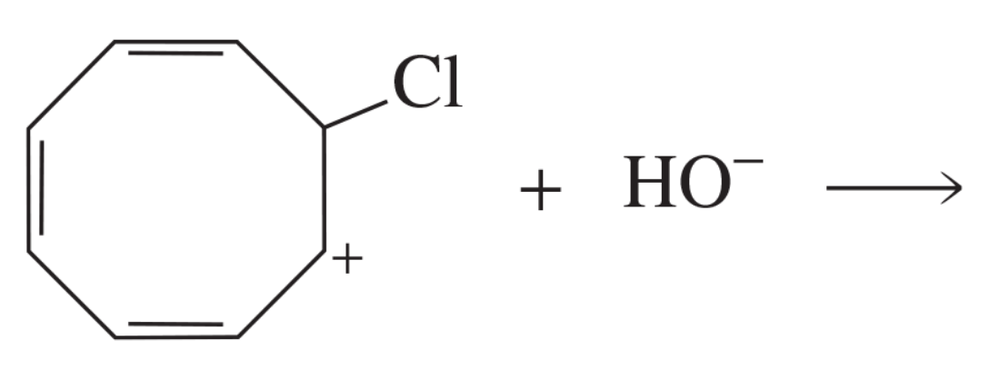
 Verified step by step guidance
 02:16
02:16