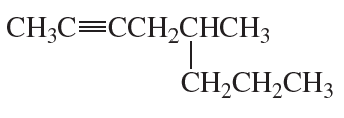
Step 1: Identify the longest continuous carbon chain in the compound. This will serve as the parent chain, and its length determines the base name (e.g., methane, ethane, propane, etc.).
Step 2: Number the parent chain starting from the end closest to the first substituent group. This ensures the substituents receive the lowest possible numbers.
Step 3: Identify and name all substituents attached to the parent chain. Substituents are groups like alkyl chains (e.g., methyl, ethyl) or functional groups (e.g., hydroxyl, halogens).
Step 4: Combine the substituent names with the parent chain name. Use prefixes to indicate the number of identical substituents (e.g., di-, tri-, tetra-) and include their position numbers.
Step 5: Ensure the name follows IUPAC rules for systematic naming, including proper placement of commas and hyphens, and verify that the name is unambiguous and complete.
Verified video answer for a similar problem:
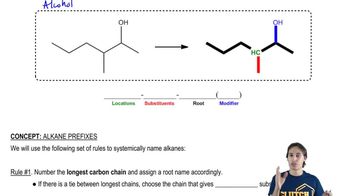
This video solution was recommended by our tutors as helpful for the problem above
Video duration:
3m
Play a video:
Was this helpful?
Key Concepts
Here are the essential concepts you must grasp in order to answer the question correctly.
IUPAC Nomenclature
IUPAC nomenclature is a systematic method for naming organic chemical compounds. It provides a set of rules to create unique names based on the structure of the molecule, including the longest carbon chain, functional groups, and stereochemistry. Understanding these rules is essential for accurately identifying and communicating the identity of compounds.
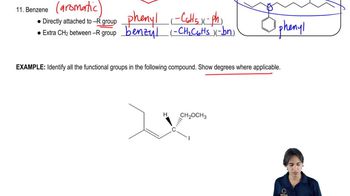
Functional groups are specific groups of atoms within molecules that are responsible for the characteristic chemical reactions of those molecules. Common functional groups include alcohols, carboxylic acids, and amines. Recognizing functional groups is crucial for determining the properties and reactivity of organic compounds, which directly influences their systematic naming.
Structural isomerism occurs when compounds have the same molecular formula but different structural arrangements of atoms. This can lead to different physical and chemical properties, making it important to specify the correct structure when naming a compound. Understanding isomerism is vital for accurately determining the systematic names of compounds, as different isomers can have distinct names.