Shown below is the 1H NMR spectrum of the alkyl bromide used to make the phosphonium ylide that reacts with a ketone in a Wittig reaction to form a compound with molecular formula C11H14. What product is obtained from the Wittig reaction? <IMAGE>
Verified step by step guidance
1
Analyze the molecular formula (C11H14) of the product to determine the degree of unsaturation. Use the formula: Degree of Unsaturation = (2C + 2 - H - X + N)/2, where C = number of carbons, H = number of hydrogens, X = number of halogens, and N = number of nitrogens.
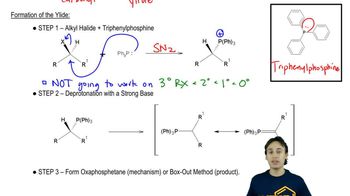
Understand the Wittig reaction mechanism: A phosphonium ylide reacts with a ketone to form an alkene. The product will have a new carbon-carbon double bond formed between the carbon of the ylide and the carbonyl carbon of the ketone.
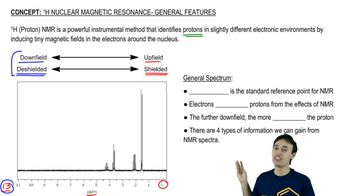
Examine the 1H NMR spectrum of the alkyl bromide to deduce its structure. Look for key signals such as chemical shifts, splitting patterns, and integration values to identify the alkyl bromide precursor used to generate the phosphonium ylide.
Combine the structure of the phosphonium ylide (derived from the alkyl bromide) with the ketone reactant. Identify the carbonyl group in the ketone and determine where the new double bond will form in the product.
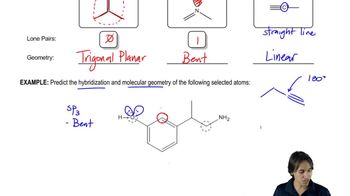
Draw the structure of the product, ensuring that the molecular formula matches C11H14. Confirm that the product contains the correct number of carbons, hydrogens, and the expected degree of unsaturation (likely an alkene).
Verified video answer for a similar problem:
This video solution was recommended by our tutors as helpful for the problem above
Play a video:
0 Comments
Key Concepts
Here are the essential concepts you must grasp in order to answer the question correctly.
NMR Spectroscopy
Nuclear Magnetic Resonance (NMR) spectroscopy is a powerful analytical technique used to determine the structure of organic compounds. It provides information about the number of hydrogen atoms in different environments within a molecule, allowing chemists to deduce connectivity and functional groups. In this context, interpreting the 1H NMR spectrum helps identify the alkyl bromide's structure, which is crucial for understanding the subsequent Wittig reaction.
The Wittig reaction is a chemical reaction that involves the reaction of a phosphonium ylide with a carbonyl compound, such as a ketone, to form an alkene. This reaction is significant in organic synthesis for constructing double bonds in a controlled manner. Understanding the mechanism and the role of the ylide is essential for predicting the product formed from the reaction with the ketone.
The molecular formula of a compound provides insight into its composition and can help predict the structure of the product formed in a reaction. In this case, the molecular formula C11H14 indicates a specific number of carbon and hydrogen atoms, guiding the identification of possible alkenes resulting from the Wittig reaction. Analyzing the molecular formula alongside the starting materials allows for accurate product prediction.