Alcohols combine with ketones and aldehydes to form interesting derivatives, which we will discuss in Chapter 18. The following reactions show the hydrolysis of two such derivatives. Propose mechanisms for these reactions. (a)
Verified step by step guidance
1
Step 1: Analyze the reaction. The given reaction involves the hydrolysis of an acetal under acidic conditions (H⁺ and H₂O). Acetals are derivatives formed from aldehydes or ketones reacting with alcohols. Hydrolysis reverses this process, regenerating the original aldehyde or ketone and releasing the alcohol.
Step 2: Protonation of the acetal oxygen. Under acidic conditions, the oxygen atom in the acetal is protonated, increasing its electrophilicity and making the molecule more susceptible to nucleophilic attack.
Step 3: Cleavage of the first bond. Water acts as a nucleophile and attacks the carbon atom bonded to the protonated oxygen, leading to the cleavage of the bond between the acetal oxygen and the carbon. This forms a hemiacetal intermediate.
Step 4: Protonation of the hemiacetal intermediate. The hydroxyl group in the hemiacetal is protonated, making it a better leaving group. This facilitates the cleavage of the bond between the carbon and the hydroxyl group, forming the aldehyde.
Step 5: Release of methanol. The methoxy group (-OCH₃) is protonated and leaves as methanol (CH₃OH), completing the hydrolysis reaction.
Verified video answer for a similar problem:
This video solution was recommended by our tutors as helpful for the problem above
Video duration:
5m
Play a video:
0 Comments
Key Concepts
Here are the essential concepts you must grasp in order to answer the question correctly.
Nucleophilic Addition
Nucleophilic addition is a fundamental reaction mechanism in organic chemistry where a nucleophile attacks an electrophilic carbon atom, typically found in carbonyl groups of aldehydes and ketones. This process leads to the formation of a tetrahedral intermediate, which can further undergo protonation or elimination to yield alcohols or other derivatives. Understanding this mechanism is crucial for analyzing reactions involving alcohols and carbonyl compounds.
Hydrolysis reactions involve the breaking of chemical bonds through the reaction with water, resulting in the formation of new products. In the context of alcohols and carbonyl compounds, hydrolysis can convert derivatives back into their original forms or into different functional groups. Recognizing the conditions and products of hydrolysis is essential for proposing accurate reaction mechanisms.
A reaction mechanism is a detailed step-by-step description of the process by which reactants are converted into products. It outlines the sequence of bond-breaking and bond-forming events, including intermediates and transition states. Proposing a mechanism for the hydrolysis of alcohol-derivative reactions requires a solid understanding of the involved species and their interactions, which is critical for predicting the outcome of the reaction.


 5:28 minutes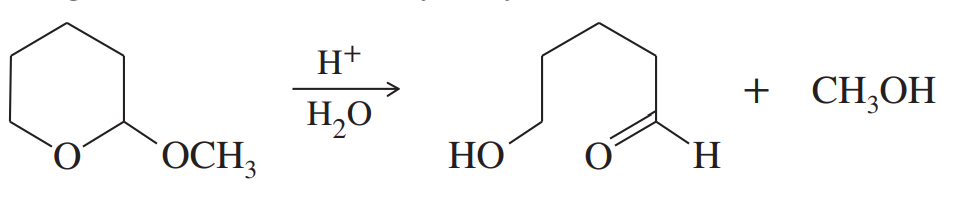
 Verified step by step guidance
 08:27
08:27