Pearson+ LogoPearson+ Logo
Ch.16 Amines
McMurry - Fundamentals of GOB 8th Edition
McMurry8th EditionFundamentals of GOBISBN: 9780134015187Not the one you use?Change textbook
Chapter 16, Problem 53e

Complete the following equations (Hint: Answers may include concepts learned from previous organic chapters):
e. Chemical equation showing the reaction of triethylamine with water, with a question mark indicating an incomplete reaction.

Verified step by step guidance
1
Identify the type of reaction taking place in the given equation. For example, determine if it is a substitution, addition, elimination, or oxidation-reduction reaction. This will guide how the reactants transform into products.
Analyze the reactants and their functional groups. Look for key features such as double bonds, halogens, hydroxyl groups, or other functional groups that may dictate the reaction mechanism.
Apply the appropriate reaction mechanism based on the functional groups and reaction type. For instance, if it is an addition reaction, consider how the reagent adds across a double bond or triple bond.
Balance the chemical equation by ensuring that the number of atoms of each element is the same on both sides of the equation. Also, check that the charges are balanced if ions are involved.
Verify the products by considering the stability of the resulting compounds. For example, in organic reactions, more stable carbocations or resonance-stabilized products are often favored.

Verified video answer for a similar problem:

This video solution was recommended by our tutors as helpful for the problem above.
Was this helpful?

Key Concepts

Here are the essential concepts you must grasp in order to answer the question correctly.

Organic Chemistry Fundamentals

Organic chemistry focuses on the structure, properties, and reactions of carbon-containing compounds. Understanding the basic principles, such as functional groups, molecular structure, and reaction mechanisms, is essential for completing chemical equations. These fundamentals provide the foundation for predicting how different organic molecules will interact and transform during reactions.
Recommended video:
Guided course
0:42
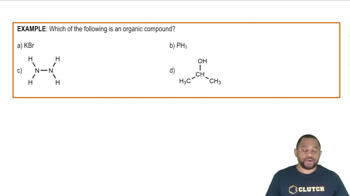
Introduction to Organic Chemistry Example 1

Reaction Mechanisms

A reaction mechanism describes the step-by-step process by which reactants are converted into products. It includes details about the breaking and forming of bonds, the role of catalysts, and the energy changes involved. Familiarity with common mechanisms, such as nucleophilic substitution or elimination reactions, is crucial for accurately completing organic equations and understanding the underlying chemistry.
Recommended video:
Guided course
1:30
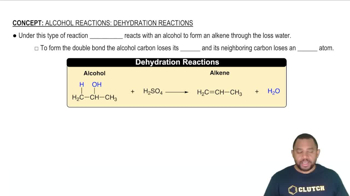
Alcohol Reactions: Dehydration Reactions Concept 1

Stoichiometry

Stoichiometry involves the calculation of reactants and products in chemical reactions based on the conservation of mass. It allows chemists to determine the proportions of substances involved in a reaction, which is vital for balancing equations. Mastery of stoichiometric principles ensures that the equations reflect the correct ratios of molecules, leading to accurate predictions of reaction outcomes.
Recommended video:
Guided course
01:16
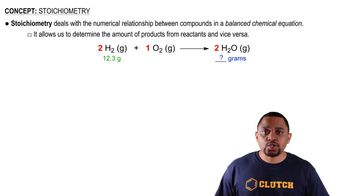
Stoichiometry