- 1. Introduction to Macroeconomics2h 3m
- 2. Introductory Economic Models1h 7m
- 3. Supply and Demand3h 23m
- Introduction to Supply and Demand4m
- The Basics of Demand6m
- Individual Demand and Market Demand3m
- Shifting Demand38m
- The Basics of Supply2m
- Individual Supply and Market Supply6m
- Shifting Supply28m
- Overview of Supply and Demand Shifts8m
- Supply and Demand Together: Equilibrium, Shortage, and Surplus8m
- Supply and Demand Together: One-sided Shifts20m
- Supply and Demand Together: Both Shift34m
- Supply and Demand: Quantitative Analysis40m
- 4. Elasticity2h 25m
- Percentage Change and Price Elasticity of Demand18m
- Elasticity and the Midpoint Method20m
- Price Elasticity of Demand on a Graph11m
- Determinants of Price Elasticity of Demand6m
- Total Revenue Test13m
- Total Revenue Along a Linear Demand Curve14m
- Income Elasticity of Demand23m
- Cross-Price Elasticity of Demand11m
- Price Elasticity of Supply12m
- Price Elasticity of Supply on a Graph3m
- Elasticity Summary9m
- 5. Consumer and Producer Surplus; Price Ceilings and Price Floors3h 19m
- WIllingness to Pay and Consumer Surplus22m
- Willingness to Sell and Producer Surplus16m
- Economic Surplus and Efficiency18m
- Quantitative Analysis of Consumer and Producer Surplus at Equilibrium28m
- Price Ceilings, Price Floors, and Black Markets38m
- Quantitative Analysis of Price Ceilings and Floors: Finding Points20m
- Quantitative Analysis of Price Ceilings and Floors: Finding Areas54m
- 6. Introduction to Taxes1h 29m
- 7. Externalities54m
- 8. The Types of Goods1h 8m
- 9. International Trade1h 16m
- 10. Introducing Economic Concepts49m
- Introducing Concepts - Business Cycle7m
- Introducing Concepts - Nominal GDP and Real GDP12m
- Introducing Concepts - Unemployment and Inflation3m
- Introducing Concepts - Economic Growth6m
- Introducing Concepts - Savings and Investment5m
- Introducing Concepts - Trade Deficit and Surplus6m
- Introducing Concepts - Monetary Policy and Fiscal Policy7m
- 11. Gross Domestic Product (GDP) and Consumer Price Index (CPI)1h 37m
- Calculating GDP11m
- Detailed Explanation of GDP Components9m
- Value Added Method for Measuring GDP1m
- Nominal GDP and Real GDP22m
- Shortcomings of GDP8m
- Calculating GDP Using the Income Approach10m
- Other Measures of Total Production and Total Income5m
- Consumer Price Index (CPI)13m
- Using CPI to Adjust for Inflation7m
- Problems with the Consumer Price Index (CPI)6m
- 12. Unemployment and Inflation1h 15m
- Labor Force and Unemployment9m
- Types of Unemployment12m
- Labor Unions and Collective Bargaining6m
- Unemployment: Minimum Wage Laws and Efficiency Wages7m
- Nominal Interest, Real Interest, and the Fisher Equation10m
- Nominal Income and Real Income12m
- Who is Affected by Inflation?5m
- Demand-Pull and Cost-Push Inflation6m
- Costs of Inflation: Shoe-leather Costs and Menu Costs4m
- 13. Productivity and Economic Growth1h 17m
- 14. The Financial System1h 37m
- 15. Income and Consumption52m
- 16. Deriving the Aggregate Expenditures Model1h 14m
- 17. Aggregate Demand and Aggregate Supply Analysis1h 18m
- Aggregate Demand12m
- Deriving Aggregate Demand from the Aggregate Expenditure Model12m
- Shifting Aggregate Demand9m
- Long Run Aggregate Supply9m
- Short Run Aggregate Supply7m
- Shifting Short Run Aggregate Supply8m
- AD-AS Model: Equilibrium in the Short Run and Long Run5m
- AD-AS Model: Shifts in Aggregate Demand14m
- 18. The Monetary System1h 1m
- The Functions of Money; The Kinds of Money8m
- Defining the Money Supply: M1 and M24m
- Required Reserves and the Deposit Multiplier8m
- Introduction to the Federal Reserve8m
- The Federal Reserve and the Money Supply11m
- History of the US Banking System9m
- The Financial Crisis of 2007-2009 (The Great Recession)10m
- 19. Monetary Policy1h 32m
- 20. Fiscal Policy52m
- 21. Revisiting Inflation, Unemployment, and Policy46m
- 22. Balance of Payments30m
- 23. Exchange Rates1h 16m
- Exchange Rates: Introduction14m
- Exchange Rates: Nominal and Real13m
- Exchange Rates: Equilibrium6m
- Exchange Rates: Shifts in Supply and Demand11m
- Exchange Rates and Net Exports6m
- Exchange Rates: Fixed, Flexible, and Managed Float5m
- Exchange Rates: Purchasing Power Parity7m
- The Gold Standard4m
- The Bretton Woods System6m
- 24. Macroeconomic Schools of Thought40m
- 25. Dynamic AD/AS Model35m
- 26. Special Topics11m
PPF - Comparative Advantage and Absolute Advantage: Videos & Practice Problems
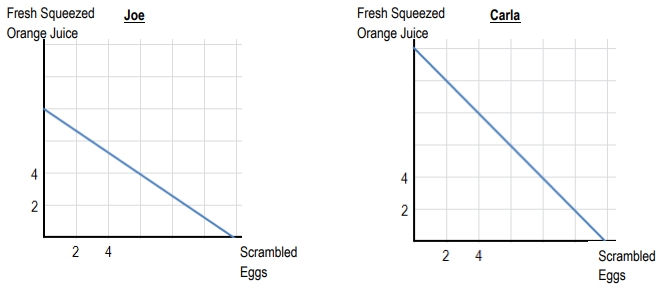
Who has the absolute advantage in making scrambled eggs?

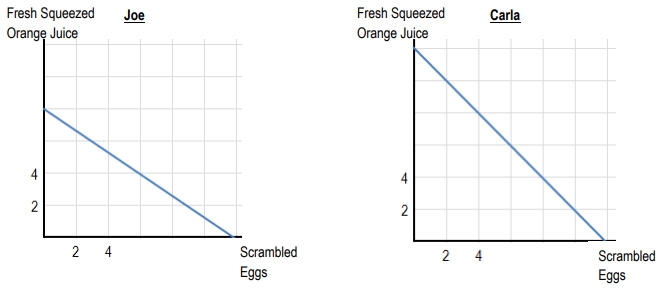
Who has the absolute advantage in making fresh squeezed orange juice?
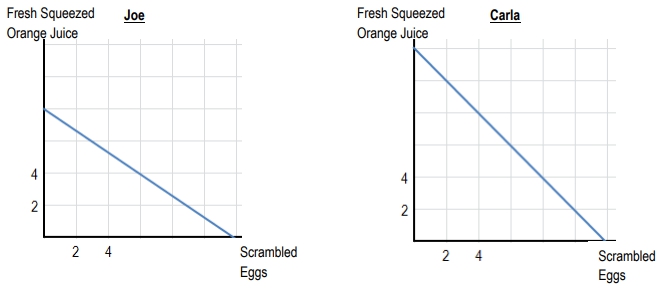
Who has the comparative advantage in making scrambled eggs?
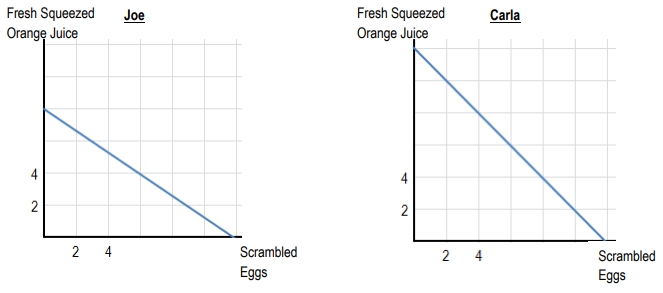
Who has the comparative advantage in making fresh squeezed orange juice?
Do you want more practice?
Here’s what students ask on this topic:
Absolute advantage refers to the ability of an individual, firm, or country to produce more of a good using the same amount of resources compared to others. For example, if your friend can produce 30 pizza rolls while you can only produce 10 with the same resources, your friend has the absolute advantage in pizza rolls. Comparative advantage, on the other hand, focuses on producing a good at a lower opportunity cost. It means specializing in the good you give up less of when producing. Even if one person has an absolute advantage in both goods, there is always a comparative advantage for each good. This concept is crucial for understanding trade and specialization because it shows how parties can benefit by focusing on what they produce most efficiently relative to what they sacrifice.
To calculate the opportunity cost of producing one good, you divide the maximum amount of the other good that could be produced by the maximum amount of the good in question. For example, if you can produce a maximum of 20 gallons of hunch punch or 10 batches of pizza rolls, the opportunity cost of 1 pizza roll is given by the MathML equation: , which equals 2 gallons of hunch punch. This means producing one pizza roll costs you 2 gallons of hunch punch. Conversely, the opportunity cost of 1 gallon of hunch punch is = 0.5 pizza rolls. This method helps identify which good has a lower opportunity cost and thus comparative advantage.
Specialization based on comparative advantage allows individuals or countries to produce goods at a lower opportunity cost, increasing overall efficiency. When each party focuses on producing the good they can make most efficiently, total production rises. For example, if you specialize in producing hunch punch because your opportunity cost is lower, and your friend specializes in pizza rolls, both of you can trade to enjoy more of both goods than if you tried to produce both independently. This leads to better resource allocation, higher aggregate supply, and mutual gains from trade, which are fundamental concepts in macroeconomics and international trade theory.
Yes, a person or country can have an absolute advantage in producing both goods, meaning they can produce more of each good with the same resources. However, comparative advantage still applies because it depends on opportunity cost, not absolute output. Even if your friend produces more pizza rolls and hunch punch, you might have a lower opportunity cost in producing one of the goods. For instance, if your opportunity cost of producing hunch punch is lower than your friend's, you have a comparative advantage in hunch punch. This difference in opportunity costs allows for beneficial trade and specialization despite one party having absolute advantages in both goods.
The Production Possibilities Frontier (PPF) graphically shows the maximum combinations of two goods that can be produced with fixed resources and technology. The slope of the PPF represents the opportunity cost of one good in terms of the other. A steeper slope means a higher opportunity cost. By comparing the slopes of two producers' PPFs, we can identify who has the lower opportunity cost for each good, indicating comparative advantage. Specializing according to comparative advantage allows producers to operate on points beyond their individual PPFs through trade, increasing overall production and consumption possibilities.