Pearson+ LogoPearson+ Logo
Ch. 15 - Recombinant DNA Technology and Its Applications
Sanders - Genetic Analysis: An Integrated Approach 3rd Edition
Sanders3rd EditionGenetic Analysis: An Integrated ApproachISBN: 9780135564172Not the one you use?Change textbook
Chapter 15, Problem 10

Why are diseases of the blood simpler targets for treatment by gene therapy than are many other genetic diseases?

Verified step by step guidance
1
Understand that blood diseases often involve a single type of cell, such as red blood cells or white blood cells, which makes targeting them more straightforward.
Recognize that blood cells are derived from hematopoietic stem cells in the bone marrow, which can be accessed and modified outside the body before being reintroduced.
Consider that blood cells can be easily sampled and monitored, allowing for effective tracking of the therapy's progress and success.
Acknowledge that the circulatory system allows for the widespread distribution of modified cells throughout the body, enhancing the effectiveness of the treatment.
Note that many blood diseases are caused by single-gene mutations, making them ideal candidates for correction through gene therapy techniques.

Verified video answer for a similar problem:

This video solution was recommended by our tutors as helpful for the problem above.
Video duration:
2m
Was this helpful?

Key Concepts

Here are the essential concepts you must grasp in order to answer the question correctly.

Gene Therapy

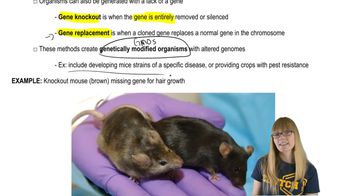
Gene therapy is a technique that modifies or replaces faulty genes to treat or prevent diseases. It can involve delivering healthy copies of genes into a patient's cells or repairing defective genes. This approach is particularly promising for genetic disorders, as it addresses the root cause of the disease at the molecular level.
Recommended video:
Guided course
09:12
Transgenic Organisms and Gene Therapy

Blood Disorders

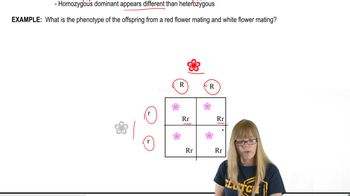
Blood disorders, such as hemophilia or sickle cell disease, often involve specific genetic mutations that affect blood cell function. These conditions are generally more accessible for gene therapy because blood cells can be easily extracted, modified, and reintroduced into the body, allowing for targeted treatment of the affected cells.
Recommended video:
Guided course
04:37
Variations on Dominance

Targeted Delivery Systems

Targeted delivery systems are methods used to direct therapeutic agents specifically to the cells or tissues that need treatment. In the case of blood disorders, these systems can effectively deliver gene therapy vectors to the bloodstream, ensuring that the therapeutic genes reach the appropriate cells, which enhances the efficacy of the treatment.
Recommended video:
Related Practice
Textbook Question

Figure E.1 illustrates the results of an electrophoretic analysis of 13 CODIS STR markers on a DNA sample and identifies the alleles for each gene. Table E.2 lists the frequencies for alleles of three of the STRs shown in the figure. Use this information to calculate the frequency of the genotype for STR genes FGA, vWA, and D3S1358 given in Figure E.1.

Textbook Question
Chimeric gene-fusion products can be used for medical or industrial purposes. One idea is to produce biological therapeutics for human medical use in animals from which the products can be easily harvested—in the milk of sheep or cattle, for example. Outline how you would produce human insulin in the milk of sheep.
Textbook Question

Additional STR allele frequency information can be added to improve the analysis in Problem 8. The frequency of D8S1179₁₂ = 0.12. The frequency of D16S539₁₈ = 0.08 and of D16S539₂₀ = 0.21. Lastly, D18S51₁₉ = 0.13 and D18S51₂₀ = 0.10. Combine the allele frequency information for these three STR genes with the information used in Problem 8 to calculate the frequency of the genotype for six of the STR genes.

Textbook Question

The frequencies of the four alleles contributed to the child by possible father F1 in Problem 7 are 0.18, 0.23, 0.13, and 0.14. Make a statement about the possible paternity of F1 based on this analysis.

Textbook Question

The frequencies of the four alleles contributed to the child by possible father F1 in Problem 7 are 0.18, 0.23, 0.13, and 0.14. Calculate the Combined Paternity Index (CPI) for the four genes in this analysis.

5
views
Textbook Question

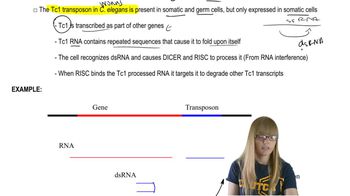
Injection of double-stranded RNA can lead to gene silencing by degradation of RNA molecules complementary to either strand of the dsRNA. Could RNAi be used in gene therapy for a defect caused by a recessive allele? A dominant allele? If so, what might be the major obstacle to using RNAi as a therapeutic agent?