Radiation is frequently used as part of the treatment of cancer. The radiation works by damaging DNA and components of the cell. Under what circumstances do you think radiation treatment is a good choice to treat cancer?
Ch. 14 - Analysis of Gene Function via Forward Genetics and Reverse Genetics

Sanders3rd EditionGenetic Analysis: An Integrated ApproachISBN: 9780135564172Not the one you use?Change textbook
All textbooks
Sanders 3rd Edition
Ch. 14 - Analysis of Gene Function via Forward Genetics and Reverse Genetics
Problem C.6b
Sanders 3rd Edition
Ch. 14 - Analysis of Gene Function via Forward Genetics and Reverse Genetics
Problem C.6bChapter 14, Problem C.6b
Radiation is frequently used as part of the treatment of cancer. The radiation works by damaging DNA and components of the cell. Is there a risk of damage to noncancer cells?
Verified step by step guidance1
Understand that radiation therapy targets rapidly dividing cancer cells by damaging their DNA, which prevents them from replicating and surviving.
Recognize that noncancerous (normal) cells in the vicinity of the treatment area can also be exposed to radiation, as the radiation is not perfectly selective.
Consider that DNA damage in noncancer cells can lead to cell death or mutations, which may cause side effects or long-term risks such as secondary cancers.
Explore the concept of differential sensitivity, where some normal cells may be more resistant or able to repair DNA damage better than cancer cells, influencing the extent of risk.
Conclude that while radiation therapy aims to minimize harm to normal cells, there is an inherent risk of damage to noncancer cells due to the nature of radiation exposure.

Verified video answer for a similar problem:
This video solution was recommended by our tutors as helpful for the problem above.
Video duration:
2mWas this helpful?
Key Concepts
Here are the essential concepts you must grasp in order to answer the question correctly.
Mechanism of Radiation Therapy
Radiation therapy uses high-energy radiation to damage the DNA of cancer cells, preventing their replication and leading to cell death. It targets rapidly dividing cells but can also affect other cells in the treatment area.
Recommended video:
Guided course
Transgenic Organisms and Gene Therapy
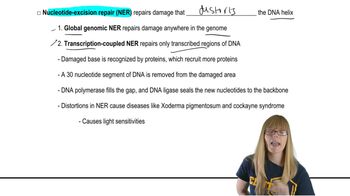
DNA Damage and Repair
Radiation causes breaks and mutations in DNA strands. While cancer cells often have impaired repair mechanisms, normal cells can sometimes repair this damage, but excessive damage may lead to cell death or mutations.
Recommended video:
Guided course
Repair Pathways
Effects on Noncancerous Cells
Noncancerous cells near the radiation site can also be damaged because radiation is not perfectly selective. This can cause side effects and risks, as healthy tissue may be harmed during treatment.
Recommended video:
Guided course
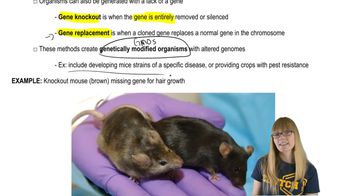
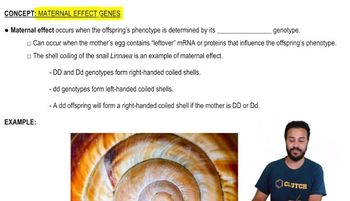
Maternal Effect
Related Practice
Textbook Question
Textbook Question
What are the advantages and disadvantages of using insertion alleles versus alleles generated by chemicals (as in TILLING) in reverse genetic studies?
Textbook Question
You have cloned the mouse ortholog of the gene associated with human Huntington disease (HD) and wish to examine its expression in mice. Outline the approaches you might take to examine the temporal and spatial expression pattern at the cellular level.
Textbook Question
Radiation is frequently used as part of the treatment of cancer. The radiation works by damaging DNA and components of the cell. How can radiation treatment control or cure cancer?
Textbook Question
Diagram the mechanism by which CRISPR–Cas functions in the immune system of bacteria and archaea.
Textbook Question
Why do most cancers require the mutation of multiple genes?