Back
Back
Problem 2.c.2
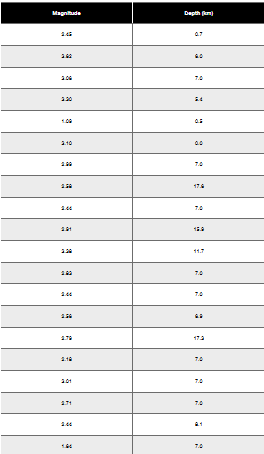
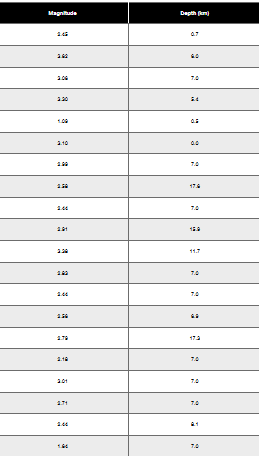
In Exercises 1–5, use the data listed in the margin, which are magnitudes (Richter scale) and depths (km) of earthquakes from Data Set 24 “Earthquakes” in Appendix B
[Image]
Frequency Distribution For the frequency distribution from Exercise 1, find the following.
a. Class limits of the first class
b. Class boundaries of the first class
c. Class midpoint of the first class
Problem 2.c.1
In Exercises 1–5, use the data listed in the margin, which are magnitudes (Richter scale) and depths (km) of earthquakes from Data Set 24 “Earthquakes” in Appendix B
Frequency Distribution Construct a frequency distribution of the magnitudes. Use a class width of 0.50 and use a starting value of 1.00.
Problem 2.c.3
In Exercises 1–5, use the data listed in the margin, which are magnitudes (Richter scale) and depths (km) of earthquakes from Data Set 24 “Earthquakes” in Appendix B
Histogram Construct the histogram corresponding to the frequency distribution from Exercise 1. For the values on the horizontal axis, use the class midpoint values. Which of the following comes closest to describing the distribution: uniform, normal, skewed left, skewed right?
Problem 2.4.4d
Estimating r For each of the following, estimate the value of the linear correlation coefficient r for the given paired data obtained from 50 randomly selected adults.
d. The 50 adults all drove cars from Jacksonville, Florida, to Richmond, Virginia. Their average (mean) speeds are recorded along with the times it took to complete that trip.
Problem 2.2.19d
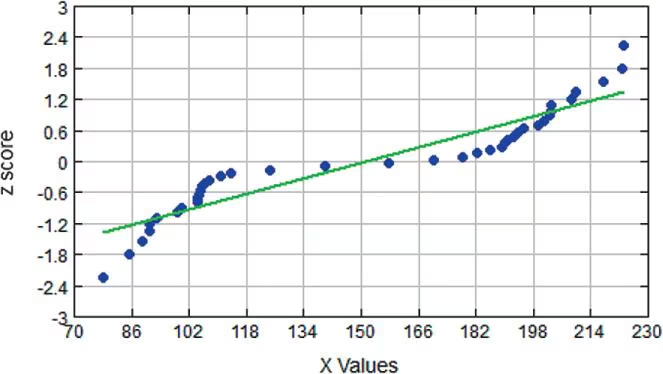
Interpreting Normal Quantile Plots Which of the following normal quantile plots appear to represent data from a population having a normal distribution? Explain.
Problem 2.q.2
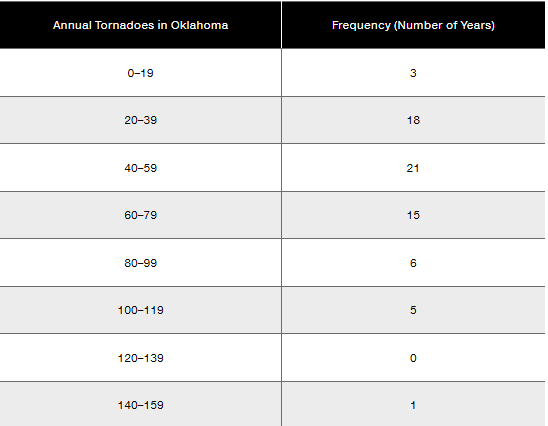
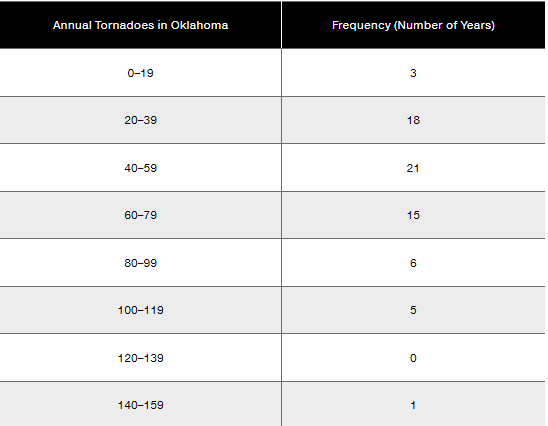
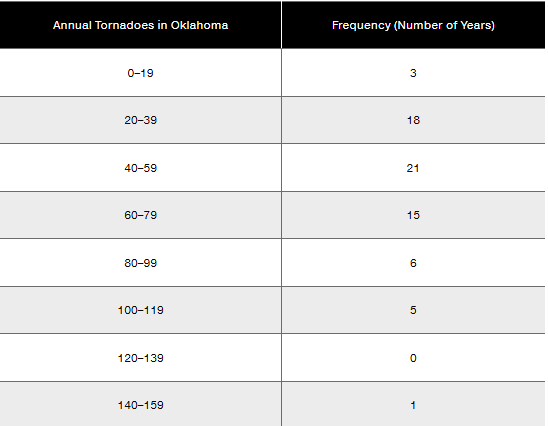
Tornado Alley Using the same frequency distribution from Exercise 1, identify the class limits of the first class and the class boundaries of the first class.
Problem 2.q.4
Tornado Alley Construct the relative frequency distribution corresponding to the frequency distribution in Exercise 1
Problem 2.q.1
Tornado Alley Refer to the accompanying frequency distribution that summarizes the number of tornadoes in Oklahoma in each year for the past several years. What is the class width? Is it possible to identify the original data values?
Problem 2.r.2
Histogram of Interarrival Times Construct the histogram that corresponds to the frequency distribution from Exercise 1. Use class midpoint values for the horizontal scale. Does the histogram suggest that the data are from a population having a normal distribution? Why or why not?
Problem 3.2.23
In Exercises 21–24, find the coefficient of variation for each of the two samples; then compare the variation. (The same data were used in Section 3-1.)
Pulse Rates Listed below are pulse rates (beats per minute) from samples of adult males and females (from Data Set 1 “Body Data” in Appendix B). Does there appear to be a difference?
[IMAGE]