Pearson+ LogoPearson+ Logo
Ch. 20 - Population Genetics and Evolution at the Population, Species, and Molecular Levels
Sanders - Genetic Analysis: An Integrated Approach 3rd Edition
Sanders3rd EditionGenetic Analysis: An Integrated ApproachISBN: 9780135564172Not the one you use?Change textbook
Chapter 20, Problem 16

Certain animal species, such as the black-footed ferret, are nearly extinct and currently exist only in captive populations. Other species, such as the panda, are also threatened but exist in the wild thanks to intensive captive breeding programs. What strategies would you suggest in the case of black-footed ferrets and in the case of pandas to monitor and minimize inbreeding depression?

Verified step by step guidance
1
Understand the concept of inbreeding depression: Inbreeding depression refers to the reduced biological fitness in a population due to mating between closely related individuals, which increases the likelihood of harmful recessive alleles being expressed. This is particularly relevant in small populations like those of black-footed ferrets and pandas.
For black-footed ferrets (captive populations): Suggest implementing genetic monitoring programs to assess genetic diversity. Use molecular techniques such as DNA sequencing or microsatellite analysis to identify genetic markers and track allele frequencies over generations.
For black-footed ferrets: Develop a breeding strategy that prioritizes maximizing genetic diversity. This can include pairing individuals with the least genetic similarity based on genetic data, and introducing individuals from other populations (if available) to increase genetic variation.
For pandas (wild populations with captive breeding programs): Monitor genetic diversity in both wild and captive populations using similar molecular techniques. Ensure that captive-bred individuals released into the wild are genetically diverse and do not exacerbate inbreeding in the wild population.
For pandas: Establish habitat corridors to connect fragmented wild populations, allowing for natural gene flow between groups. This reduces the risk of inbreeding depression by increasing the effective population size and promoting genetic exchange.

Verified video answer for a similar problem:

This video solution was recommended by our tutors as helpful for the problem above.
Video duration:
1m
Was this helpful?

Key Concepts

Here are the essential concepts you must grasp in order to answer the question correctly.

Inbreeding Depression

Inbreeding depression refers to the reduced biological fitness in a population due to inbreeding, which increases the likelihood of offspring inheriting deleterious alleles. This phenomenon can lead to a decrease in genetic diversity, resulting in lower survival rates, reproductive success, and overall health of the population. Understanding inbreeding depression is crucial for managing captive breeding programs and ensuring the long-term viability of endangered species.
Recommended video:
Guided course
07:55
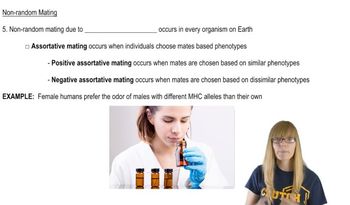
Non-Random Mating

Genetic Monitoring

Genetic monitoring involves assessing the genetic diversity and health of a population through techniques such as DNA analysis. This process helps identify levels of inbreeding, genetic drift, and the presence of harmful alleles. By regularly monitoring genetic variation, conservationists can make informed decisions about breeding strategies to enhance genetic diversity and reduce the risks associated with inbreeding depression.
Recommended video:
Guided course
03:45
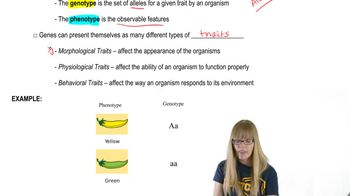
Descriptive Genetics

Captive Breeding Programs

Captive breeding programs are conservation efforts aimed at breeding endangered species in controlled environments to increase their population size and genetic diversity. These programs often involve careful selection of breeding pairs to avoid inbreeding and may include strategies like cross-fostering or introducing individuals from different populations. Effective captive breeding can help re-establish wild populations and ensure the survival of species like the black-footed ferret and the panda.
Recommended video:
Guided course
08:28
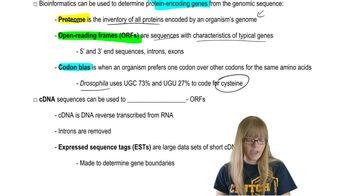
Bioinformatics
Related Practice
Textbook Question

The mtDNA sequence of Neanderthals is more similar to that of modern humans than to that of Denisovans. However, analyses of nuclear DNA clearly indicate that Neandertals and Denisovans share a more recent common ancestor than either of these hominins shares with modern humans. Propose a hypothesis to resolve the discrepancy between the mtDNA and the nuclear genome.

2
views
Textbook Question
What is inbreeding depression? Why is inbreeding depression a serious concern for animal biologists involved in species-conservation breeding programs?
Textbook Question

If you were to compare your genome sequence with that of your parents, how would it differ? If you were to compare your genome sequence with another student's in the class, how would it differ? What additional difference might you see if your genome was compared with that of a sub-Saharan African, or if you are of sub-Saharan African descent, with that of a non-African?

1
views
Textbook Question

Genetic Analysis 20.1 predicts the number of individuals expected to have the blood group genotypes MM, MN, and NN. Perform a chi-square analysis using the number of people observed and expected in each blood-type category, and state whether the sample is in H-W equilibrium.

7
views
Textbook Question

In a population of rabbits, f(C₁) = 0.70 and f(C₂) = 0.30. The alleles exhibit an incomplete dominance relationship in which C₁C₁ produces black rabbits, C₁C₂ produces tan-colored rabbits, and C₂C₂ produces rabbits with white fur. If the assumptions of the Hardy–Weinberg principle apply to the rabbit population, what are the expected frequencies of black, tan, and white rabbits?

4
views
Textbook Question

Sickle cell disease (SCD) is found in numerous populations whose ancestral homes are in the malaria belt of Africa and Asia. SCD is an autosomal recessive disorder that results from homozygosity for a mutant β-globin gene allele. Data on one affected population indicates that approximately 8 in 100 newborn infants have SCD.

What are the frequencies of the wild-type (βᴬ) and mutant (βˢ) alleles in this population?