Pearson+ LogoPearson+ Logo
Ch.11 Introduction to Organic Chemistry: Hydrocarbons
Timberlake - Chemistry: An Introduction to General, Organic, and Biological Chemistry 13th Edition
Timberlake13th EditionChemistry: An Introduction to General, Organic, and Biological ChemistryISBN: 9780134421353Not the one you use?Change textbook
Chapter 11, Problem 33b

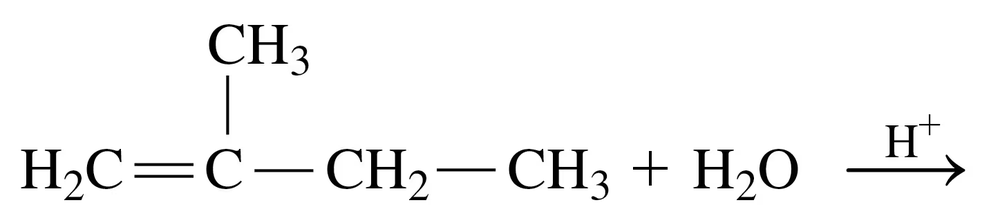
Draw the structural formula for the product in each of the following reactions:
b. Structural formula of an alkene reacting with water and an acid catalyst, showing the reactants and products.

Verified step by step guidance
1
Identify the type of reaction depicted in the image (e.g., addition, substitution, elimination, etc.). This will help determine the structural changes occurring in the reactants.
Analyze the reactants and reagents provided in the reaction. Look for functional groups, double or triple bonds, and any catalysts or conditions that might influence the reaction.
Determine the mechanism of the reaction. For example, if it is an addition reaction, consider whether it is electrophilic or nucleophilic addition and how the reactants interact.
Predict the structural formula of the product by applying the reaction mechanism. Modify the reactant structure accordingly, ensuring that all bonds and atoms are accounted for.
Verify the product by checking for proper valency of atoms, ensuring that the reaction follows the rules of organic chemistry, and confirming that the product matches the expected outcome of the reaction type.

Verified video answer for a similar problem:

This video solution was recommended by our tutors as helpful for the problem above.
Was this helpful?

Key Concepts

Here are the essential concepts you must grasp in order to answer the question correctly.

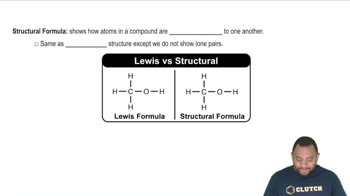
Structural Formula

A structural formula represents the arrangement of atoms within a molecule, showing how they are bonded together. It provides detailed information about the connectivity of atoms, including single, double, or triple bonds, and can indicate the presence of functional groups. Understanding structural formulas is essential for predicting the reactivity and properties of chemical compounds.
Recommended video:
Guided course
1:01
Structural Formula Concept 2

Reaction Mechanism

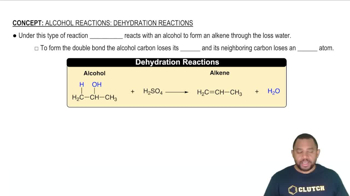
A reaction mechanism describes the step-by-step sequence of elementary reactions that occur during a chemical transformation. It outlines how reactants are converted into products, detailing the intermediates and transition states involved. Grasping the mechanism is crucial for predicting the outcome of a reaction and understanding the factors that influence its rate and selectivity.
Recommended video:
Guided course
1:30
Alcohol Reactions: Dehydration Reactions Concept 1

Functional Groups

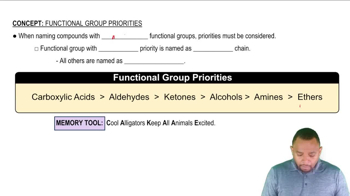
Functional groups are specific groups of atoms within molecules that are responsible for the characteristic chemical reactions of those molecules. They determine the properties and reactivity of organic compounds, influencing how they interact in chemical reactions. Identifying functional groups is vital for predicting the products of reactions and understanding the behavior of organic molecules.
Recommended video:
Guided course
1:11
Functional Group Priorities Concept 1