Back
Back
Problem 32
Factor into linear factors given that k is a zero. (multiplicity )
Problem 32a
Show that each polynomial function has a real zero as described in parts (a) and (b). In Exercises 31 and 32, also work part (c). ƒ(x)=4x3-37x2+50x+60 between 2 and 3
Problem 32b
Show that each polynomial function has a real zero as described in parts (a) and (b). In Exercises 31 and 32, also work part (c). ƒ(x)=4x3-37x2+50x+60 between 7 and 8
Problem 32c
Show that each polynomial function has a real zero as described in parts (a) and (b). In Exercises 31 and 32, also work part (c). ƒ(x)=4x^3-37x^2+50x+60 Find the zero in part (b) to three decimal places.
Problem 33
Solve each polynomial inequality. Give the solution set in interval notation. (x + 3)3(2x - 1)(x + 4) ≥ 0
Problem 33
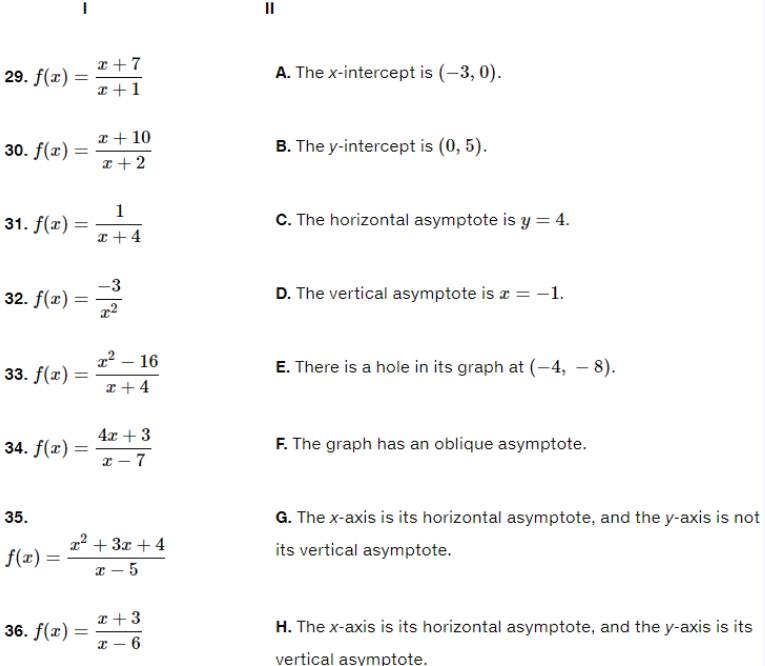
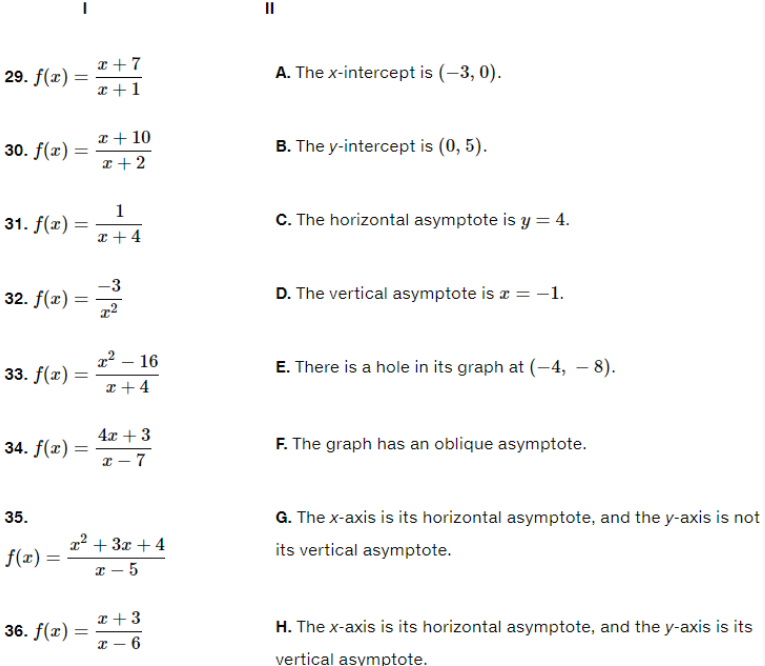
Match the rational function in Column I with the appropriate description in Column II. Choices in Column II can be used only once. ƒ(x)=(x2-16)/(x+4)
Problem 33
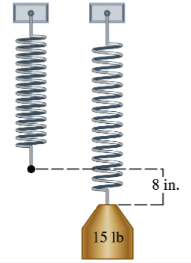
Hooke's Law for a Spring Hooke's law for an elastic spring states that the distance a spring stretches varies directly as the force applied. If a force of 15 lb stretches a certain spring 8 in., how much will a force of 30 lb stretch the spring?
Problem 33
For each polynomial function, use the remainder theorem to find ƒ(k). ƒ(x) = x2 + 5x+6; k = -2
Problem 33
For each polynomial function, one zero is given. Find all other zeros.
Problem 33a
Show that each polynomial function has a real zero as described in parts (a) and (b). In Exercises 31 and 32, also work part (c). ƒ(x)=6x^4+13x^3-11x^2-3x+5 no zero greater than 1
Problem 33b
Show that each polynomial function has a real zero as described in parts (a) and (b). In Exercises 31 and 32, also work part (c). ƒ(x)=6x^4+13x^3-11x^2-3x+5 no zero less than -3
Problem 34
For each polynomial function, one zero is given. Find all other zeros.
Problem 34
Graph each polynomial function. Factor first if the polynomial is not in factored form. ƒ(x)=x2(x-5)(x+3)(x-1)
Problem 34
Solve each problem. Use Descartes' rule of signs to determine the different possibilities for the numbers of positive, negative, and nonreal complex zeros of .
Problem 34
Graph each quadratic function. Give the (a) vertex, (b) axis, (c) domain, and (d) range. ƒ(x) = -3x2 + 24x - 46
Problem 35
Graph each polynomial function. Factor first if the polynomial is not in factored form. ƒ(x)=(3x-1)(x+2)2
Problem 35
Match the rational function in Column I with the appropriate description in Column II. Choices in Column II can be used only once. ƒ(x)=(x2+3x+4)/(x-5)
Problem 35
Solve each problem. Is x+1 a factor of ƒ(x)=x3+2x2+3x+2?
Problem 35
For each polynomial function, use the remainder theorem to find ƒ(k). ƒ(x) = 2x2 - 3x-3; k = 2
Problem 35
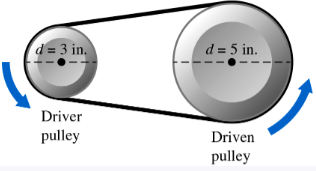
Solve each problem. The speed of a pulley varies inversely as its diameter. One kind of pulley, with diameter 3 in., turns at 150 revolutions per minute. Find the speed of a similar pulley with diameter 5 in.
Problem 36
For each polynomial function, use the remainder theorem to find ƒ(k). ƒ(x) = - x3 + 8x2 + 63; k=4
Problem 36
Graph each polynomial function. Factor first if the polynomial is not in factored form. ƒ(x)=(4x+3)(x+2)2
Problem 36
For each polynomial function, one zero is given. Find all other zeros.
Problem 37
Solve each problem. Find a polynomial function ƒ of degree 3 with -2, 1, and 4 as zeros, and ƒ(2)=16.
Problem 37
For each polynomial function, use the remainder theorem to find ƒ(k). ƒ(x) = x3 - 4x2 + 2x+1; k = -1
Problem 37
For each polynomial function, one zero is given. Find all other zeros.
Problem 37
Give the equations of any vertical, horizontal, or oblique asymptotes for the graph of each rational function. ƒ(x)=3/(x-5)
Problem 37
Determine the largest open interval of the domain (a) over which the function is increasing and (b) over which it is decreasing. ƒ(x) = (x + 3)2
Problem 37
Current Flow In electric current flow, it is found that the resistance offered by a fixed length of wire of a given material varies inversely as the square of the diameter of the wire. If a wire 0.01 in. in diameter has a resistance of 0.4 ohm, what is the resistance of a wire of the same length and material with diameter 0.03 in., to the nearest ten-thousandth of an ohm?
Problem 37
Graph each polynomial function. Factor first if the polynomial is not in factored form. ƒ(x)=x3+5x2-x-5