Back
Back
Problem 1
Fill in the blank(s) to correctly complete each sentence. If ƒ(x) = 4x, then ƒ(2) = and ƒ(-2) = ________.
Problem 6
Answer each of the following. Write log3 12 in terms of natural logarithms using the change-of-base theorem.
Problem 6
Fill in the blank(s) to correctly complete each sentence. The graph of ƒ(x) = -(1/3)x+4-5 is that of ƒ(x) = (1/3)x reflected across the ______ -axis, translated to the left ______ units and down _______ units.
Problem 7
Solve each equation. Round answers to the nearest hundredth as needed. (1/4)x=64
Problem 8
Solve each equation. Round answers to the nearest hundredth as needed. x2/3 =36
Problem 8
Answer each of the following. Between what two consecutive integers must log2 12 lie?
Problem 11
For ƒ(x) = 3x and g(x)= (1/4)x find each of the following. Round answers to the nearest thousandth as needed. See Example 1. ƒ(2)
Problem 11
If the statement is in exponential form, write it in an equivalent logarithmic form. If the statement is in logarithmic form, write it in exponential form. 34 = 81
Problem 11
Solve each equation. In Exercises 11–34, give irrational solutions as decimals correct to the nearest thousandth. In Exercises 35-40, give solutions in exact form. 3x = 7
Problem 11
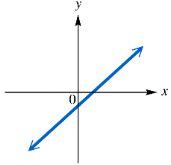
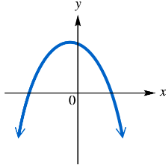
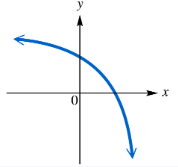
Determine whether each function graphed or defined is one-to-one.
Problem 11
Find each value. If applicable, give an approximation to four decimal places. log 1012
Problem 13
Solve each equation. In Exercises 11–34, give irrational solutions as decimals correct to the nearest thousandth. In Exercises 35-40, give solutions in exact form. (1/2)x = 5
Problem 13
For ƒ(x) = 3x and g(x)= (1/4)x find each of the following. Round answers to the nearest thousandth as needed. ƒ(-2)
Problem 13
Find each value. If applicable, give an approximation to four decimal places. log 0.1
Problem 13
Determine whether each function graphed or defined is one-to-one.
Problem 15
Find each value. If applicable, give an approximation to four decimal places. log 63
Problem 15
Solve each equation. In Exercises 11–34, give irrational solutions as decimals correct to the nearest thousandth. In Exercises 35-40, give solutions in exact form. 0.8x = 4
Problem 15
Determine whether each function graphed or defined is one-to-one.
Problem 15
For ƒ(x) = 3x and g(x)= (1/4)x find each of the following. Round answers to the nearest thousandth as needed. g(2)
Problem 16
For ƒ(x) = 3x and g(x)= (1/4)x find each of the following. Round answers to the nearest thousandth as needed. See Example 1. g(3)
Problem 16
If the statement is in exponential form, write it in an equivalent logarithmic form. If the statement is in logarithmic form, write it in exponential form. log5 5 = 1
Problem 17
Find each value. If applicable, give an approximation to four decimal places. log 0.0022
Problem 17
Determine whether each function graphed or defined is one-to-one. y = 2x - 8
Problem 17
If the statement is in exponential form, write it in an equivalent logarithmic form. If the statement is in logarithmic form, write it in exponential form.
Problem 17
Solve each equation. In Exercises 11–34, give irrational solutions as decimals correct to the nearest thousandth. In Exercises 35-40, give solutions in exact form. 4(x-1) = 32x
Problem 18
For ƒ(x) = 3x and g(x)= (1/4)x find each of the following. Round answers to the nearest thousandth as needed. See Example 1. g(-3)
Problem 18
If the statement is in exponential form, write it in an equivalent logarithmic form. If the statement is in logarithmic form, write it in exponential form. log4 1/64 = -3
Problem 19
Find each value. If applicable, give an approximation to four decimal places. log(387 23)
Problem 19
Solve each equation. In Exercises 11–34, give irrational solutions as decimals correct to the nearest thousandth. In Exercises 35-40, give solutions in exact form. 6(x+1) = 4(2x-1)
Problem 20
Determine whether each function graphed or defined is one-to-one. y = -√(100 - x2)