Back
Back
Problem 63
Use properties of logarithms to condense each logarithmic expression. Write the expression as a single logarithm whose coefficient is 1. Where possible, evaluate logarithmic expressions without using a calculator. (1/2)(log x + log y)
Problem 63
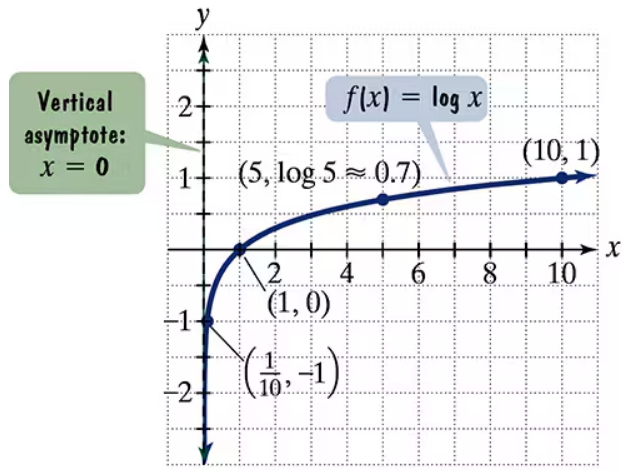
The figure shows the graph of f(x) = log x. In Exercises 59–64, use transformations of this graph to graph each function. Graph and give equations of the asymptotes. Use the graphs to determine each function's domain and range.
g(x) = 1-log x
Problem 63
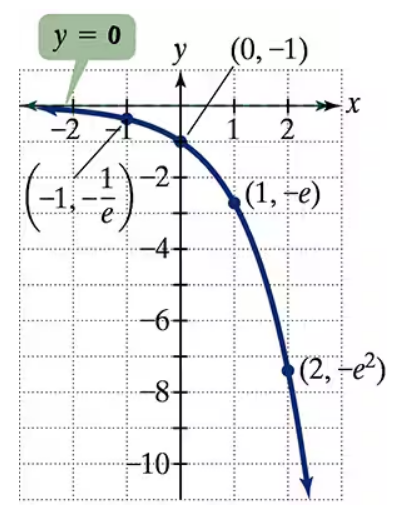
Give the equation of each exponential function whose graph is shown.
Problem 64
In Exercises 64–73, solve each exponential equation. Where necessary, express the solution set in terms of natural or common logarithms and use a calculator to obtain a decimal approximation, correct to two decimal places, for the solution. 2^(4x-2) = 64
Problem 65
Use properties of logarithms to condense each logarithmic expression. Write the expression as a single logarithm whose coefficient is 1. Where possible, evaluate logarithmic expressions without using a calculator.
Problem 65
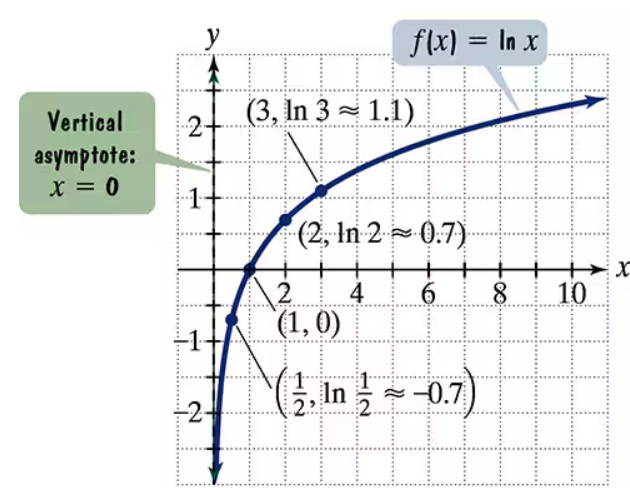
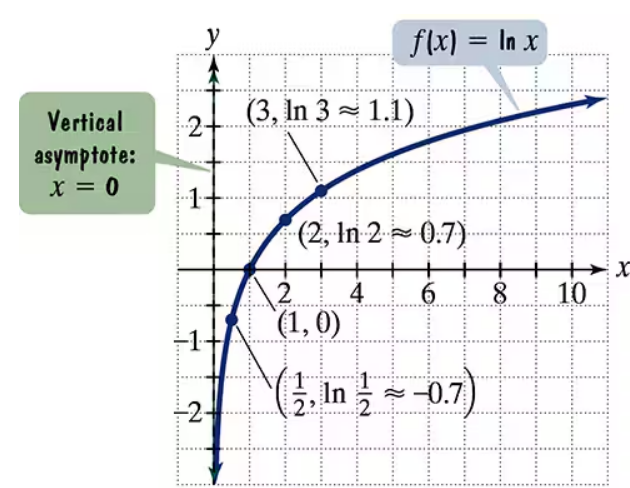
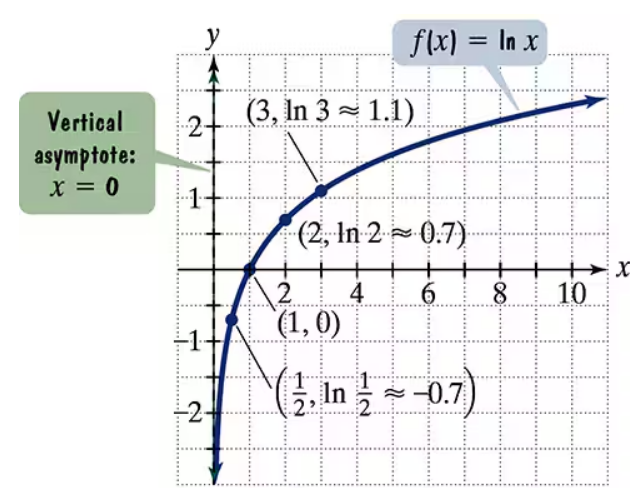
The figure shows the graph of f(x) = ln x. In Exercises 65–74, use transformations of this graph to graph each function. Graph and give equations of the asymptotes. Use the graphs to determine each function's domain and range. g(x) = ln (x+2)
Problem 65
Solve each logarithmic equation in Exercises 49–92. Be sure to reject any value of that is not in the domain of the original logarithmic expressions. Give the exact answer. Then, where necessary, use a calculator to obtain a decimal approximation, correct to two decimal places, for the solution.
Problem 66
In Exercises 64–73, solve each exponential equation. Where necessary, express the solution set in terms of natural or common logarithms and use a calculator to obtain a decimal approximation, correct to two decimal places, for the solution. 10^x = 7000
Problem 67
Use properties of logarithms to condense each logarithmic expression. Write the expression as a single logarithm whose coefficient is 1. Where possible, evaluate logarithmic expressions without using a calculator.
Problem 67
Solve each logarithmic equation in Exercises 49–92. Be sure to reject any value of x that is not in the domain of the original logarithmic expressions. Give the exact answer. Then, where necessary, use a calculator to obtain a decimal approximation, correct to two decimal places, for the solution. log5 x+log5(4x−1)=1
Problem 67
The figure shows the graph of f(x) = ln x. In Exercises 65–74, use transformations of this graph to graph each function. Graph and give equations of the asymptotes. Use the graphs to determine each function's domain and range.
h(x) = ln (2x)
Problem 68
The figure shows the graph of f(x) = ln x. In Exercises 65–74, use transformations of this graph to graph each function. Graph and give equations of the asymptotes. Use the graphs to determine each function's domain and range. h(x) = ln(x/2)
Problem 68
In Exercises 64–73, solve each exponential equation. Where necessary, express the solution set in terms of natural or common logarithms and use a calculator to obtain a decimal approximation, correct to two decimal places, for the solution.
Problem 69
Use properties of logarithms to condense each logarithmic expression. Write the expression as a single logarithm whose coefficient is 1. Where possible, evaluate logarithmic expressions without using a calculator.
Problem 69
Solve each logarithmic equation in Exercises 49–92. Be sure to reject any value of x that is not in the domain of the original logarithmic expressions. Give the exact answer. Then, where necessary, use a calculator to obtain a decimal approximation, correct to two decimal places, for the solution. log3(x+6)+log3(x+4)=1
Problem 69
The figure shows the graph of f(x) = ln x. In Exercises 65–74, use transformations of this graph to graph each function. Graph and give equations of the asymptotes. Use the graphs to determine each function's domain and range. g(x) = 2 ln x
Problem 71
In Exercises 71–78, use common logarithms or natural logarithms and a calculator to evaluate to four decimal places. log5 13
Problem 71
Solve each logarithmic equation in Exercises 49–92. Be sure to reject any value of x that is not in the domain of the original logarithmic expressions. Give the exact answer. Then, where necessary, use a calculator to obtain a decimal approximation, correct to two decimal places, for the solution. log2(x+2)−log2(x−5)=3
Problem 73
Solve each logarithmic equation in Exercises 49–92. Be sure to reject any value of x that is not in the domain of the original logarithmic expressions. Give the exact answer. Then, where necessary, use a calculator to obtain a decimal approximation, correct to two decimal places, for the solution. 2 log3(x+4)=log3 9 + 2
Problem 73
In Exercises 71–78, use common logarithms or natural logarithms and a calculator to evaluate to four decimal places. log14 87.5
Problem 75
Solve each logarithmic equation in Exercises 49–92. Be sure to reject any value of x that is not in the domain of the original logarithmic expressions. Give the exact answer. Then, where necessary, use a calculator to obtain a decimal approximation, correct to two decimal places, for the solution. log2(x−6)+log2(x−4)−log2 x=2
Problem 75
Find the domain of each logarithmic function. f(x) = log5(x+4)
Problem 75
In Exercises 71–78, use common logarithms or natural logarithms and a calculator to evaluate to four decimal places. log0.1 17
Problem 76
In Exercises 74–79, solve each logarithmic equation. log2 (x+3) + log2 (x-3) =4
Problem 77
Solve each logarithmic equation in Exercises 49–92. Be sure to reject any value of x that is not in the domain of the original logarithmic expressions. Give the exact answer. Then, where necessary, use a calculator to obtain a decimal approximation, correct to two decimal places, for the solution. log(x+4)=log x+log 4
Problem 77
Find the domain of each logarithmic function. f(x) = log (2 - x)
Problem 77
Use common logarithms or natural logarithms and a calculator to evaluate to four decimal places. logπ 63
Problem 79
Solve each logarithmic equation in Exercises 49–92. Be sure to reject any value of x that is not in the domain of the original logarithmic expressions. Give the exact answer. Then, where necessary, use a calculator to obtain a decimal approximation, correct to two decimal places, for the solution. log(3x−3)=log(x+1)+log 4
Problem 79
In Exercises 74–79, solve each logarithmic equation. log4 (2x+1) = log4 (x-3) + log4 (x+5)
Problem 79
Find the domain of each logarithmic function. f(x) = ln (x-2)²