
Pearson+ LogoPearson+ Logo
Ch. 9 - Cellular Respiration and Fermentation
Freeman - Biological Science 8th Edition
Freeman8th EditionBiological ScienceISBN: 9780138276263Not the one you use?Change textbook
Chapter 9, Problem 1

Where does the citric acid cycle occur in eukaryotes? a. in the cytosol of cells b. in the intermembrane space of mitochondria c. in the inner membrane of mitochondria d. in the matrix of mitochondria

Verified step by step guidance
1
Identify the location where the citric acid cycle occurs. The citric acid cycle, also known as the Krebs cycle, is a key metabolic pathway that generates energy through the oxidation of acetate derived from carbohydrates, fats, and proteins into carbon dioxide.
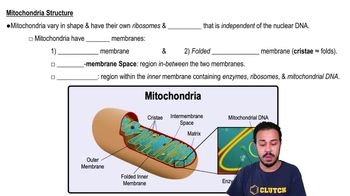
Understand the structure of mitochondria. Mitochondria have an outer membrane, an inner membrane, and two internal compartments: the intermembrane space and the matrix.
Recall that the citric acid cycle involves enzymes that catalyze the reactions of the cycle. These enzymes are located in a specific part of the mitochondria.
Eliminate incorrect options: The citric acid cycle does not occur in the cytosol (option a), the intermembrane space (option b), or the inner membrane (option c) of mitochondria.
Conclude that the correct answer is d. The citric acid cycle takes place in the matrix of mitochondria, where the necessary enzymes and conditions are present.

Verified video answer for a similar problem:

This video solution was recommended by our tutors as helpful for the problem above.
Video duration:
1m
Was this helpful?

Key Concepts

Here are the essential concepts you must grasp in order to answer the question correctly.

Citric Acid Cycle

The citric acid cycle, also known as the Krebs cycle, is a series of chemical reactions used by all aerobic organisms to generate energy. It plays a crucial role in cellular respiration by oxidizing acetyl-CoA to produce ATP, NADH, and FADH2, which are essential for energy production.
Recommended video:

Mitochondria

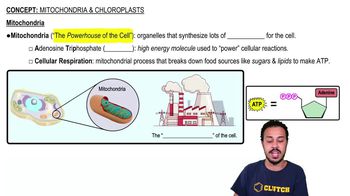
Mitochondria are membrane-bound organelles found in eukaryotic cells, often referred to as the 'powerhouses' of the cell. They are responsible for producing ATP through oxidative phosphorylation and are the site of the citric acid cycle, specifically within their inner compartments.
Recommended video:

Mitochondrial Matrix

The mitochondrial matrix is the innermost compartment of the mitochondria, enclosed by the inner membrane. It contains enzymes necessary for the citric acid cycle, as well as mitochondrial DNA and ribosomes, facilitating the production of proteins required for mitochondrial function.
Recommended video:
Guided course
04:45
Mitochondria Structure