
Textbook Question
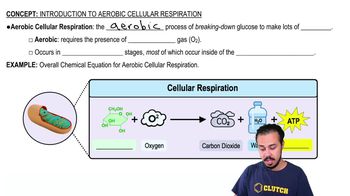
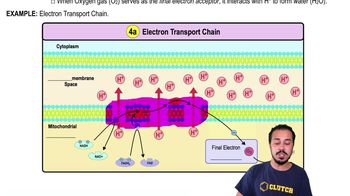
If you were to expose cells that are undergoing aerobic respiration to a radioactive oxygen isotope in the form of O2, which of the following molecules would you expect to be radiolabeled?
a. Pyruvate
b. Water
c. NADH
d. CO2



 Verified step by step guidance
 03:39
03:39
 07:41
07:41 04:36
04:36If you were to expose cells that are undergoing aerobic respiration to a radioactive oxygen isotope in the form of O2, which of the following molecules would you expect to be radiolabeled?
a. Pyruvate
b. Water
c. NADH
d. CO2
In step 3 of the citric acid cycle, the enzyme isocitrate dehydrogenase is regulated by NADH. Compare and contrast the regulation of this enzyme with the regulation of phosphofructokinase in glycolysis.
Explain the relationship between electron transport and oxidative phosphorylation. How do uncoupling proteins 'uncouple' this relationship in brown adipose tissue?
Cyanide (C ≡ N−) blocks complex IV of the electron transport chain. Suggest a hypothesis for what happens to the ETC when complex IV stops working. Your hypothesis should explain why cyanide poisoning in humans is fatal.
Early estimates suggested that the oxidation of glucose via aerobic respiration would produce 38 ATP. Based on what you know of the theoretical yields of ATP from cellular respiration, show how this total was determined. Why do biologists now think this amount of ATP per molecule of glucose is not achieved in cells?