
Textbook Question
Trees can be killed by girdling—the removal of bark and vascular cambium in a ring all the way around the tree. Explain why.


 Verified step by step guidance
 02:45
02:45
 07:52
07:52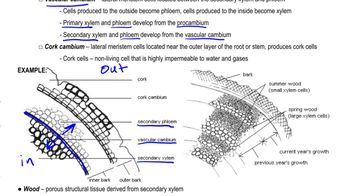 06:53
06:53Trees can be killed by girdling—the removal of bark and vascular cambium in a ring all the way around the tree. Explain why.
Plants experience a vast array of conditions that can alter their growth and development, including temperature and availability of water, nutrients, and light. They are also exposed to pollutants such as acid rain formed largely as a result of burning fossil fuels and volcanic eruptions. Acid rain can strip minerals and nutrients from the soil and eat away the outer waxy layer of tissue that protects a plant. Acid rain is still a major environmental problem in certain regions.
How does acid rain affect plant growth?
Develop a hypothesis on the likely effects of acid rain on primary growth in trees.
Based on your hypothesis, make some predictions about the impact of acid rain on the height of tree trunks.
Plants experience a vast array of conditions that can alter their growth and development, including temperature and availability of water, nutrients, and light. They are also exposed to pollutants such as acid rain formed largely as a result of burning fossil fuels and volcanic eruptions. Acid rain can strip minerals and nutrients from the soil, and eat away the outer waxy layer of tissue that protects a plant. Acid rain is still a major environmental problem in certain regions. How does acid rain affect plant growth? Researchers tested the effects of acid rain (pH 2.0) on seedlings of two different species, camphor tree (Cinnamomum camphora) and chinaberry tree (Melia azederach), using distilled water as a control. Results of the experiments are shown here. Note that acid rain caused a significant reduction of growth in chinaberry trees (*** means P < 0.001), but not in camphor trees. What was the approximate percentage of growth reduction observed in the chinaberry trees treated with acid rain?
Plants experience a vast array of conditions that can alter their growth and development, including temperature and availability of water, nutrients, and light. They are also exposed to pollutants such as acid rain formed largely as a result of burning fossil fuels and volcanic eruptions. Acid rain can strip minerals and nutrients from the soil, and eat away the outer waxy layer of tissue that protects a plant. Acid rain is still a major environmental problem in certain regions. How does acid rain affect plant growth? Give a plausible explanation for the differential effect of acid rain on height in camphor and chinaberry trees (i.e., what structural features might offer more protection from acid rain in one species versus another?).
Plants experience a vast array of conditions that can alter their growth and development, including temperature and availability of water, nutrients, and light. They are also exposed to pollutants such as acid rain formed largely as a result of burning fossil fuels and volcanic eruptions. Acid rain can strip minerals and nutrients from the soil and eat away the outer waxy layer of tissue that protects a plant. Acid rain is still a major environmental problem in certain regions. How does acid rain affect plant growth?
Based on the results presented here, predict the impact of acid rain on the vascular cambium in the two species.
How would that effect be apparent in the amount of wood produced in the tree trunks?
Plants experience a vast array of conditions that can alter their growth and development, including temperature and availability of water, nutrients, and light. They are also exposed to pollutants such as acid rain formed largely as a result of burning fossil fuels and volcanic eruptions. Acid rain can strip minerals and nutrients from the soil and eat away the outer waxy layer of tissue that protects a plant. Acid rain is still a major environmental problem in certain regions. How does acid rain affect plant growth?
Beyond primary and secondary growth, what other aspects of plant growth might be negatively affected when plants are exposed to environmental stress?