Pearson+ LogoPearson+ Logo
Ch. 34 - Plant Form and Function
Freeman - Biological Science 8th Edition
Freeman8th EditionBiological ScienceISBN: 9780138276263Not the one you use?Change textbook
Chapter 34, Problem 12b

Plants experience a vast array of conditions that can alter their growth and development, including temperature and availability of water, nutrients, and light. They are also exposed to pollutants such as acid rain formed largely as a result of burning fossil fuels and volcanic eruptions. Acid rain can strip minerals and nutrients from the soil, and eat away the outer waxy layer of tissue that protects a plant. Acid rain is still a major environmental problem in certain regions. How does acid rain affect plant growth? Researchers tested the effects of acid rain (pH 2.0) on seedlings of two different species, camphor tree (Cinnamomum camphora) and chinaberry tree (Melia azederach), using distilled water as a control. Results of the experiments are shown here. Note that acid rain caused a significant reduction of growth in chinaberry trees (*** means P < 0.001), but not in camphor trees. What was the approximate percentage of growth reduction observed in the chinaberry trees treated with acid rain?

Verified step by step guidance
1
Examine the graph provided, which shows the height of seedlings for two tree species: camphor tree and chinaberry tree. The graph compares the growth under two conditions: exposure to acid rain (pH 2.0) and distilled water.
Identify the height of chinaberry trees treated with distilled water and acid rain. From the graph, note the approximate height values for each condition.
Calculate the difference in height between chinaberry trees treated with distilled water and those treated with acid rain. This difference represents the reduction in growth due to acid rain.
To find the percentage reduction in growth, use the formula: \( \text{Percentage Reduction} = \frac{\text{Height with Distilled Water} - \text{Height with Acid Rain}}{\text{Height with Distilled Water}} \times 100 \).
Substitute the height values obtained from the graph into the formula to calculate the approximate percentage reduction in growth for chinaberry trees treated with acid rain.

Verified video answer for a similar problem:

This video solution was recommended by our tutors as helpful for the problem above.
Video duration:
3m
Was this helpful?

Key Concepts

Here are the essential concepts you must grasp in order to answer the question correctly.

Acid Rain

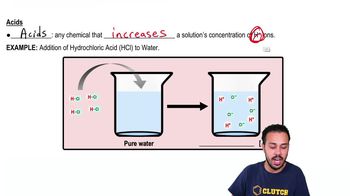
Acid rain is precipitation that has a lower pH than normal, typically due to pollutants like sulfur dioxide and nitrogen oxides from fossil fuel combustion. This acidic precipitation can harm plants by leaching essential nutrients from the soil and damaging protective plant tissues. Understanding the chemical composition and effects of acid rain is crucial for assessing its impact on plant health and growth.
Recommended video:

Plant Growth Responses

Plants exhibit various growth responses to environmental stressors, including changes in height, leaf development, and overall biomass. These responses can be measured quantitatively, such as through height measurements in experiments. The ability of different species to tolerate or adapt to stressors like acid rain can vary significantly, influencing their growth outcomes and survival.
Recommended video:
Guided course
06:53
Secondary Growth

Experimental Controls

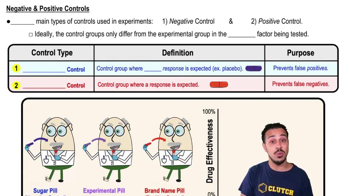
In scientific experiments, controls are essential for establishing a baseline for comparison. In this study, distilled water served as a control to assess the effects of acid rain (pH 2.0) on plant growth. By comparing the growth of seedlings treated with acid rain to those receiving distilled water, researchers can determine the specific impact of the acidic conditions on different plant species.
Recommended video:
Guided course
07:42
Negative & Positive Controls
Related Practice
Textbook Question

Identify the structure you are consuming when you eat each of the following: Asparagus, Brussels sprouts, celery, spinach, carrots, and potatoes.

Textbook Question

Trees can be killed by girdling—the removal of bark and vascular cambium in a ring all the way around the tree. Explain why.

Textbook Question

Plants experience a vast array of conditions that can alter their growth and development, including temperature and availability of water, nutrients, and light. They are also exposed to pollutants such as acid rain formed largely as a result of burning fossil fuels and volcanic eruptions. Acid rain can strip minerals and nutrients from the soil and eat away the outer waxy layer of tissue that protects a plant. Acid rain is still a major environmental problem in certain regions.

How does acid rain affect plant growth?

Develop a hypothesis on the likely effects of acid rain on primary growth in trees.

Based on your hypothesis, make some predictions about the impact of acid rain on the height of tree trunks.

Textbook Question

Plants experience a vast array of conditions that can alter their growth and development, including temperature and availability of water, nutrients, and light. They are also exposed to pollutants such as acid rain formed largely as a result of burning fossil fuels and volcanic eruptions. Acid rain can strip minerals and nutrients from the soil, and eat away the outer waxy layer of tissue that protects a plant. Acid rain is still a major environmental problem in certain regions. How does acid rain affect plant growth? Which meristem was likely affected in the chinaberry tree?

Textbook Question

Plants experience a vast array of conditions that can alter their growth and development, including temperature and availability of water, nutrients, and light. They are also exposed to pollutants such as acid rain formed largely as a result of burning fossil fuels and volcanic eruptions. Acid rain can strip minerals and nutrients from the soil, and eat away the outer waxy layer of tissue that protects a plant. Acid rain is still a major environmental problem in certain regions. How does acid rain affect plant growth? Give a plausible explanation for the differential effect of acid rain on height in camphor and chinaberry trees (i.e., what structural features might offer more protection from acid rain in one species versus another?).

Textbook Question

Plants experience a vast array of conditions that can alter their growth and development, including temperature and availability of water, nutrients, and light. They are also exposed to pollutants such as acid rain formed largely as a result of burning fossil fuels and volcanic eruptions. Acid rain can strip minerals and nutrients from the soil and eat away the outer waxy layer of tissue that protects a plant. Acid rain is still a major environmental problem in certain regions. How does acid rain affect plant growth?

Based on the results presented here, predict the impact of acid rain on the vascular cambium in the two species.

How would that effect be apparent in the amount of wood produced in the tree trunks?