
Pearson+ LogoPearson+ Logo
Ch. 26 - Bacteria and Archaea
Freeman - Biological Science 8th Edition
Freeman8th EditionBiological ScienceISBN: 9780138276263Not the one you use?Change textbook
Chapter 26, Problem 7

The text claims that the evolution of an oxygen-rich atmosphere paved the way for increasingly efficient cellular respiration and higher growth rates in organisms. Explain.

Verified step by step guidance
1
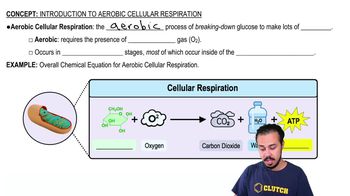
Understand the role of oxygen in cellular respiration: Cellular respiration is the process by which cells convert glucose and oxygen into energy (ATP), carbon dioxide, and water. Oxygen acts as the final electron acceptor in the electron transport chain, enabling efficient ATP production.
Compare aerobic and anaerobic respiration: Aerobic respiration (using oxygen) produces significantly more ATP per glucose molecule compared to anaerobic respiration (which occurs in the absence of oxygen). This increased energy yield allows organisms to sustain higher metabolic rates and more complex activities.
Link oxygen availability to evolutionary advantages: The evolution of an oxygen-rich atmosphere provided organisms with the ability to perform aerobic respiration, which supports higher energy demands. This enabled the development of larger, multicellular organisms and more complex biological systems.
Discuss the impact on growth rates: With more efficient energy production through aerobic respiration, organisms could allocate more resources to growth, reproduction, and repair, leading to higher growth rates and evolutionary success.
Connect to ecological and evolutionary changes: The oxygen-rich atmosphere also allowed for diversification of life forms, including the emergence of more complex ecosystems and adaptations that rely on high energy availability, such as active movement and predation.

Verified video answer for a similar problem:

This video solution was recommended by our tutors as helpful for the problem above.
Video duration:
1m
Was this helpful?

Key Concepts

Here are the essential concepts you must grasp in order to answer the question correctly.

Cellular Respiration

Cellular respiration is the biochemical process by which cells convert glucose and oxygen into energy, carbon dioxide, and water. This process is essential for producing ATP (adenosine triphosphate), the energy currency of the cell. The efficiency of cellular respiration increases with the availability of oxygen, allowing organisms to generate more energy to support growth and metabolic activities.
Recommended video:
Guided course
03:39
Introduction to Cellular Respiration

Oxygen-Rich Atmosphere

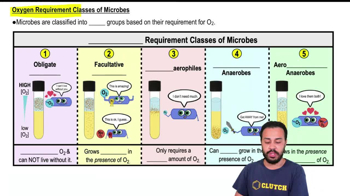
An oxygen-rich atmosphere refers to an environment where oxygen levels are significantly higher than those found in an anaerobic atmosphere. The Great Oxygenation Event, which occurred around 2.4 billion years ago, led to a dramatic increase in atmospheric oxygen due to photosynthetic organisms. This shift enabled aerobic organisms to thrive, as they could utilize oxygen for more efficient energy production.
Recommended video:
Guided course
07:27
Oxygen Requirement Classes of Microbes

Evolution and Growth Rates

Evolution is the process through which species adapt over time through natural selection, leading to changes in traits that enhance survival and reproduction. An oxygen-rich atmosphere allowed for the evolution of more complex life forms, as higher energy availability supported larger body sizes and faster growth rates. This evolutionary advantage facilitated the diversification of life and the development of more intricate ecosystems.
Recommended video:
Guided course
03:26
Population Growth Rate vs. Per Capita Population Growth Rate
Related Practice
Textbook Question

Evaluate these statements about Koch's postulates, which are used to establish a causative link between a specific microbe and a specific disease. Select True or False for each statement.

T/FThe microbe must be present in individuals suffering from the disease and absent from healthy individuals.

T/FThe microbe must be isolated and grown in pure culture.

T/FIf organisms from the pure culture are injected into a healthy experimental animal, the disease symptoms should appear.

T/FThe microbe does not have to be isolated from the experimental animal as long as the disease is present.

Textbook Question

What has metagenomic analysis allowed researchers to do for the first time? a. sample organisms from an environment and grow them under defined conditions in the lab b. isolate organisms from an environment and sequence their entire genome c. study organisms that cannot be cultured (grown in the lab) d. identify important morphological differences among species

Textbook Question

Biologists often use the term 'energy source' as a synonym for 'electron donor.' Why?

Textbook Question

Streptococcus mutans obtains energy by oxidizing sucrose. This bacterium is abundant in the mouths of Western European and North American children and is a prominent cause of cavities. The organism is virtually absent in children from East Africa, where tooth decay is rare. Propose a hypothesis to explain this observation. Outline the design of a study that would test your hypothesis.

Textbook Question

Suppose that you've been hired by a firm interested in using bacteria to clean up organic solvents found in toxic waste dumps. Your new employer is particularly interested in finding cells that are capable of breaking a molecule called benzene into less-toxic compounds. Where would you go to look for bacteria that can metabolize benzene as an energy or carbon source? How would you design an enrichment culture capable of isolating benzene-metabolizing species?