Pearson+ LogoPearson+ Logo
Ch.14 Carboxylic Acids, Esters, Amines, and Amides
Timberlake - Chemistry: An Introduction to General, Organic, and Biological Chemistry 13th Edition
Timberlake13th EditionChemistry: An Introduction to General, Organic, and Biological ChemistryISBN: 9780134421353Not the one you use?Change textbook
Chapter 14, Problem 62d

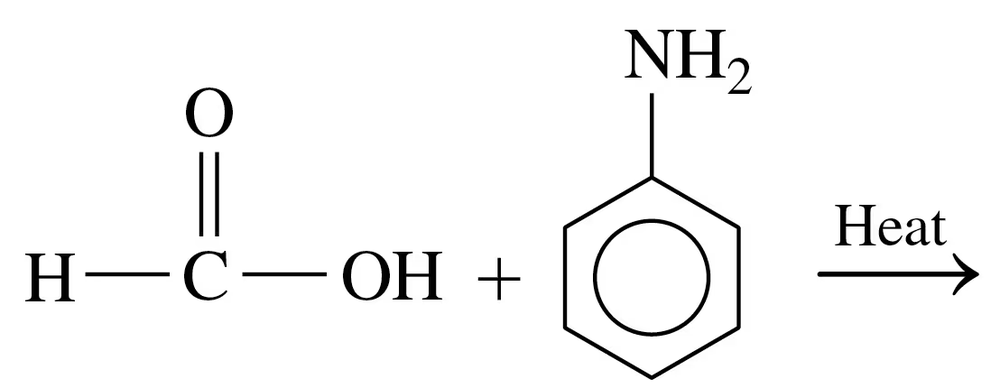
Draw the condensed structural or line-angle formulas for the products of the following:
d. Condensed structural formulas showing the reaction of a carboxylic acid and an amine with heat to form an amide.

Verified step by step guidance
1
Identify the type of reaction occurring in the problem. For example, determine if it is an addition, substitution, elimination, or oxidation-reduction reaction. This will guide how the reactants transform into products.
Analyze the structure of the reactant provided in the image. Break it down into its functional groups and bonding patterns to understand how it might react.
Apply the reaction mechanism associated with the reaction type. For instance, if it is an addition reaction, identify the site of addition (e.g., double bond or triple bond) and the reagents involved.
Draw the condensed structural formula for the product by replacing or modifying the appropriate bonds or groups in the reactant based on the reaction mechanism. Ensure that all atoms follow the octet rule where applicable.
Convert the condensed structural formula into a line-angle formula if required. In a line-angle formula, carbon atoms are represented as vertices, and hydrogen atoms bonded to carbons are implied rather than explicitly shown.

Verified video answer for a similar problem:

This video solution was recommended by our tutors as helpful for the problem above.
Video duration:
2m
Was this helpful?

Key Concepts

Here are the essential concepts you must grasp in order to answer the question correctly.

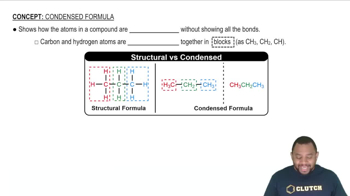
Condensed Structural Formula

A condensed structural formula is a way of representing a chemical compound that shows the arrangement of atoms and the connectivity between them without depicting all the bonds explicitly. It typically groups atoms together to indicate how they are bonded, making it easier to visualize the structure of the molecule. For example, in ethanol, the condensed formula is CH3CH2OH, indicating the presence of a hydroxyl group.
Recommended video:
Guided course
1:53
Condensed Formula Concept 1

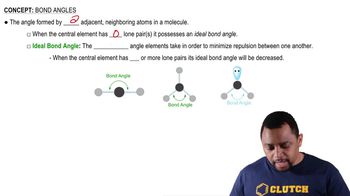
Line-Angle Formula

The line-angle formula, also known as the skeletal formula, is a simplified representation of organic molecules where vertices represent carbon atoms and lines represent bonds. This method omits hydrogen atoms attached to carbons, making it easier to visualize complex structures. For instance, a straight chain of five carbon atoms would be represented as a zigzag line, simplifying the depiction of larger molecules.
Recommended video:
Guided course
01:24
Bond Angles (Simplified) Concept 1

Chemical Products

Chemical products refer to the substances that result from a chemical reaction. In organic chemistry, understanding the products formed from reactants is crucial for predicting reaction outcomes. The products can vary based on reaction conditions, such as temperature and catalysts, and can be represented using condensed structural or line-angle formulas to convey their molecular structure effectively.
Recommended video:
Guided course
00:58
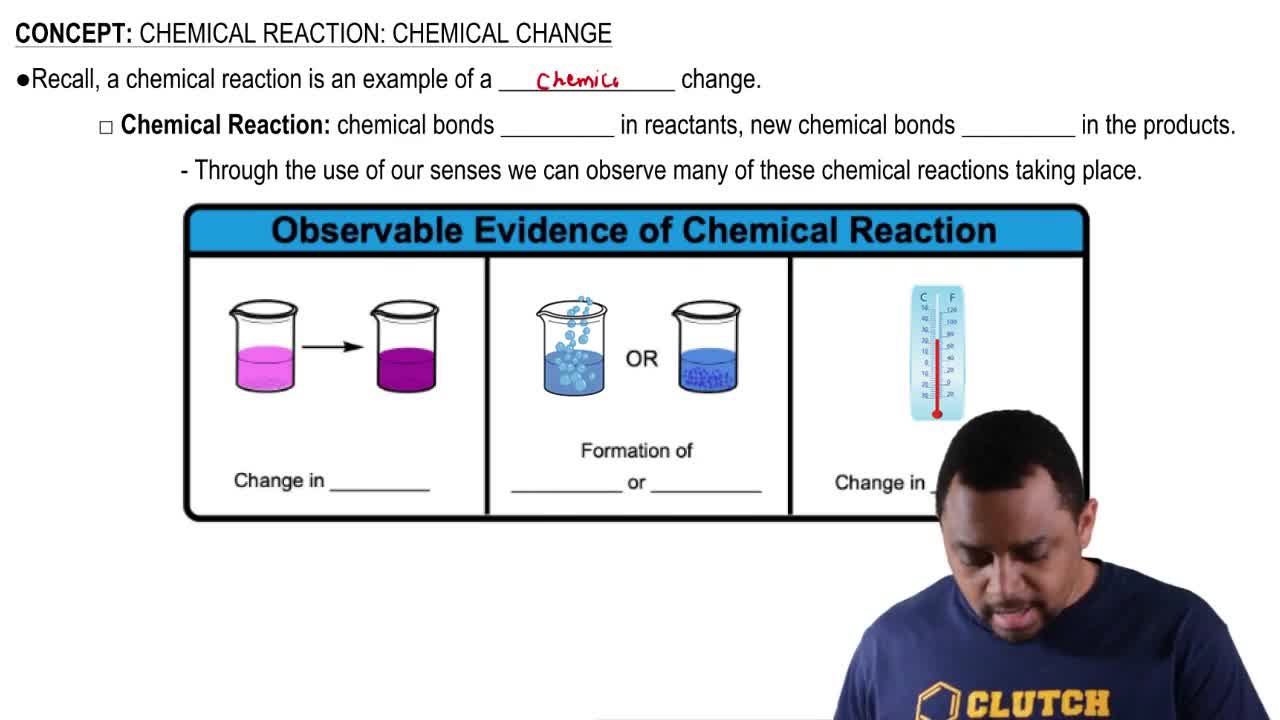
Chemical Reaction: Chemical Change Concept 1