Pearson+ LogoPearson+ Logo
Ch. 29 - Fungi
Freeman - Biological Science 8th Edition
Freeman8th EditionBiological ScienceISBN: 9780138276263Not the one you use?Change textbook
Chapter 29, Problem 12

Some fungi have elaborate mechanisms for dispersing spores. For example, the “squirt gun” fungus Pilobolus, which grows in cow dung, forcibly shoots off tiny black sporangia filled with spores. Any sporangia that are flung onto fresh grass are likely to be eaten by a grazing cow, passed through its digestive system unharmed, and deposited in a new batch of dung. The spores carried within the sporangia are perfectly positioned to grow into a new mycelium.
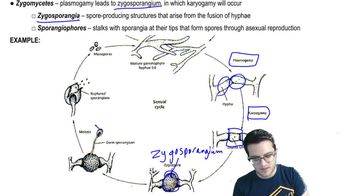
Both asexual sporangia (shown in the photo) and zygosporangia can be found in cow dung. Make a simplified drawing that illustrates the events of plasmogamy, karyogamy, and meiosis that occur during sexual reproduction in Pilobolus. Be sure to indicate and label the zygosporangium.

Verified step by step guidance
1
Begin by understanding the life cycle of Pilobolus, a type of fungus. It involves both asexual and sexual reproduction. In sexual reproduction, key events include plasmogamy, karyogamy, and meiosis.
Draw the initial stage where two compatible hyphae (fungal filaments) come into contact. Label this stage as 'Plasmogamy', where the cytoplasm of the two parent cells fuses together without the fusion of nuclei.
Next, illustrate the formation of the zygosporangium, which is a thick-walled structure. Inside the zygosporangium, label the event 'Karyogamy', where the nuclei from the two parent cells fuse to form a diploid nucleus.
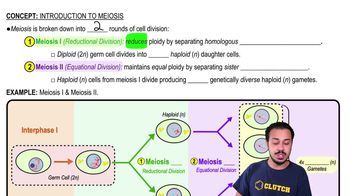
Following karyogamy, depict the process of meiosis occurring within the zygosporangium. Meiosis is the division process that reduces the chromosome number by half, resulting in haploid spores.
Finally, show the release of spores from the zygosporangium. These spores can germinate to form new hyphae, completing the cycle. Label the spores and indicate that they are haploid, ready to grow into new organisms.

Verified video answer for a similar problem:

This video solution was recommended by our tutors as helpful for the problem above.
Video duration:
1m
Was this helpful?

Key Concepts

Here are the essential concepts you must grasp in order to answer the question correctly.

Plasmogamy

Plasmogamy is the stage in the sexual reproduction of fungi where the cytoplasm of two parent mycelia fuses together without the fusion of nuclei. This process results in a heterokaryotic stage, where cells contain two or more genetically distinct nuclei. In Pilobolus, plasmogamy is a crucial step leading to the formation of the zygosporangium.
Recommended video:
Guided course
04:54
Fungi Reproduction - 2

Karyogamy

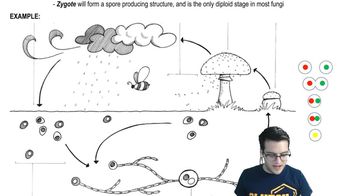
Karyogamy follows plasmogamy and involves the fusion of the nuclei from the fused parent cells. This results in the formation of a diploid zygote nucleus. In the life cycle of Pilobolus, karyogamy occurs within the zygosporangium, leading to the creation of a diploid zygote that will eventually undergo meiosis.
Recommended video:
Guided course
09:27
Fungi Reproduction - 1

Meiosis

Meiosis is a type of cell division that reduces the chromosome number by half, resulting in the production of haploid spores. In Pilobolus, meiosis occurs after karyogamy within the zygosporangium, leading to the formation of genetically diverse spores. These spores are then released to germinate and form new mycelia, completing the sexual reproduction cycle.
Recommended video:
Guided course
04:49
Meiosis I & Meiosis II
Related Practice
Textbook Question

Table 29.1 mentions that chytrids are responsible for massive die-offs currently occurring in amphibians. Review Koch's postulates; then design a study showing how you would use Koch's postulates to test the hypothesis that chytrid infections are responsible for frog deaths.

Textbook Question

Many mushrooms are extremely colorful. One hypothesis is that the colors serve as a warning to prevent animals from eating mushrooms, much like the bright yellow and black stripes on wasps help to deter potential predators. Design an experiment to test this hypothesis.

Textbook Question

Some fungi have elaborate mechanisms for dispersing spores. For example, the 'squirt gun' fungus Pilobolus, which grows in cow dung, forcibly shoots off tiny black sporangia filled with spores. Any sporangia that are flung onto fresh grass are likely to be eaten by a grazing cow, passed through its digestive system unharmed, and deposited in a new batch of dung. The spores carried within the sporangia are perfectly positioned to grow into a new mycelium.

Pilobolus is a zygomycete, and the sporangia just described produce asexual spores. In contrast, which of the following best describes what happens during the sexual phase of its life cycle?

a. It produces eight ascospores in each ascus.

b. It produces basidiospores that grow into mushrooms.

c. It produces motile sperm and eggs.

d. Hyphae from two compatible mating types fuse and form a zygosporangium.
Textbook Question

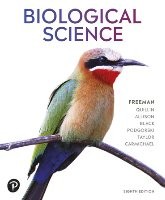
Some fungi have elaborate mechanisms for dispersing spores. For example, the “squirt gun” fungus Pilobolus, which grows in cow dung, forcibly shoots off tiny black sporangia filled with spores. Any sporangia that are flung onto fresh grass are likely to be eaten by a grazing cow, passed through its digestive system unharmed, and deposited in a new batch of dung. The spores carried within the sporangia are perfectly positioned to grow into a new mycelium.

Would you describe the association between Pilobolus and cows as a symbiotic relationship? Explain your answer.

Textbook Question

Explain the process of extracellular digestion that occurs during the growth of Pilobolus mycelia through dung.

Textbook Question

Using high-speed video, researchers have measured several variables associated with sporangium discharge in various spore-shooting fungi. Based on the data in the table shown here, how do the launch speed and acceleration of Pilobolus compare with those of the other fungi?

How does launch speed for each species compare with the top speed of 44 km/h reached by Jamaican athlete Usain Bolt during his 2009 world-record-setting 100-m race?