Pearson+ LogoPearson+ Logo
Ch. 46 - Animal Reproduction
Campbell - Campbell Biology 12th Edition
Urry12th EditionCampbell BiologyISBN: 9785794169850Not the one you use?Change textbook
Chapter 46, Problem 5

During human gestation, rudiments of all organs develop
a. In the first trimester
b. In the second trimester
c. In the third trimester
d. During the blastocyst stage

Verified step by step guidance
1
Understand the stages of human gestation: Human gestation is divided into three trimesters, each with distinct developmental milestones.
Identify the key developmental events in each trimester: The first trimester is crucial for the formation of rudimentary organs, a process known as organogenesis.
Recognize the significance of the first trimester: During this period, the embryo undergoes rapid cell division and differentiation, leading to the formation of basic organ structures.
Differentiate between the stages of embryonic development: The blastocyst stage occurs early in the first trimester and involves implantation into the uterine wall, preceding organ development.
Conclude which trimester is associated with organ rudiment development: Based on the understanding of gestational stages, determine that the first trimester is when rudiments of all organs develop.

Verified video answer for a similar problem:

This video solution was recommended by our tutors as helpful for the problem above.
Video duration:
1m
Was this helpful?

Key Concepts

Here are the essential concepts you must grasp in order to answer the question correctly.

Human Gestation

Human gestation is the period of development from fertilization to birth, typically lasting about 40 weeks. It is divided into three trimesters, each with distinct developmental milestones. Understanding the timeline of organ development is crucial for comprehending the stages of gestation.
Recommended video:
Guided course
02:58
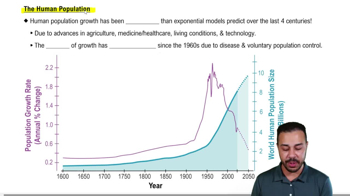
The Human Population

Organogenesis

Organogenesis is the process by which the rudiments of organs form during embryonic development. This critical phase occurs primarily in the first trimester, where the basic structures of all major organs are established, setting the foundation for further growth and maturation.
Recommended video:
Guided course
06:55
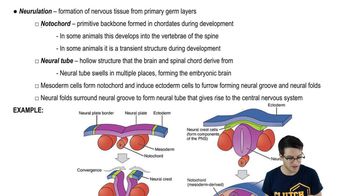
Organogenesis and Neurulation

Blastocyst Stage

The blastocyst stage is an early phase in embryonic development, occurring shortly after fertilization. During this stage, the embryo implants into the uterine wall, but organ development has not yet begun. Understanding this stage helps differentiate it from later stages where organogenesis occurs.
Recommended video:
Guided course
03:16
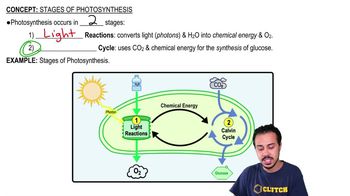
Stages of Photosynthesis
Related Practice
Textbook Question

Which of the following is not properly paired?

a. Seminiferous tubule—cervix

b. Vas deferens—oviduct

c. Testosterone—estradiol

d. Scrotum—labia majora

Textbook Question

Which of the following is properly paired?

a. Seminiferous tubule — Cervix

b. Vas deferens — Oviduct

c. Corpus luteum —Sertoli cell

d. Scrotum — Clitoris
Textbook Question

Peaks of LH and FSH production occur during

a. The menstrual flow phase of the uterine cycle

b. The beginning of the follicular phase of the ovarian cycle

c. The period just before ovulation

d. The secretory phase of the uterine cycle

Textbook Question

Which of the following is a true statement?

a. All mammals have menstrual cycles

b. The endometrial lining is shed in menstrual cycles but reabsorbed in estrous cycles

c. Estrous cycles are more frequent than menstrual cycles

d. Ovulation occurs before the endometrium thickens in estrous cycles

Textbook Question

For which of the following is the number the same in human males and females?

a. Interruptions in meiotic divisions

b. Functional gametes produced by meiosis

c. Meiotic divisions required to produce each gamete

d. Different cell types produced by meiosis

Textbook Question

Which statement about human reproduction is true?

a. Fertilization occurs in the vagina.

b. Spermatogenesis and oogenesis both require normal body temperature.

c. An oocyte completes meiosis after a sperm penetrates it.

d. The earliest stages of spermatogenesis occur closest to the lumen of the seminiferous tubules.