Pearson+ LogoPearson+ Logo
Ch. 46 - Animal Reproduction
Campbell - Campbell Biology 12th Edition
Urry12th EditionCampbell BiologyISBN: 9785794169850Not the one you use?Change textbook
Chapter 46, Problem 7

For which of the following is the number the same in human males and females?
a. Interruptions in meiotic divisions
b. Functional gametes produced by meiosis
c. Meiotic divisions required to produce each gamete
d. Different cell types produced by meiosis

Verified step by step guidance
1
Understand the process of meiosis: Meiosis is a type of cell division that reduces the chromosome number by half, creating four haploid cells, each genetically distinct from the parent cell. It consists of two rounds of division: meiosis I and meiosis II.
Consider the interruptions in meiotic divisions: In human females, meiosis is arrested at two stages (prophase I and metaphase II) until fertilization, whereas in males, meiosis proceeds continuously. Therefore, the number of interruptions is not the same.
Evaluate the functional gametes produced by meiosis: In human males, each meiotic division results in four functional sperm cells, while in females, it results in one functional egg and three polar bodies. Thus, the number of functional gametes is not the same.
Analyze the meiotic divisions required to produce each gamete: Both males and females undergo two meiotic divisions (meiosis I and meiosis II) to produce gametes. Therefore, the number of meiotic divisions required is the same.
Examine the different cell types produced by meiosis: Males produce sperm cells, while females produce egg cells and polar bodies. The types of cells produced are different between the sexes.

Verified video answer for a similar problem:

This video solution was recommended by our tutors as helpful for the problem above.
Video duration:
1m
Was this helpful?

Key Concepts

Here are the essential concepts you must grasp in order to answer the question correctly.

Meiosis

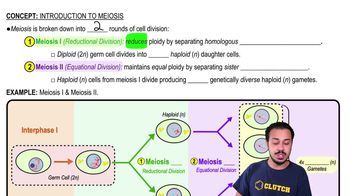
Meiosis is a type of cell division that reduces the chromosome number by half, resulting in the production of gametes—sperm in males and eggs in females. It consists of two consecutive divisions, meiosis I and meiosis II, and is crucial for sexual reproduction, ensuring genetic diversity and maintaining the chromosome number across generations.
Recommended video:
Guided course
04:49
Meiosis I & Meiosis II

Gamete Production

In humans, gamete production involves the formation of sperm in males and eggs in females through meiosis. Males produce four functional sperm cells from each meiotic division, while females typically produce one functional egg and polar bodies, which are non-functional. This difference is due to the unequal division of cytoplasm during female meiosis.
Recommended video:
Guided course
04:36
Primary Production in Aquatic Ecosystems

Meiotic Divisions

Both human males and females undergo two meiotic divisions to produce gametes. However, the number of functional gametes produced differs: males produce four sperm cells per meiotic event, while females produce one egg. The number of meiotic divisions required to produce each gamete is the same, but the outcome in terms of functional gametes differs between sexes.
Recommended video:
Guided course
03:19
Importance of Cell Division