Pearson+ LogoPearson+ Logo
Ch. 46 - Animal Reproduction
Campbell - Campbell Biology 12th Edition
Urry12th EditionCampbell BiologyISBN: 9785794169850Not the one you use?Change textbook
Chapter 46, Problem 3

Which of the following is properly paired?
a. Seminiferous tubule — Cervix
b. Vas deferens — Oviduct
c. Corpus luteum —Sertoli cell
d. Scrotum — Clitoris

Verified step by step guidance
1
Step 1: Begin by identifying the biological structures mentioned in each pair and their respective functions or roles in the reproductive systems of males and females.
Step 2: Analyze the first pair: 'Seminiferous tubule — Cervix'. Seminiferous tubules are located in the testes and are responsible for sperm production, while the cervix is part of the female reproductive system, connecting the vagina to the uterus. These structures are not functionally or anatomically paired.
Step 3: Examine the second pair: 'Vas deferens — Oviduct'. The vas deferens is a duct in the male reproductive system that transports sperm from the epididymis to the urethra, while the oviduct (or fallopian tube) is part of the female reproductive system, where fertilization typically occurs. These structures are not paired as they belong to different systems.
Step 4: Evaluate the third pair: 'Corpus luteum — Sertoli cell'. The corpus luteum is a temporary endocrine structure in the female ovary that secretes hormones like progesterone, while Sertoli cells are located in the seminiferous tubules of the male testes and support sperm development. These are not paired.
Step 5: Assess the fourth pair: 'Scrotum — Clitoris'. The scrotum is an external pouch in males that houses the testes and regulates their temperature, while the clitoris is a sensitive structure in the female reproductive system. These are not paired either. None of the options provided are properly paired.

Verified video answer for a similar problem:

This video solution was recommended by our tutors as helpful for the problem above.
Video duration:
2m
Was this helpful?

Key Concepts

Here are the essential concepts you must grasp in order to answer the question correctly.

Reproductive Anatomy

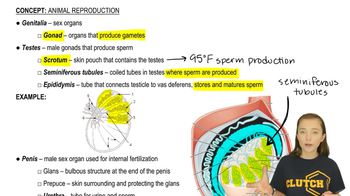
Reproductive anatomy refers to the structures involved in the reproductive system of both males and females. In males, key structures include the seminiferous tubules, which produce sperm, and the vas deferens, which transports sperm. In females, the oviduct (or fallopian tube) is where fertilization typically occurs, and the cervix is the lower part of the uterus that opens into the vagina.
Recommended video:
Guided course
11:56
Male Reproductive Anatomy

Gonadal Function

Gonadal function involves the roles of the testes and ovaries in producing gametes and hormones. In males, Sertoli cells support sperm development within the seminiferous tubules, while in females, the corpus luteum forms after ovulation and produces hormones like progesterone to maintain the uterine lining for potential pregnancy.
Recommended video:
Guided course
06:04
Functional Groups

Sexual Differentiation

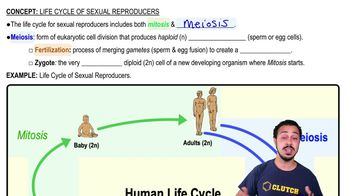
Sexual differentiation is the process by which individuals develop male or female characteristics, influenced by genetic and hormonal factors. The scrotum is a male structure that houses the testes, while the clitoris is a female structure involved in sexual arousal. Understanding these differences is crucial for identifying proper pairings in reproductive anatomy.
Recommended video:
Guided course
04:14
Life Cycle of Sexual Reproducers