Pearson+ LogoPearson+ Logo
Ch. 17 - The Human Footprint
Belk, Maier - Biology: Science for Life 6th Edition
Belk, Maier6th EditionBiology: Science for LifeISBN: 9780135214084Not the one you use?Change textbook
Chapter 17, Problem 8

Which statement best describes the desert biome?
a. It is found wherever temperatures are high
b. It contains a larger amount of biomass per unit area than any other biome
c. Its dominant vegetation is adapted to conserve water
d. Most are located at the equator; e. It is not suitable for human habitation

Verified step by step guidance
1
Understand the characteristics of a desert biome: Deserts are defined by their low precipitation levels, not necessarily by high temperatures. They can be hot or cold, but the key feature is aridity.
Analyze the vegetation in deserts: Plants in deserts are typically adapted to conserve water due to the scarcity of rainfall. These adaptations include features like thick, waxy cuticles, deep root systems, and the ability to store water in tissues (e.g., succulents like cacti).
Evaluate the biomass per unit area: Deserts generally have a low biomass per unit area compared to other biomes like rainforests, due to limited water availability and sparse vegetation.
Consider the location of deserts: While some deserts are near the equator, many are located in subtropical regions (e.g., the Sahara) or in rain shadows of mountains. They are not exclusively equatorial.
Assess human habitation: While deserts can be challenging for human habitation due to extreme conditions, they are not entirely uninhabitable. Many human communities have adapted to live in desert environments.

Verified video answer for a similar problem:

This video solution was recommended by our tutors as helpful for the problem above.
Video duration:
53s
Was this helpful?

Key Concepts

Here are the essential concepts you must grasp in order to answer the question correctly.

Desert Biome Characteristics

The desert biome is characterized by low precipitation, extreme temperature variations, and sparse vegetation. These conditions lead to unique adaptations in flora and fauna, allowing them to survive in arid environments. Understanding these characteristics is essential for distinguishing deserts from other biomes.
Recommended video:
Guided course
09:26
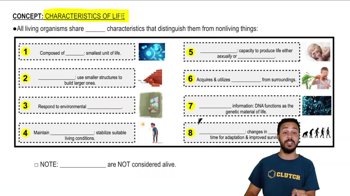
Characteristics of Life

Water Conservation Adaptations

Plants in desert biomes have evolved specific adaptations to conserve water, such as thick cuticles, deep root systems, and modified leaves (like spines in cacti). These adaptations enable them to minimize water loss and maximize water uptake, which is crucial for survival in such harsh conditions.
Recommended video:
05:24
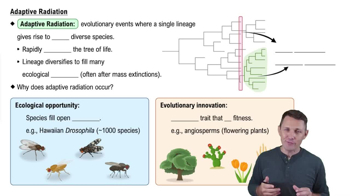
Adaptive Radiation

Biomass and Productivity

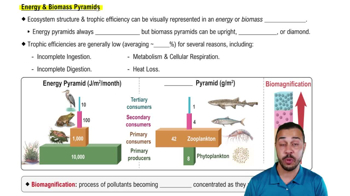
Biomass refers to the total mass of living organisms in a given area, and productivity measures the rate of biomass production. Deserts typically have lower biomass and productivity compared to other biomes, such as forests or grasslands, due to limited water availability and harsh environmental conditions.
Recommended video:
Guided course
05:41
Energy & Biomass Pyramids