An ice cube with a mass of 20 g at -20 °C (typical freezer temperature) is dropped into a cup that holds 500 mL of hot water, initially at 83 °C. What is the final temperature in the cup? The density of liquid water is 1.00 g>mL; the specific heat capacity of ice is 2.03 J>g@C; the specific heat capacity of liquid water is 4.184 J>g@C; the enthalpy of fusion of water is 6.01 kJ>mol.
Verified step by step guidance
1
Convert the mass of the ice cube to moles using the molar mass of water (18.015 g/mol).
Calculate the energy required to warm the ice from -20 °C to 0 °C using the specific heat capacity of ice (2.03 J/g°C).
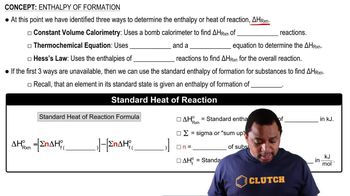
Calculate the energy required to melt the ice at 0 °C using the enthalpy of fusion (6.01 kJ/mol).
Calculate the energy required to warm the melted ice (now water) from 0 °C to the final temperature using the specific heat capacity of liquid water (4.184 J/g°C).
Set up an energy balance equation where the heat lost by the hot water equals the total heat gained by the ice and solve for the final temperature.
Verified video answer for a similar problem:
This video solution was recommended by our tutors as helpful for the problem above.
Video duration:
12m
Play a video:
0 Comments
Was this helpful?
Key Concepts
Here are the essential concepts you must grasp in order to answer the question correctly.
Specific Heat Capacity
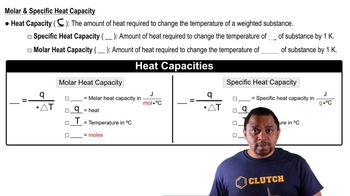
Specific heat capacity is the amount of heat required to raise the temperature of one gram of a substance by one degree Celsius. It varies between different materials, influencing how they absorb and release heat. In this problem, the specific heat capacities of both ice and liquid water are crucial for calculating the heat transfer during the temperature change.
The enthalpy of fusion is the amount of energy required to change a substance from solid to liquid at its melting point without changing its temperature. For water, this value is significant when ice melts into liquid water, as it requires energy input, which affects the overall heat balance in the system.
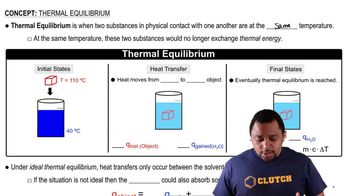
Heat transfer refers to the movement of thermal energy from a hotter object to a cooler one until thermal equilibrium is reached. In this scenario, the heat lost by the hot water will be equal to the heat gained by the ice, including the energy needed for melting. Understanding this principle is essential for determining the final temperature of the system.


 Verified step by step guidance
 02:19
02:19