Back
Back
Problem 11
Determine whether each relation defines a function. {(5,1),(3,2),(4,9),(7,8)}
Problem 11
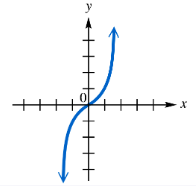
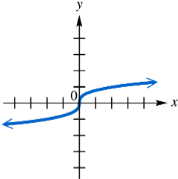
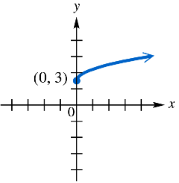
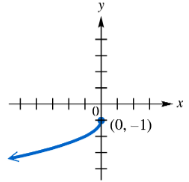
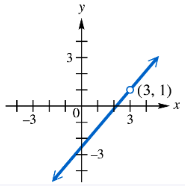
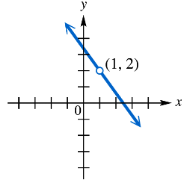
Determine the intervals of the domain over which each function is continuous.
Problem 11
Write an equation for each line described. Give answers in standard form for Exercises 11–20 and in slope-intercept form (if possible) for Exercises 21–32. through (1,3), m = -2
Problem 12
Determine the intervals of the domain over which each function is continuous.
Problem 12
Let and . Find each of the following. See Example 1.
Problem 12
Determine whether each relation defines a function. {(8,0),(5,7),(9,3),(3,8)}
Problem 13
Write an equation for each line described. Give answers in standard form for Exercises 11–20 and in slope-intercept form (if possible) for Exercises 21–32. through (-5,4), m = -3/2
Problem 13
Determine the intervals of the domain over which each function is continuous.
Problem 13
In the following exercises, (a) find the center-radius form of the equation of each circle described, and (b) graph it. center (2, 0), radius 6
Problem 13
Determine whether each relation defines a function. {(2,4),(0,2),(2,6)}
Problem 13
Let ƒ(x)=x2+3 and g(x)=-2x+6. Find each of the following. (ƒ-g)(-1)
Problem 14
Let and . Find each of the following. See Example 1.
Problem 14
Determine the intervals of the domain over which each function is continuous.
Problem 14
Determine whether each relation defines a function. {(9,-2),(-3,5),(9,1)}
Problem 15
In the following exercises, (a) find the center-radius form of the equation of each circle described, and (b) graph it. center (0, 4), radius 4
Problem 15
Write an equation for each line described. Give answers in standard form for Exercises 11–20 and in slope-intercept form (if possible) for Exercises 21–32. through (-8,4), undefined slope
Problem 15
Determine whether each relation defines a function. {(-3,1),(4,1),(-2,7)}
Problem 15
Let ƒ(x)=x2+3 and g(x)=-2x+6. Find each of the following. (ƒg)(4)
Problem 15
For the points P and Q, find (a) the distance d(P, Q) and (b) the coordinates of the mid-point M of line segment PQ. P(-5,-6), Q(7,-1)
Problem 15
Determine the intervals of the domain over which each function is continuous.
Problem 16
Determine the intervals of the domain over which each function is continuous.
Problem 16
Determine whether each relation defines a function. {(-12,5),(-10,3),(8,3)}
Problem 16
Let and . Find each of the following. See Example 1.
Problem 17
For the points P and Q, find (a) the distance d(P, Q) and (b) the coordinates of the mid-point M of line segment PQ. P(8,2), Q(3,5)
Problem 17
Let ƒ(x)=x2+3 and g(x)=-2x+6. Find each of the following. (ƒ/g)(-1)
Problem 17
Graph each function. See Examples 1 and 2. ƒ(x)=3|x|
Problem 17
In the following exercises, (a) find the center-radius form of the equation of each circle described, and (b) graph it. center (-2, 5), radius 4
Problem 17
Write an equation for each line described. Give answers in standard form for Exercises 11–20 and in slope-intercept form (if possible) for Exercises 21–32. through (5,-8), m = 0
Problem 17
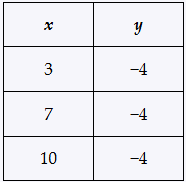
Determine whether each relation defines a function.
Problem 18
Let ƒ(x)=x^2+3 and g(x)=-2x+6. Find each of the following. See Example 1.
(ƒ/g)(5)