

 Back
Back
Problem 39
In Exercises 29–42, solve each system by the method of your choice.
Problem 39
Graph the solution set of each system of inequalities or indicate that the system has no solution.
Problem 39
In Exercises 31–42, solve by the method of your choice. Identify systems with no solution and systems with infinitely many solutions, using set notation to express their solution sets. x/4 - y/4 = −1 x + 4y = -9
Problem 40
In Exercises 39–45, graph each inequality. y ≤ (-1/2)x + 2
Problem 41
Graph the solution set of each system of inequalities or indicate that the system has no solution.
Problem 41
In Exercises 31–42, solve by the method of your choice. Identify systems with no solution and systems with infinitely many solutions, using set notation to express their solution sets. 2x = 3y + 4 4x = 3 - 5y
Problem 41
Write the partial fraction decomposition of each rational expression. (4x2+3x+14)/(x3 - 8)
Problem 41
In Exercises 29–42, solve each system by the method of your choice.
Problem 43
In Exercises 43–46, let x represent one number and let y represent the other number. Use the given conditions to write a system of equations. Solve the system and find the numbers. The sum of two numbers is 7. If one number is subtracted from the other, their difference is -1. Find the numbers.
Problem 43
Graph the solution set of each system of inequalities or indicate that the system has no solution.
Problem 43
Perform each long division and write the partial fraction decomposition of the remainder term. (x5+2)/(x2-1)
Problem 43
In Exercises 43–46, let x represent one number and let y represent the other number. Use the given conditions to write a system of nonlinear equations. Solve the system and find the numbers. The sum of two numbers is 10 and their product is 24. Find the numbers.
Problem 44
In Exercises 39–45, graph each inequality. y ≤ x^2 - 1
Problem 45
Graph the solution set of each system of inequalities or indicate that the system has no solution.
Problem 45
Perform each long division and write the partial fraction decomposition of the remainder term. (x4-x2+2)/(x3-x2)
Problem 45
In Exercises 39–45, graph each inequality. y ≤ 2^x
Problem 45
In Exercises 43–46, let x represent one number and let y represent the other number. Use the given conditions to write a system of nonlinear equations. Solve the system and find the numbers. The difference between the squares of two numbers is 3. Twice the square of the first number increased by the square of the second number is 9. Find the numbers.
Problem 46
In Exercises 46–55, graph the solution set of each system of inequalities or indicate that the system has no solution.
This
is a piecewise function. Refer to the textbook.
Problem 47
Graph the solution set of each system of inequalities or indicate that the system has no solution.
Problem 47
In Exercises 46–55, graph the solution set of each system of inequalities or indicate that the system has no solution.
This
is a piecewise function. Refer to the textbook.
Problem 47
In Exercises 47–48, solve each system by the method of your choice. (x + 2)/2 - (y + 4)/3 = 3 (x + y)/5 = (x - y)/2 - 5/2

Problem 47
In Exercises 47–52, solve each system by the method of your choice.
Problem 48
In Exercises 47–48, solve each system by the method of your choice. (x - y)/3 = (x + y)/2 - 1/2 (x + 2)/2 - 4 = (y + 4)/3

Problem 49
In Exercises 49–50, solve each system for x and y, expressing either value in terms of a or b, if necessary. Assume that a ≠ 0, b ≠ 0 5ax + 4y = 17 ax + 7y = 22

Problem 49
In Exercises 47–52, solve each system by the method of your choice.
Problem 49
Graph the solution set of each system of inequalities or indicate that the system has no solution.
Problem 51
Graph the solution set of each system of inequalities or indicate that the system has no solution.
Problem 51
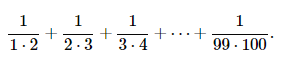
Find the partial fraction decomposition for 1/x(x+1) and use the result to find the following sum:
Problem 51
Solve each system for x and y, expressing either value in terms of a or b, if necessary. Assume that a ≠ 0 and b ≠ 0. For the linear function f(x) = mx + b, f(−2) = 11 and ƒ(3) = -9. Find m and b.
Problem 51
In Exercises 47–52, solve each system by the method of your choice.