Pearson+ LogoPearson+ Logo
Ch. 31 - Fungi
Campbell - Campbell Biology 12th Edition
Urry12th EditionCampbell BiologyISBN: 9785794169850Not the one you use?Change textbook
Chapter 31, Problem 2

Which of the following cells or structures are associated with asexual reproduction in fungi?
a. Ascospores
b. Basidiospores
c. Zygosporangia
d. Conidiophores

Verified step by step guidance
1
Understand the concept of asexual reproduction in fungi. Asexual reproduction involves the production of offspring without the fusion of gametes, and it typically results in genetically identical organisms.
Identify the structures associated with asexual reproduction in fungi. Conidiophores are specialized fungal structures that produce conidia, which are asexual spores.
Ascertain the role of conidia in asexual reproduction. Conidia are formed on conidiophores and are dispersed to form new fungal colonies without sexual reproduction.
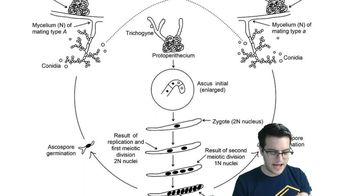
Differentiate between the options given: Ascospores and basidiospores are associated with sexual reproduction, while zygosporangia are involved in the sexual reproduction of zygomycetes.
Conclude that conidiophores are the structures associated with asexual reproduction in fungi, as they produce conidia, which are asexual spores.

Verified video answer for a similar problem:

This video solution was recommended by our tutors as helpful for the problem above.
Video duration:
3m
Was this helpful?

Key Concepts

Here are the essential concepts you must grasp in order to answer the question correctly.

Asexual Reproduction in Fungi

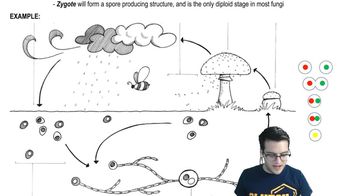
Asexual reproduction in fungi involves the production of spores without the fusion of gametes, allowing for rapid and efficient propagation. This process typically results in genetically identical offspring, enabling fungi to colonize environments quickly. Common structures associated with asexual reproduction include conidiophores, which produce conidia, a type of asexual spore.
Recommended video:
Guided course
03:12
Fungi Reproduction - 3

Conidiophores

Conidiophores are specialized fungal structures that produce conidia, which are asexual spores. These structures are crucial for asexual reproduction, allowing fungi to disperse and reproduce without sexual processes. Conidiophores vary in shape and size among different fungal species, and they play a key role in the rapid spread of fungi in suitable environments.

Sexual Reproduction in Fungi

Sexual reproduction in fungi involves the fusion of specialized cells or spores, leading to genetic recombination and diversity. Structures like ascospores, basidiospores, and zygosporangia are associated with sexual reproduction, where genetic material from two parent cells combines to form a new organism. This process enhances adaptability and survival in changing environments.
Recommended video:
Guided course
09:27
Fungi Reproduction - 1