Pearson+ LogoPearson+ Logo
Ch. 25 - The History of Life on Earth
Campbell - Campbell Biology 12th Edition
Urry12th EditionCampbell BiologyISBN: 9785794169850Not the one you use?Change textbook
Chapter 25, Problem 2

The oxygen revolution changed Earth's environment dramatically. Which of the following took advantage of the presence of free oxygen in the oceans and atmosphere?
a. The evolution of cellular respiration, which used oxygen to help harvest energy from organic molecules
b. The persistence of some animal groups in anaerobic habitats
c. The evolution of photosynthetic pigments that protected early algae from the corrosive effects of oxygen
d. The evolution of chloroplasts after early protists incorporated photosynthetic cyanobacteria

Verified step by step guidance
1
Understand the context of the 'oxygen revolution': This refers to the Great Oxidation Event, which occurred around 2.4 billion years ago when oxygen levels in Earth's atmosphere and oceans increased significantly due to photosynthetic organisms like cyanobacteria.
Consider the impact of free oxygen: Oxygen is a highly reactive molecule that can be toxic to anaerobic organisms. However, it also allows for more efficient energy production through aerobic respiration.
Analyze option a: The evolution of cellular respiration is directly related to the presence of oxygen. Aerobic respiration uses oxygen to extract more energy from organic molecules compared to anaerobic processes.
Evaluate option b: While some organisms persisted in anaerobic environments, this option does not describe taking advantage of free oxygen, but rather avoiding it.
Assess options c and d: Photosynthetic pigments and chloroplast evolution are related to photosynthesis, which produces oxygen, but they do not directly take advantage of free oxygen for energy extraction like cellular respiration does.

Verified video answer for a similar problem:

This video solution was recommended by our tutors as helpful for the problem above.
Video duration:
49s
Was this helpful?

Key Concepts

Here are the essential concepts you must grasp in order to answer the question correctly.

Oxygen Revolution

The Oxygen Revolution, also known as the Great Oxidation Event, occurred around 2.4 billion years ago when cyanobacteria began producing oxygen through photosynthesis. This led to a significant increase in atmospheric oxygen, transforming Earth's environment and enabling the evolution of aerobic organisms that could utilize oxygen for energy production.
Recommended video:
Guided course
07:27
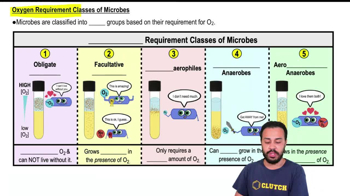
Oxygen Requirement Classes of Microbes

Cellular Respiration

Cellular respiration is a metabolic process where cells convert biochemical energy from nutrients into adenosine triphosphate (ATP), and release waste products. This process, particularly aerobic respiration, uses oxygen to efficiently extract energy from organic molecules, making it a crucial adaptation following the rise in atmospheric oxygen levels.
Recommended video:
Guided course
03:39
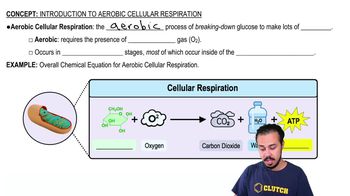
Introduction to Cellular Respiration

Endosymbiotic Theory

The endosymbiotic theory explains the origin of eukaryotic cell organelles like mitochondria and chloroplasts. It suggests that these organelles were once free-living bacteria that were engulfed by ancestral eukaryotic cells. This theory is supported by the presence of their own DNA and double membranes, and it is key to understanding the evolution of complex life forms, including the development of chloroplasts from cyanobacteria.
Recommended video:
Guided course
06:58
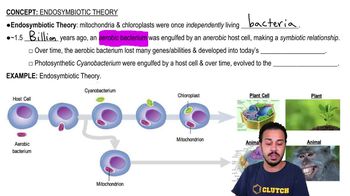
Endosymbiotic Theory