Pearson+ LogoPearson+ Logo
Ch. 8 - Does Testing Save Lives?
Belk, Maier - Biology: Science for Life 6th Edition
Belk, Maier6th EditionBiology: Science for LifeISBN: 9780135214084Not the one you use?Change textbook
Chapter 8, Problem 6

Scientists have recently developed a process by which a skin cell from a human can be triggered to develop into a human heart muscle cell. This is possible because ________.
a. Most cells in the human body contain the genetic instructions for making all types of human cells.
b. A skin cell is produced when all genes in the cell are expressed; turning off some genes in the cell results in a heart cell.
c. Scientists can add new genes to old cells to make them take different forms.
d. A skin cell expresses only recessive alleles, so it can be triggered to produce dominant heart cell alleles.
e. It is easy to mutate the genes in skin cells to produce the alleles required for other cell types.

Verified step by step guidance
1
Understand the concept of cellular differentiation: Cellular differentiation is the process by which a less specialized cell becomes a more specialized cell type. In humans, most cells contain the same genetic material (DNA), but different cell types express different sets of genes to perform specific functions.
Recognize that all human cells (except red blood cells) contain the complete set of genetic instructions (the genome). This means that a skin cell has the genetic potential to become any other type of cell, including a heart muscle cell, if the correct genes are activated or suppressed.
Learn about induced pluripotent stem cells (iPSCs): Scientists can reprogram specialized cells, like skin cells, into a pluripotent state where they behave like stem cells. These iPSCs can then be directed to differentiate into specific cell types, such as heart muscle cells, by controlling gene expression.
Evaluate the options provided in the question: Option (a) aligns with the concept that most cells contain the genetic instructions for making all types of human cells. This is the basis for reprogramming skin cells into heart muscle cells.
Understand why the other options are incorrect: For example, option (b) incorrectly suggests that turning off genes in a skin cell directly results in a heart cell, which oversimplifies the process. Option (c) implies adding new genes, which is not necessary since the genetic instructions are already present. Option (d) and (e) involve misconceptions about alleles and mutations that are not relevant to this process.

Verified video answer for a similar problem:

This video solution was recommended by our tutors as helpful for the problem above.
Video duration:
48s
Was this helpful?

Key Concepts

Here are the essential concepts you must grasp in order to answer the question correctly.

Cell Differentiation

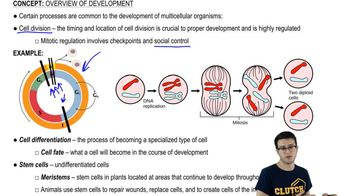
Cell differentiation is the process by which a less specialized cell becomes a more specialized cell type. In multicellular organisms, this process allows for the development of various cell types, such as muscle cells, nerve cells, and skin cells, each with distinct functions. Understanding how cells can change their identity is crucial for grasping how a skin cell can be transformed into a heart muscle cell.
Recommended video:
Guided course
05:28
Cell Division and Differentiation

Gene Expression

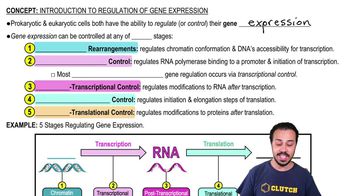
Gene expression refers to the process by which information from a gene is used to synthesize functional gene products, typically proteins. Different cell types express different sets of genes, which determines their specific functions. In the context of the question, manipulating gene expression in a skin cell can enable it to adopt the characteristics of a heart muscle cell.
Recommended video:
Guided course
06:40
Introduction to Regulation of Gene Expression

Stem Cells and Induced Pluripotent Stem Cells (iPSCs)

Stem cells are undifferentiated cells that have the potential to develop into various cell types. Induced pluripotent stem cells (iPSCs) are a type of stem cell created by reprogramming adult cells, such as skin cells, to revert to a pluripotent state. This technology allows scientists to generate specific cell types, like heart muscle cells, from differentiated cells, highlighting the potential for regenerative medicine.
Recommended video:
Guided course
05:33
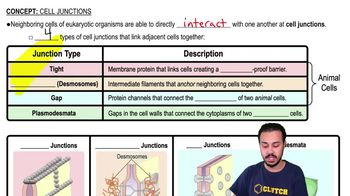
Cell Junctions
Related Practice
Textbook Question

Which of the following statements correctly describe the relationship between genes and chromosomes?

a. Genes are chromosomes.

b. Chromosomes contain many genes.

c. Genes are made up of hundreds or thousands of chromosomes.

d. Genes are assorted independently during meiosis, but chromosomes are not.

e. More than one of the above is correct.

1
views
Textbook Question

An allele is a ________.

a. Version of a gene

b. Dysfunctional gene

c. Protein

d. Spare copy of a gene

e. Phenotype

Textbook Question

Sperm and eggs in humans always ________.

a. Each have two copies of every gene.

b. Each have one copy of every gene.

c. Each contain either all recessive alleles or all dominant alleles.

d. Are genetically identical to all other sperm or eggs produced by that person.

e. Each contain all of the genetic information from their producer.

2
views
Textbook Question

What is the physical basis for the independent assortment of alleles into offspring?

a. There are chromosome divisions during gamete production.

b. Homologous chromosome pairs are separated during gamete production.

c. Sperm and eggs are produced by different sexes.

d. Each gene codes for more than one protein.

e. The instruction manual for producing a human is incomplete.

Textbook Question

Among heritable diseases, which genotype can be present in an individual without causing a disease phenotype in that individual?

a. Heterozygous for a dominant disease

b. Homozygous for a dominant disease

c. Heterozygous for recessive disease

d. Homozygous for a recessive disease

e. All of the above

Textbook Question

A woman is a carrier of the X-linked recessive color blindness gene. She has children with a man with normal color vision. Which of the following is true of their offspring?

a. All the males will be color blind.

b. All the females will be carriers.

c. Half the females will be color blind.

d. Half the males will be color blind.