Pearson+ LogoPearson+ Logo
Ch. 7 - Fertility
Belk, Maier - Biology: Science for Life 6th Edition
Belk, Maier6th EditionBiology: Science for LifeISBN: 9780135214084Not the one you use?Change textbook
Chapter 7, Problem 4

A sperm cell follows which path?
a. Seminiferous tubules, epididymis, vas deferens, urethra
b. Urethra, vas deferens, seminiferous tubules, epididymis
c. Seminiferous tubules, vas deferens, epididymis, urethra
d. Epididymis, seminiferous tubules, vas deferens, urethra
e. Epididymis, vas deferens, seminiferous tubules, urethra

Verified step by step guidance
1
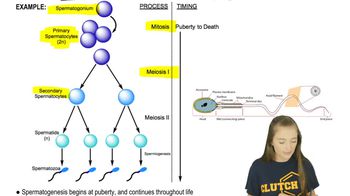
Understand the process of sperm production and transport in the male reproductive system. Sperm is produced in the seminiferous tubules of the testes through a process called spermatogenesis.
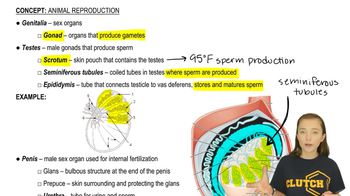
After production, sperm is transported to the epididymis, where it matures and is stored until ejaculation.
During ejaculation, sperm travels from the epididymis into the vas deferens, a muscular tube that propels sperm forward.
The vas deferens connects to the urethra, which serves as the final passageway for sperm to exit the body during ejaculation.
Review the options provided and identify the correct sequence based on the anatomical pathway: seminiferous tubules → epididymis → vas deferens → urethra.

Verified video answer for a similar problem:

This video solution was recommended by our tutors as helpful for the problem above.
Video duration:
1m
Was this helpful?

Key Concepts

Here are the essential concepts you must grasp in order to answer the question correctly.

Spermatogenesis

Spermatogenesis is the process by which sperm cells are produced in the seminiferous tubules of the testes. This complex process involves the division and maturation of germ cells, ultimately leading to the formation of mature spermatozoa. Understanding this process is crucial for tracing the path of sperm from its origin to its exit from the male reproductive system.
Recommended video:
Guided course
12:51
Spermatogenesis

Male Reproductive Anatomy

The male reproductive system includes several key structures: the seminiferous tubules, epididymis, vas deferens, and urethra. Sperm cells travel through these structures in a specific sequence, starting from the seminiferous tubules where they are produced, to the epididymis for maturation, then to the vas deferens for storage, and finally exiting through the urethra during ejaculation.
Recommended video:
Guided course
11:56
Male Reproductive Anatomy

Pathway of Sperm Transport

The pathway of sperm transport is a defined route that sperm cells follow from their site of production to their exit from the body. This pathway is critical for understanding male fertility and reproductive health, as any disruption can affect sperm maturation and transport, ultimately impacting the ability to conceive.
Recommended video:
Guided course
02:37
Active Transport