Skip to main content
Organic Chemistry
My Course
Learn
Exam Prep
AI Tutor
Study Guides
Textbook Solutions
Flashcards
Explore
My Course
Learn
Exam Prep
AI Tutor
Study Guides
Textbook Solutions
Flashcards
Explore
Back
Intro to Organic Chemistry quiz #7
You can tap to flip the card.
How would you describe the process of artificial selection?
You can tap to
flip the card.
👆
How would you describe the process of artificial selection?
Artificial selection is the intentional breeding of organisms to produce desired traits.
Track progress
Control buttons has been changed to "navigation" mode.
1/17
Related flashcards
Related practice
Recommended videos
Guided course
02:18
Organic molecules in your everyday life.
Johnny
Guided course
00:56
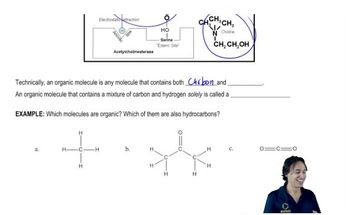
What is an organic molecule?
Johnny
Guided course
02:17
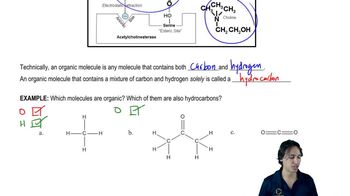
Identifying organic molecules
Johnny
Terms in this set (17)
Hide definitions
How would you describe the process of artificial selection?
Artificial selection is the intentional breeding of organisms to produce desired traits.
Which is the correct order of the flow of energy in a food chain?
The correct order is: sunlight → producers → primary consumers → secondary consumers → tertiary consumers.
What happens along an electron transport chain?
Along an electron transport chain, electrons are transferred through a series of proteins, creating a proton gradient that drives ATP synthesis.
What is self-pollination?
Self-pollination is the process where pollen from a flower fertilizes the ovules of the same flower or another flower on the same plant.
Why did Mendel choose to study pea plants?
Mendel chose to study pea plants because they have easily observable traits, can be easily cross-pollinated, and have a short generation time.
What does reverse transcriptase do?
Reverse transcriptase synthesizes DNA from an RNA template, allowing retroviruses to integrate their genetic material into the host genome.
What important information about the Galápagos Islands tortoises did Darwin learn?
Darwin learned that the tortoises had different shell shapes depending on the island, suggesting adaptation to different environments.
Which of the following would be used by a chemoorganotroph for energy?
A chemoorganotroph would use organic compounds for energy.
Which process does not release energy from glucose?
Photosynthesis does not release energy from glucose; it produces glucose.
What organism is thought to have added oxygen to Earths early atmosphere?
Cyanobacteria are thought to have added oxygen to Earths early atmosphere through photosynthesis.
What type of rock might contain evidence of past life?
Sedimentary rock might contain evidence of past life, such as fossils.
What is a prophage?
A prophage is viral DNA integrated into the host genome, remaining dormant until activated.
What is the output of photosynthesis?
The output of photosynthesis is glucose and oxygen.
What is the main difference between food chains and food webs?
Food chains show a linear sequence of energy flow, while food webs show interconnected food chains in an ecosystem.
What bacteria were genetically engineered to produce insulin?
E. coli bacteria were genetically engineered to produce insulin.
What does the directed-pollination hypothesis suggest?
The directed-pollination hypothesis suggests that flowers have evolved traits to attract specific pollinators, enhancing reproductive success.
What makes up the electron transport chain?
The electron transport chain is made up of a series of proteins and complexes that transfer electrons and pump protons to create a gradient.
 Back
Back
 Back
Back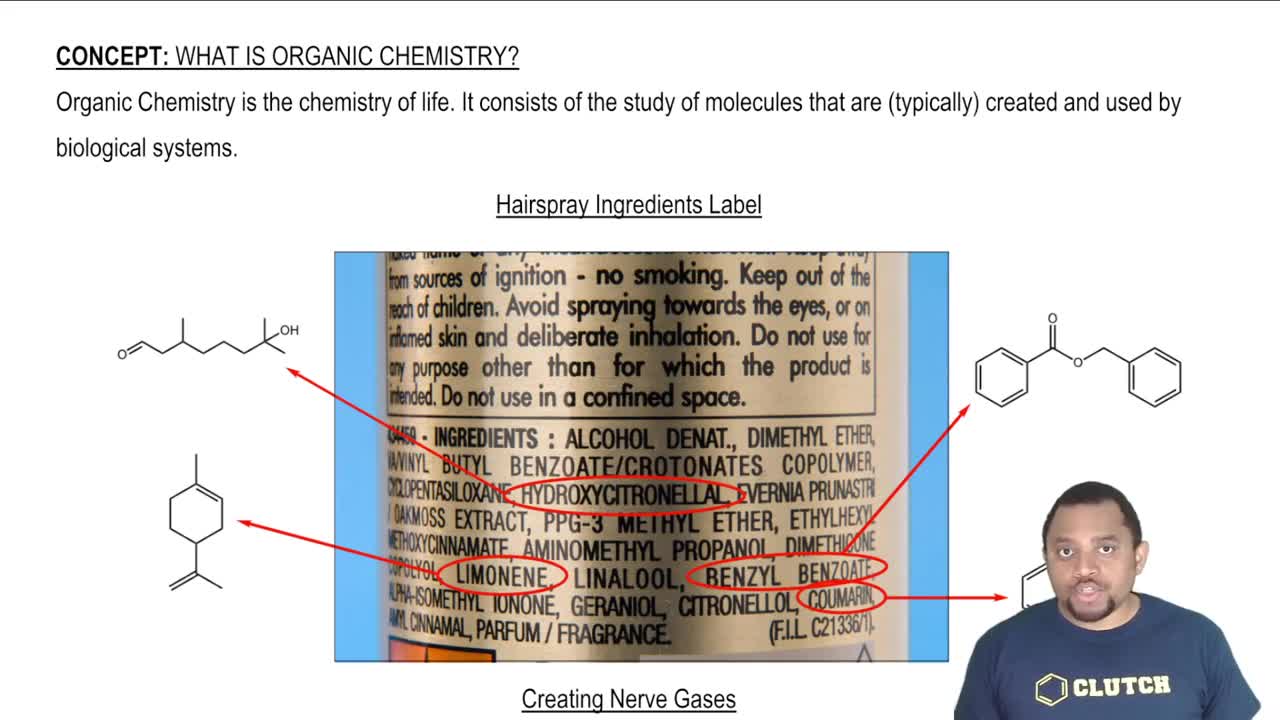
 02:18
02:18