Ch.12 Food as Fuel An Overview of Metabolism
Frost - General, Organic and Biological Chemistry 4th Edition
Frost4th EditionGeneral, Organic and Biological ChemistryISBN: 9780134988696Not the one you use?Change textbook
Chapter 8, Problem 62c

Name the metabolic substrate(s) that can be produced from the carbon atoms of each of the following amino acids:
c. cysteine

Verified step by step guidance
1
Understand that amino acids can be metabolized into various substrates depending on their structure and the metabolic pathways involved. Cysteine is a sulfur-containing amino acid.
Recognize that cysteine can be converted into pyruvate, a key intermediate in cellular metabolism, through a series of enzymatic reactions. Pyruvate is involved in glycolysis and the citric acid cycle.
Note that the sulfur atom in cysteine is removed during its conversion to pyruvate. This process involves desulfuration, where the sulfur is released as hydrogen sulfide (H₂S) or incorporated into other sulfur-containing compounds.
Consider that cysteine can also contribute to the synthesis of glutathione, an important antioxidant in the body, but this is not directly related to the carbon atoms being converted into metabolic substrates.
Summarize that the primary metabolic substrate produced from the carbon atoms of cysteine is pyruvate, which can then enter various metabolic pathways such as energy production or gluconeogenesis.

Verified video answer for a similar problem:

This video solution was recommended by our tutors as helpful for the problem above.
Video duration:
3m
Was this helpful?

Key Concepts

Here are the essential concepts you must grasp in order to answer the question correctly.

Amino Acid Metabolism

Amino acid metabolism involves the biochemical processes that break down amino acids for energy or convert them into other compounds. Each amino acid can be transformed into various metabolic substrates, depending on its structure and the body's needs. Understanding these pathways is crucial for identifying the specific substrates produced from amino acids like cysteine.
Recommended video:
Guided course
3:03
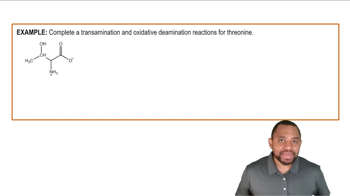
Amino Acid Catabolism: Amino Group Example 2

Cysteine Catabolism

Cysteine is a sulfur-containing amino acid that can be catabolized to produce several important metabolites. It can be converted into pyruvate, which enters the citric acid cycle for energy production, or into other compounds like glutathione, a key antioxidant. Recognizing these pathways is essential for determining the metabolic substrates derived from cysteine.
Recommended video:
Guided course
2:06
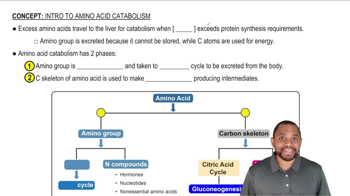
Intro to Amino Acid Catabolism Concept 1

Metabolic Substrates

Metabolic substrates are the molecules that serve as the starting materials for metabolic reactions. In the context of amino acids, these substrates can include intermediates like pyruvate, acetyl-CoA, or other compounds that enter various metabolic pathways. Identifying the specific substrates produced from cysteine is important for understanding its role in metabolism and energy production.
Recommended video:
Guided course
2:32
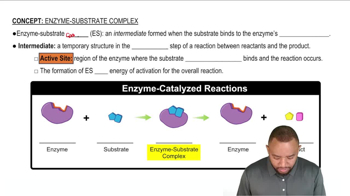
Enzyme-Substrate Complex Concept 1