Pearson+ LogoPearson+ Logo
Ch.10 Proteins Workers of the Cell
Frost - General, Organic and Biological Chemistry 4th Edition
Frost4th EditionGeneral, Organic and Biological ChemistryISBN: 9780134988696Not the one you use?Change textbook
Chapter 6, Problem 8d

Draw the structure for the amino acid represented by each of the following abbreviations:
d. Y

Verified step by step guidance
1
Identify the amino acid abbreviation 'Y'. In biochemistry, 'Y' stands for Tyrosine, which is one of the 20 standard amino acids.
Understand the general structure of an amino acid: it consists of a central carbon atom (α-carbon) bonded to an amino group (-NH₂), a carboxyl group (-COOH), a hydrogen atom, and a unique side chain (R-group).
Determine the specific side chain (R-group) for Tyrosine. Tyrosine has a phenol group (-C₆H₄OH) attached to the α-carbon via a methylene group (-CH₂).
Combine the general amino acid structure with Tyrosine's specific side chain. The structure will include the α-carbon bonded to the amino group, carboxyl group, hydrogen atom, and the phenol-containing side chain.
Draw the complete structure of Tyrosine, ensuring proper placement of all functional groups: the amino group (-NH₂) on one side, the carboxyl group (-COOH) on the opposite side, and the phenol-containing side chain (-CH₂-C₆H₄OH) attached to the α-carbon.

Verified video answer for a similar problem:

This video solution was recommended by our tutors as helpful for the problem above.
Video duration:
1m
Was this helpful?

Key Concepts

Here are the essential concepts you must grasp in order to answer the question correctly.

Amino Acids

Amino acids are organic compounds that serve as the building blocks of proteins. Each amino acid consists of a central carbon atom, an amino group, a carboxyl group, a hydrogen atom, and a variable side chain (R group) that determines the specific properties of the amino acid. Understanding the structure of amino acids is essential for grasping how they combine to form proteins.
Recommended video:
Guided course
3:03
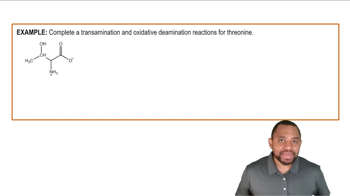
Amino Acid Catabolism: Amino Group Example 2

Amino Acid Abbreviations

Amino acids are often represented by one-letter or three-letter abbreviations for convenience in scientific communication. For example, 'Y' stands for tyrosine, which is an amino acid with a specific side chain that influences its chemical properties and role in proteins. Familiarity with these abbreviations is crucial for interpreting and drawing amino acid structures accurately.
Recommended video:
Guided course
3:03
Amino Acid Catabolism: Amino Group Example 2

Chemical Structure of Tyrosine

Tyrosine is an aromatic amino acid characterized by a phenolic side chain, which contributes to its unique properties, including its role in protein structure and function. The chemical structure of tyrosine includes a hydroxyl group (-OH) attached to a benzene ring, making it polar and capable of forming hydrogen bonds. Understanding its structure is vital for predicting its behavior in biological systems.
Recommended video:
Guided course
00:58
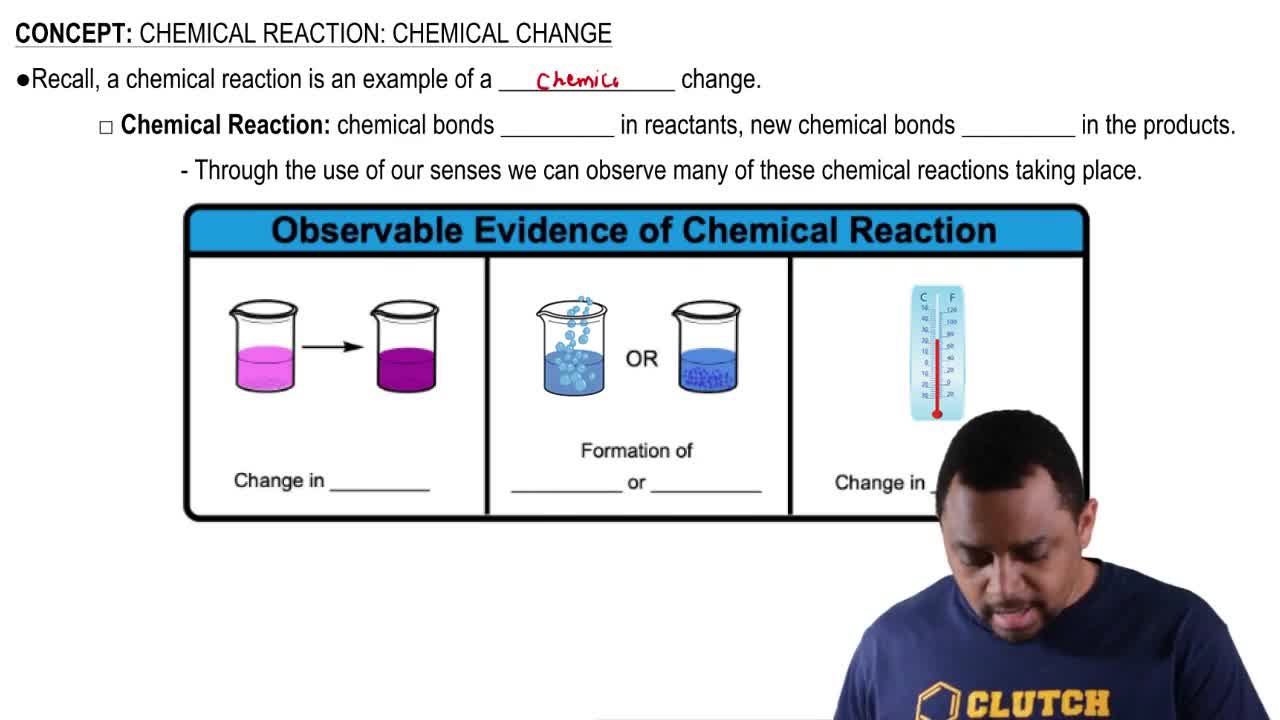
Chemical Reaction: Chemical Change Concept 1