
Pearson+ LogoPearson+ Logo
Ch. 46 - Chemical Signals in Animals
Freeman - Biological Science 8th Edition
Freeman8th EditionBiological ScienceISBN: 9780138276263Not the one you use?Change textbook
Chapter 46, Problem 4

True or False: In hormone systems, negative feedback occurs when the presence of a hormone inhibits release of the hormone.

Verified step by step guidance
1
Understand the concept of negative feedback in hormone systems: Negative feedback is a regulatory mechanism in which the output of a process inhibits or slows down the process itself.
Identify the role of hormones in this process: Hormones are chemical messengers that regulate physiological processes in the body.
Analyze the statement: The statement says that the presence of a hormone inhibits the release of the same hormone, which is a characteristic of negative feedback mechanisms.
Apply the concept to the statement: In many hormone systems, such as the release of thyroid hormones or cortisol, the presence of a certain level of hormone in the blood signals the system to reduce or stop further hormone release.
Conclude the truth value: The statement is true, as it correctly describes how negative feedback works in hormone systems.

Verified video answer for a similar problem:

This video solution was recommended by our tutors as helpful for the problem above.
Video duration:
2m
Was this helpful?

Key Concepts

Here are the essential concepts you must grasp in order to answer the question correctly.

Negative Feedback Mechanism

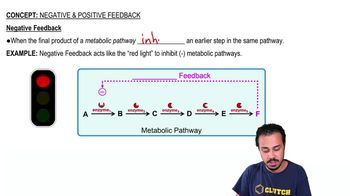
Negative feedback is a regulatory mechanism in biological systems where the output of a process inhibits its own production. In hormone systems, this means that when a hormone reaches a certain level in the bloodstream, it signals the endocrine glands to reduce or stop its further release, maintaining homeostasis.
Recommended video:
Guided course
02:41
Negative Feedback

Hormone Regulation

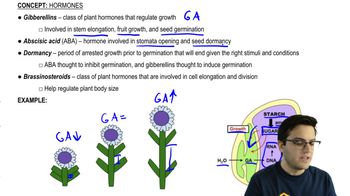
Hormones are chemical messengers produced by glands in the endocrine system that regulate various physiological processes. Their levels must be tightly controlled, and negative feedback is a key strategy for ensuring that hormone concentrations remain within optimal ranges, preventing overactivity or deficiency.
Recommended video:
Guided course
08:18
Plant Hormones and Senescence

Homeostasis

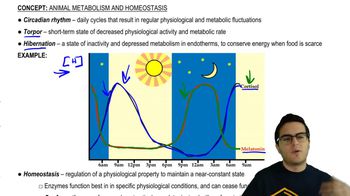
Homeostasis refers to the stable internal conditions maintained by living organisms despite external changes. Hormonal regulation, including negative feedback mechanisms, plays a crucial role in achieving homeostasis by adjusting physiological processes such as metabolism, growth, and response to stress.
Recommended video:
Related Practice