Pearson+ LogoPearson+ Logo
Ch. 45 - Animal Movement
Freeman - Biological Science 8th Edition
Freeman8th EditionBiological ScienceISBN: 9780138276263Not the one you use?Change textbook
Chapter 45, Problem 3

Which of the following is critical to the function of most exoskeletons, endoskeletons, and hydrostatic skeletons?
a. Muscles interact with the skeleton in antagonistic groups.
b. Muscles attach to each of these types of skeletons via tendons.
c. Muscles extend joints by pushing skeletal elements.
d. Segments of the body or limbs are extended when paired muscles relax in unison.

Verified step by step guidance
1
Understand the role of muscles in skeletal systems: Muscles are essential for movement and function in all types of skeletons, including exoskeletons, endoskeletons, and hydrostatic skeletons.
Recognize the concept of antagonistic muscle groups: In many organisms, muscles work in pairs known as antagonistic groups, where one muscle contracts while the other relaxes, allowing for movement.
Consider how muscles interact with different types of skeletons: Muscles typically attach to skeletons via tendons, which are strong connective tissues that transmit the force generated by muscle contraction to the skeletal elements.
Evaluate the mechanism of joint movement: Muscles generally do not push skeletal elements; instead, they pull on them to create movement. This is a key aspect of how muscles extend or flex joints.
Analyze the role of muscle relaxation in movement: Movement often involves the coordinated relaxation and contraction of paired muscles, allowing for smooth and controlled extension of body segments or limbs.

Verified video answer for a similar problem:

This video solution was recommended by our tutors as helpful for the problem above.
Video duration:
1m
Was this helpful?

Key Concepts

Here are the essential concepts you must grasp in order to answer the question correctly.

Muscle-Skeleton Interaction

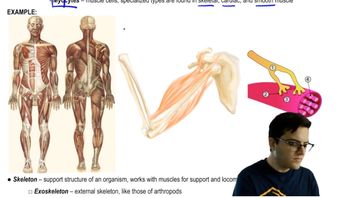
Muscle-skeleton interaction is crucial for movement in organisms with exoskeletons, endoskeletons, and hydrostatic skeletons. Muscles work in antagonistic pairs, where one muscle contracts while the other relaxes, allowing for precise control of movement. This interaction is essential for locomotion and various bodily functions.
Recommended video:
Guided course
02:08
Muscle System and Skeleton

Tendon Attachment

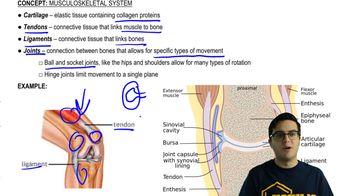
Tendons are fibrous connective tissues that attach muscles to bones or other structures, facilitating movement. In organisms with exoskeletons, endoskeletons, and hydrostatic skeletons, tendons play a critical role in transmitting the force generated by muscle contractions to the skeleton, enabling movement and stability.
Recommended video:

Antagonistic Muscle Groups

Antagonistic muscle groups consist of pairs of muscles that work against each other to create movement. When one muscle contracts, the opposing muscle relaxes, allowing for joint extension or flexion. This mechanism is vital for the function of various skeleton types, ensuring coordinated and controlled movements.
Recommended video:
Guided course
06:04
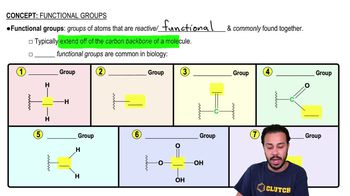
Functional Groups
Related Practice
Textbook Question

Which of the following statements regarding control of muscle tissue is/are correct? Select True or False for each statement.

T/F All skeletal muscles are voluntary.

T/F Cardiac muscle is involuntary.

T/F Some smooth muscle tissues are voluntary, and others are involuntary.

T/F Parasympathetic and sympathetic neurons innervate skeletal, cardiac, and smooth muscle tissues.

Textbook Question

In muscle cells, myosin molecules continue moving along actin molecules as long as:

a. ATP is present and troponin is not bound to Ca²⁺.

b. ADP is present and tropomyosin is released from intracellular stores.

c. ADP is present and the intracellular acetylcholine level is high.

d. ATP is present and the intracellular Ca²⁺ concentration is high.

1
views
Textbook Question

How did data on sarcomere structure inspire the sliding-filament model of muscle contraction?

Explain why the observation that muscle cells contain many mitochondria and extensive smooth endoplasmic reticulum turned out to be logical once the molecular mechanism of muscular contraction was understood.

Textbook Question

Rigor mortis is the stiffening of a body after death that occurs when myosin binds to actin but cannot unbind. What prevents myosin from unbinding?

Textbook Question

In 2023, Tigist Assefa of Ethiopia set a new record with a time of 2 hours, 11 minutes, and 53 seconds. Scientists, trainers, and athletes alike have wondered about the extent to which muscle structure and function contribute to success in athletes such as Assefa. What makes elite distance runners so good? Are their muscles somehow different from those of less successful athletes and non-athletes? Compare and contrast the structure and function of the three types of skeletal muscle fibers.