Pearson+ LogoPearson+ Logo
Ch. 41 - Animal Nutrition
Freeman - Biological Science 8th Edition
Freeman8th EditionBiological ScienceISBN: 9780138276263Not the one you use?Change textbook
Chapter 41, Problem 13b

Minnows are mainly carnivorous, eating insects and other small animals. However, herbivory has evolved independently in minnows several times.
What changes in digestive structure and function are associated with the evolution of herbivory?
Researchers compared the relative gut length—the length of the digestive tract divided by body length—in four species of herbivorous minnows and four species of carnivorous minnows. The results are shown in the graph provided here. Based on these data, what conclusion can you draw about the relationship between diet and gut length?

Verified step by step guidance
1
Examine the graph provided, which compares the relative gut length of herbivorous and carnivorous minnows. Note that relative gut length is calculated as the length of the digestive tract divided by body length.
Observe that the herbivorous species have a significantly longer relative gut length compared to the carnivorous species. This is indicated by the higher bars for herbivorous species in the graph.
Understand that a longer gut length in herbivorous species is likely an adaptation to their diet, which consists mainly of plant material. Plant material is generally harder to digest and requires more time and surface area for effective nutrient absorption.
Recognize that the shorter gut length in carnivorous species reflects their diet of insects and small animals, which are typically easier to digest and require less digestive tract length for nutrient absorption.
Conclude that the data suggests a strong relationship between diet and gut length, where herbivory in minnows is associated with an increased gut length to accommodate the digestion of plant material.

Verified video answer for a similar problem:

This video solution was recommended by our tutors as helpful for the problem above.
Video duration:
1m
Was this helpful?

Key Concepts

Here are the essential concepts you must grasp in order to answer the question correctly.

Digestive Adaptations

Herbivorous animals often exhibit specific adaptations in their digestive systems to efficiently process plant material, which is typically more fibrous and harder to digest than animal matter. These adaptations can include longer gut lengths, specialized stomach compartments, and the presence of symbiotic microorganisms that help break down cellulose.
Recommended video:
Guided course
05:11
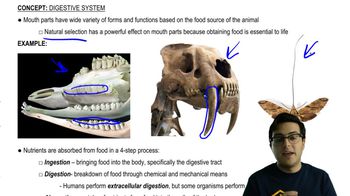
Digestion and Digestive Tracts

Relative Gut Length

Relative gut length is a measure that compares the length of the digestive tract to the body length of an organism. This metric is crucial for understanding dietary habits, as herbivorous species generally have longer guts to facilitate the breakdown of complex plant materials, while carnivorous species tend to have shorter guts due to the easier digestibility of animal proteins.
Recommended video:
03:54
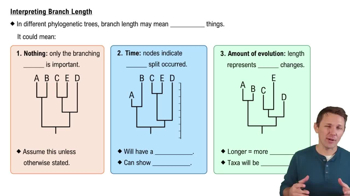
Interpreting Branch Length

Evolutionary Ecology

Evolutionary ecology examines how evolutionary processes shape the interactions between organisms and their environments, including dietary adaptations. The evolution of herbivory in minnows illustrates how changes in diet can lead to significant morphological and physiological changes, such as increased gut length, which enhance survival and reproductive success in specific ecological niches.
Recommended video:
02:45
History of Evolutionary Theory Example 1
Related Practice
Textbook Question

Among vertebrates, the large intestine exists only in lineages that are primarily terrestrial (amphibians, reptiles, and mammals). Propose a hypothesis to explain this observation.
Textbook Question

Minnows are mainly carnivorous, eating insects and other small animals. However, herbivory has evolved independently in minnows several times.

What changes in digestive structure and function are associated with the evolution of herbivory?

Like cichlids, minnows use their pharyngeal jaws to process food. Suggest some possible structural differences between the teeth on the pharyngeal jaws of carnivorous and herbivorous minnows.

Textbook Question

Minnows are mainly carnivorous, eating insects and other small animals. However, herbivory has evolved independently in minnows several times.

What changes in digestive structure and function are associated with the evolution of herbivory?

Which of the following is true of the digestive tracts of minnows?

a. They are incomplete but have both a mouth and an anus.

b. They are complete, facilitating compartmentalization of digestion in different organs.

c. They are incomplete, with no accessory organs.

d. They are complete and include a large gastrovascular cavity.

Textbook Question

Minnows are mainly carnivorous, eating insects and other small animals. However, herbivory has evolved independently in minnows several times.

What changes in digestive structure and function are associated with the evolution of herbivory?

Suggest a function of the difference in relative gut lengths of herbivorous and carnivorous minnows.

Textbook Question

Minnows are mainly carnivorous, eating insects and other small animals. However, herbivory has evolved independently in minnows several times.

What changes in digestive structure and function are associated with the evolution of herbivory?

Which minnows, herbivorous or carnivorous, should exhibit higher cellulase activity in the gut? Explain.

Textbook Question

Minnows are mainly carnivorous, eating insects and other small animals. However, herbivory has evolved independently in minnows several times.

What changes in digestive structure and function are associated with the evolution of herbivory?

Why did the researchers compare relative gut length instead of absolute gut length?