
Pearson+ LogoPearson+ Logo
Ch. 40 - Water and Electrolyte Balance in Animals
Freeman - Biological Science 8th Edition
Freeman8th EditionBiological ScienceISBN: 9780138276263Not the one you use?Change textbook
Chapter 40, Problem 6

The chloride cells of fish gills have a high density of mitochondria. How does this characteristic relate to the functional role of chloride cells?
Would you expect other epithelial cells involved in ion transport to contain large numbers of mitochondria? Explain.

Verified step by step guidance
1
Chloride cells in fish gills are specialized epithelial cells responsible for ion transport, particularly the exchange of chloride ions. This process is energy-intensive, requiring ATP to drive active transport mechanisms.
Mitochondria are the organelles within cells that produce ATP through cellular respiration. A high density of mitochondria in chloride cells indicates a high demand for energy to support the active transport of ions against their concentration gradients.
The presence of numerous mitochondria ensures that chloride cells have sufficient ATP to power ion pumps, such as the Na+/K+ ATPase and other transporters involved in maintaining ionic balance in the fish's body.
Other epithelial cells involved in ion transport, such as those in the kidney or intestinal lining, would also be expected to contain large numbers of mitochondria. This is because they similarly require substantial energy to perform active transport of ions and maintain homeostasis.
In summary, the high density of mitochondria in chloride cells and other ion-transporting epithelial cells is directly related to their functional role in energy-demanding processes of active ion transport.

Verified video answer for a similar problem:

This video solution was recommended by our tutors as helpful for the problem above.
Video duration:
1m
Was this helpful?

Key Concepts

Here are the essential concepts you must grasp in order to answer the question correctly.

Chloride Cells Function

Chloride cells, located in the gills of fish, are specialized epithelial cells responsible for ion regulation, particularly the excretion of excess salts. They play a crucial role in maintaining osmotic balance by actively transporting ions like chloride and sodium against concentration gradients, which is essential for fish living in varying salinity environments.
Recommended video:
Guided course
05:33
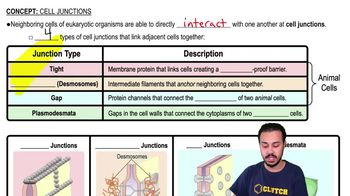
Cell Junctions

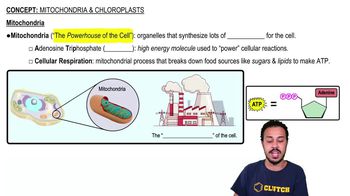
Role of Mitochondria in Ion Transport

Mitochondria are the powerhouse of the cell, providing ATP necessary for active transport processes. In chloride cells, the high density of mitochondria supports the energy-intensive task of ion transport, enabling the cells to maintain ion gradients across the gill epithelium. This is vital for the active transport mechanisms that require substantial energy input.
Recommended video:

Epithelial Cells and Ion Transport

Epithelial cells involved in ion transport, like those in the kidney or intestinal lining, often contain numerous mitochondria due to their role in active transport. These cells require significant energy to move ions against concentration gradients, similar to chloride cells in fish gills, indicating a common physiological adaptation for efficient ion regulation across different organisms.
Recommended video:
Guided course
07:06
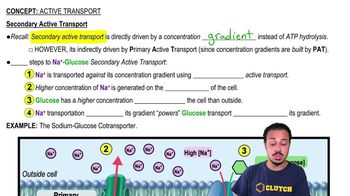
Secondary Active Transport
Related Practice
Textbook Question

What effect does antidiuretic hormone (ADH) have on the nephron?

a. It increases the water permeability of the descending limb of the loop of Henle.

b. It decreases the water permeability of the descending limb of the loop of Henle.

c. It increases the water permeability of the collecting duct.

d. It decreases the water permeability of the collecting duct.

1
views
Textbook Question

In Gila monsters, the organ in which water from urine is reabsorbed into the bloodstream is the___________.             .

Textbook Question

Compare and contrast the types of nitrogenous wastes excreted by animals. Identify which type can be excreted with the least water, which is most toxic, and which waste is excreted by bony fishes, by mammals, and by insects. Which type would you expect to be produced by embryos inside eggs laid on land?

Textbook Question

Explain why mammals would not be able to produce concentrated urine if their nephrons lacked loops of Henle.

Textbook Question

Scientists have noted that marine invertebrates tend to be osmoconformers, while freshwater invertebrates tend to be osmoregulators. Suggest an explanation for this phenomenon.

Textbook Question

Biologists have been able to produce mice that lack functioning genes for aquaporins. How would the urine of these mice compare to that of mice with normal aquaporins?

a. Lower volume and lower osmolarity

b. Lower volume and higher osmolarity

c. Higher volume and lower osmolarity

d. Higher volume and higher osmolarity