Pearson+ LogoPearson+ Logo
Ch. 28 - Green Algae and Land Plants
Freeman - Biological Science 8th Edition
Freeman8th EditionBiological ScienceISBN: 9780138276263Not the one you use?Change textbook
Chapter 28, Problem 15

<Image>
Moss sperm are motile and capable of swimming short distances to fertilize an egg. However, it was unknown until recently how sperm make their way from male to female gametophytes that may be separated by a distance of several centimeters or more.
Besides springtails, are there other ways moss sperm may be transferred from male to female gametophytes?

Verified step by step guidance
1
Understand the reproductive strategy of mosses: Mosses are non-vascular plants that reproduce sexually through the production of gametes. The male gametophyte produces sperm, while the female gametophyte produces eggs.
Recognize the role of water in moss reproduction: Moss sperm are motile and require a film of water to swim towards the egg. This is why mosses are often found in moist environments.
Consider the role of environmental factors: Besides springtails, other small invertebrates or environmental factors such as rain or dew can facilitate the transfer of sperm by creating a water pathway or by physically moving the sperm.
Explore the possibility of wind or water currents: In some cases, wind or water currents can help disperse sperm over short distances, although this is less common due to the need for a moist environment.
Investigate the role of other organisms: Other organisms, such as insects or small animals, might inadvertently transfer sperm while moving through the moss, similar to how pollinators transfer pollen in flowering plants.

Verified video answer for a similar problem:

This video solution was recommended by our tutors as helpful for the problem above.
Video duration:
24s
Was this helpful?

Key Concepts

Here are the essential concepts you must grasp in order to answer the question correctly.

Moss Reproduction

Mosses reproduce through a life cycle that includes both sexual and asexual phases. The sexual phase involves the production of gametes: sperm from male gametophytes and eggs from female gametophytes. Fertilization occurs when sperm swim through water to reach the egg, highlighting the importance of a moist environment for successful reproduction.
Recommended video:
Guided course
03:12
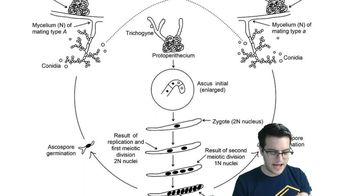
Fungi Reproduction - 3

Sperm Motility in Mosses

Moss sperm are flagellated and require a film of water to swim towards the egg for fertilization. This motility is crucial for the sexual reproduction of mosses, as it allows sperm to navigate the moist environment and reach the female gametophyte, which may be located at a distance from the male gametophyte.
Recommended video:

Role of Biotic and Abiotic Factors in Sperm Transfer

Besides springtails, other biotic factors like insects or small animals, and abiotic factors such as rain or water currents, can facilitate the transfer of moss sperm. These agents can inadvertently carry sperm across distances, aiding in fertilization by bridging the gap between male and female gametophytes in the absence of direct water pathways.
Recommended video:
Guided course
06:59
Biotic and Abiotic Factors
Related Practice
Textbook Question

<Image>

Moss sperm are motile and capable of swimming short distances to fertilize an egg. However, it was unknown until recently how sperm make their way from male to female gametophytes that may be separated by a distance of several centimeters or more.

What structure do moss sperm use for motility, and how does that reflect the evolution of land plants from green algae?

Textbook Question

<Image>

Moss sperm are motile and capable of swimming short distances to fertilize an egg. However, it was unknown until recently how sperm make their way from male to female gametophytes that may be separated by a distance of several centimeters or more.

Beyond the results presented here, what other evidence would be useful when drawing conclusions about the role of springtails in moss reproduction?

Textbook Question

Moss sperm are motile and capable of swimming short distances to fertilize an egg. However, it was unknown until recently how sperm make their way from male to female gametophytes that may be separated by a distance of several centimeters or more. A friend in your biology study group claims that eggs in mosses are fertilized by spores. What is wrong with that statement?

Textbook Question

<Image>

Moss sperm are motile and capable of swimming short distances to fertilize an egg. However, it was unknown until recently how sperm make their way from male to female gametophytes that may be separated by a distance of several centimeters or more.

Animals are responsible for pollinating many flowering plants. Did animal-mediated fertilization originate with flowering plants, or was this mode of sperm dispersal likely in place before the origin of flowering plants? Explain.