Pearson+ LogoPearson+ Logo
Ch. 28 - Protists
Campbell - Campbell Biology 11th Edition
Urry11th EditionCampbell BiologyISBN: 9789357423311Not the one you use?Change textbook
Chapter 28, Problem 7

Medical researchers seek to develop drugs that can kill or restrict the growth of human pathogens yet have few harmful effects on patients. These drugs often work by disrupting the metabolism of the pathogen or by targeting its structural features.
Draw and label a phylogenetic tree that includes an ancestral prokaryote and the following groups of organisms: Excavata, SAR, Archaeplastida, Unikonta, and, within Unikonta, amoebozoans, animals, choanoflagellates, fungi, and nucleariids. Based on this tree, hypothesize whether it would be most difficult to develop drugs to combat human pathogens that are prokaryotes, protists, animals, or fungi. (You do not need to consider the evolution of drug resistance by the pathogen.)

Verified step by step guidance
1
Start by understanding the concept of a phylogenetic tree, which is a diagram that represents evolutionary relationships among various biological species based upon similarities and differences in their physical or genetic characteristics.
Identify the groups of organisms to be included in the phylogenetic tree: Excavata, SAR, Archaeplastida, Unikonta, and within Unikonta, amoebozoans, animals, choanoflagellates, fungi, and nucleariids.
Place the ancestral prokaryote at the base of the tree, as prokaryotes are considered the most ancient form of life from which other groups evolved.
Draw branches from the ancestral prokaryote to represent the major eukaryotic supergroups: Excavata, SAR, Archaeplastida, and Unikonta. Within Unikonta, further branch out to include amoebozoans, animals, choanoflagellates, fungi, and nucleariids.
Hypothesize which group of pathogens might be most difficult to target with drugs based on their evolutionary proximity to humans. Consider that pathogens closely related to humans, such as animals and fungi, might be more challenging to target without affecting human cells, due to shared metabolic and structural features.

Verified video answer for a similar problem:

This video solution was recommended by our tutors as helpful for the problem above.
Video duration:
1m
Was this helpful?

Key Concepts

Here are the essential concepts you must grasp in order to answer the question correctly.

Phylogenetic Tree

A phylogenetic tree is a diagram that represents the evolutionary relationships among various biological species based on similarities and differences in their physical or genetic characteristics. It helps in understanding how different groups of organisms are related through common ancestors, which is crucial for hypothesizing drug development challenges against pathogens.
Recommended video:
04:13
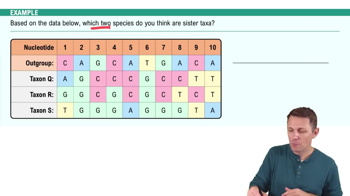
Building Phylogenetic Trees Example 2

Metabolism Disruption

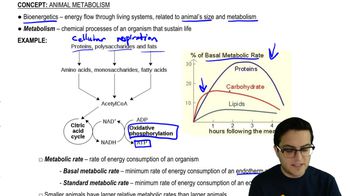
Metabolism disruption involves targeting the biochemical processes that allow pathogens to grow and reproduce. Drugs that disrupt metabolism aim to inhibit essential pathways unique to the pathogen, minimizing harm to the host. Understanding these pathways is vital for developing effective treatments against specific groups like prokaryotes, protists, animals, or fungi.
Recommended video:
Guided course
07:08
Metabolic Rate

Structural Features of Pathogens

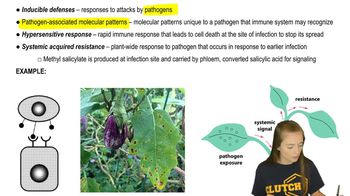
Targeting structural features of pathogens involves designing drugs that interfere with the physical components essential for their survival, such as cell walls or membranes. This approach requires knowledge of the unique structural characteristics of different pathogens, which can vary significantly between prokaryotes, protists, animals, and fungi, influencing drug development strategies.
Recommended video:
Guided course
08:59
Pathogen Defenses