Pearson+ LogoPearson+ Logo
Ch. 38 - Angiosperm Reproduction and Biotechnology
Campbell - Campbell Biology 12th Edition
Urry12th EditionCampbell BiologyISBN: 9785794169850Not the one you use?Change textbook
Chapter 38, Problem 8

Draw and label the parts of a flower.

Verified step by step guidance
1
Start by drawing the main structure of the flower, which includes the stem and the receptacle at the top of the stem where the flower parts are attached.
Draw the sepals, which are the outermost parts of the flower. They are usually green and protect the flower bud before it opens.
Next, draw the petals, which are often colorful and located just inside the sepals. They attract pollinators to the flower.
Inside the petals, draw the stamens, which are the male reproductive parts of the flower. Each stamen consists of a filament and an anther at the top where pollen is produced.
Finally, draw the pistil, which is the female reproductive part of the flower. It is usually located in the center and consists of the stigma, style, and ovary. The stigma is the top part that receives pollen, the style is the tube that leads to the ovary, and the ovary contains the ovules.

Verified video answer for a similar problem:

This video solution was recommended by our tutors as helpful for the problem above.
Video duration:
2m
Was this helpful?

Key Concepts

Here are the essential concepts you must grasp in order to answer the question correctly.

Flower Structure

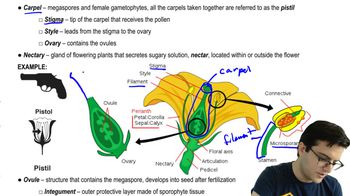
A flower is composed of several key parts, each with a specific function. The main parts include the petals, which attract pollinators; the sepals, which protect the flower bud; the stamens, which are the male reproductive organs; and the pistil, which is the female reproductive organ. Understanding these components is essential for identifying and labeling a flower's anatomy.
Recommended video:
Guided course
04:08
Flower Anatomy

Reproductive Organs

The reproductive organs of a flower are crucial for its role in plant reproduction. The stamen consists of the anther and filament, where pollen is produced. The pistil includes the stigma, style, and ovary, where fertilization occurs. Recognizing these parts helps in understanding how flowers facilitate the reproduction process in plants.
Recommended video:
Guided course
03:12
Fungi Reproduction - 3

Pollination Process

Pollination is the transfer of pollen from the male anther to the female stigma. This process can occur via wind, water, or animal pollinators. Successful pollination leads to fertilization, where the ovules develop into seeds. Knowing how pollination works is vital for understanding the function of flower parts and their role in the life cycle of plants.
Recommended video: