Pearson+ LogoPearson+ Logo
Ch. 32 - An Overview of Animal Diversity
Campbell - Campbell Biology 12th Edition
Urry12th EditionCampbell BiologyISBN: 9785794169850Not the one you use?Change textbook
Chapter 32, Problem 1

One of the characteristics unique to animals is
a. Gastrulation
b. Multicellularity
c. Sexual reproduction
d. Flagellated sperm

Verified step by step guidance
1
Understand the question: It asks for a characteristic unique to animals, meaning it should be a feature that is not found in other kingdoms like plants, fungi, or protists.
Review the options: a. gastrulation, b. multicellularity, c. sexual reproduction, d. flagellated sperm.
Consider each option: Multicellularity (b) is found in plants and fungi, sexual reproduction (c) is common in many organisms including plants and fungi, flagellated sperm (d) can be found in some plants and protists.
Focus on gastrulation (a): Gastrulation is a phase early in the embryonic development of most animals, during which the single-layered blastula is reorganized into a multilayered structure known as the gastrula. This process is unique to animals.
Conclude that gastrulation is the characteristic unique to animals, as it is a developmental process not found in other kingdoms.

Verified video answer for a similar problem:

This video solution was recommended by our tutors as helpful for the problem above.
Video duration:
1m
Was this helpful?

Key Concepts

Here are the essential concepts you must grasp in order to answer the question correctly.

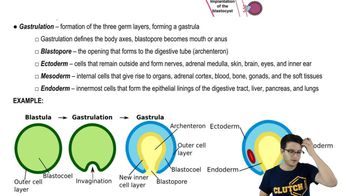
Gastrulation

Gastrulation is a crucial phase in embryonic development where the single-layered blastula reorganizes into a multilayered structure known as the gastrula. This process establishes the primary germ layers: ectoderm, mesoderm, and endoderm, which later differentiate into various tissues and organs. Gastrulation is unique to animals and is essential for proper development.
Recommended video:
Guided course
04:22
Implantion and Gastrulation

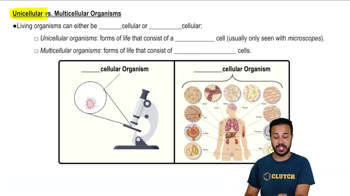
Multicellularity

Multicellularity refers to organisms composed of multiple cells that work collaboratively, allowing for specialization and division of labor among different cell types. This characteristic is not exclusive to animals, as plants, fungi, and some protists also exhibit multicellularity. It enables complex structures and functions, such as tissues and organs, to develop.
Recommended video:
Guided course
02:09
Unicellular vs. Multicellular

Flagellated Sperm

Flagellated sperm are sperm cells equipped with a flagellum, a whip-like structure that enables motility, allowing them to swim towards the egg for fertilization. This feature is common in many animal species, facilitating sexual reproduction. While flagellated sperm are prevalent in animals, they are not unique to them, as some plants and algae also produce flagellated gametes.
Recommended video:
Guided course
06:26
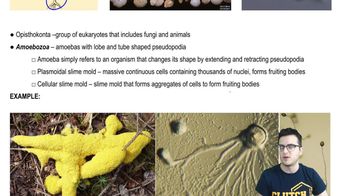
Rhizarians and Amoebozoa