

Pearson+ LogoPearson+ Logo
Ch. 11 - Cell Communication
Campbell - Campbell Biology 12th Edition
Urry12th EditionCampbell BiologyISBN: 9785794169850Not the one you use?Change textbook
Chapter 11, Problem 3

Lipid-soluble signaling molecules, such as aldosterone, cross the membranes of all cells but affect only target cells because
a. Only target cells retain the appropriate DNA segments.
b. Intracellular receptors are present only in target cells.
c. Only target cells have enzymes that break down aldosterone.
d. Only in target cells is aldosterone able to initiate the phosphorylation cascade that turns genes on.

Verified step by step guidance
1
Understand the nature of lipid-soluble signaling molecules: These molecules can easily cross cell membranes due to their ability to dissolve in the lipid bilayer.
Recognize that not all cells respond to lipid-soluble signals: Although these molecules can enter any cell, only specific cells, known as target cells, will respond to them.
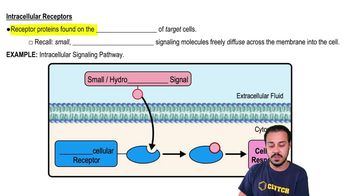
Identify the role of intracellular receptors: Target cells have specific receptors inside the cell that bind to the signaling molecule. This binding is crucial for the signal to have an effect.
Consider the options given: Evaluate each option based on your understanding of how lipid-soluble signaling molecules work. Focus on the presence of intracellular receptors in target cells.
Conclude which option correctly explains why only target cells are affected: The correct answer involves the presence of intracellular receptors in target cells, which bind the signaling molecule and initiate a cellular response.

Verified video answer for a similar problem:

This video solution was recommended by our tutors as helpful for the problem above.
Video duration:
37s
Was this helpful?

Key Concepts

Here are the essential concepts you must grasp in order to answer the question correctly.

Lipid-soluble signaling molecules

Lipid-soluble signaling molecules, such as steroid hormones, can easily pass through cell membranes due to their hydrophobic nature. These molecules typically bind to intracellular receptors, which are located within the cytoplasm or nucleus of target cells, allowing them to directly influence gene expression and cellular function.
Recommended video:

Intracellular receptors

Intracellular receptors are proteins located inside the cell, either in the cytoplasm or nucleus, that bind to lipid-soluble signaling molecules. Upon binding, these receptors often act as transcription factors, directly affecting gene expression by interacting with specific DNA sequences, thus influencing cellular responses.
Recommended video:
Guided course
02:28
Intracellular Receptors

Target cells

Target cells are specific cells that respond to signaling molecules due to the presence of specific receptors. In the context of lipid-soluble molecules like aldosterone, only target cells possess the intracellular receptors necessary for binding the molecule, which allows them to initiate specific cellular responses, such as changes in gene expression.
Recommended video:
Guided course
02:50
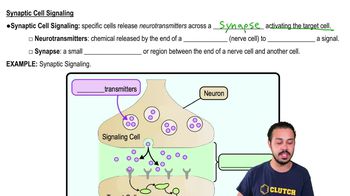
Synaptic Cell Signaling