Textbook Question
Add labels to the figure that follows, which illustrates some molecules that can and cannot pass through cell membranes unaided.
2
views


 Belk, Maier 6th EditionCh. 3 - Is It Possible to Supplement Your Way to Better Performance and Health?Problem 5
 Verified step by step guidance
 03:25
03:25
 08:24
08:24 07:08
07:08Add labels to the figure that follows, which illustrates some molecules that can and cannot pass through cell membranes unaided.
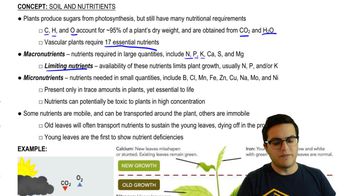
Macronutrients ________.
a. Include carbohydrates and vitamins.
b. Should make up a small percentage of a healthful diet.
c. Are essential in minute amounts to help enzymes function.
d. Include carbohydrates, fats, and proteins.
e. Are synthesized by cells and not necessary to obtain from the diet.
Which of the following is not a function of water?
a. Dispersing nutrients throughout the body.
b. Helping prevent cancer.
c. Helping to regulate body temperature.
d. Helping to regulate blood pressure.
The main constituents of the plasma membrane are ________.
a. Carbohydrates and lipids
b. Proteins and phospholipids
c. Fats and carbohydrates
d. Fatty acids and nucleic acids
A substance moving across a membrane against a concentration gradient is moving by ________.
a. Passive transport
b. Osmosis
c. Facilitated diffusion
d. Active transport
e. Diffusion
A cell that is placed in salty seawater will ________.
a. Take sodium and chloride ions in by diffusion.
b. Move water out of the cell by active transport.
c. Use facilitated diffusion to break apart the sodium and chloride ions.
d. Lose water to the outside of the cell via osmosis.