Pearson+ LogoPearson+ Logo
Ch.12 Food as Fuel An Overview of Metabolism
Frost - General, Organic and Biological Chemistry 4th Edition
Frost4th EditionGeneral, Organic and Biological ChemistryISBN: 9780134988696Not the one you use?Change textbook
Chapter 8, Problem 15c

Name a carbohydrate (if any) that undergoes digestion in each of the following sites:
c. small intestine

Verified step by step guidance
1
Understand that carbohydrates are broken down into simpler sugars during digestion, and this process occurs in specific parts of the digestive system.
Recall that the small intestine is the primary site for the digestion of carbohydrates, where enzymes like pancreatic amylase and disaccharidases (e.g., maltase, lactase, sucrase) act on carbohydrates.
Identify that polysaccharides such as starch are broken down into disaccharides and then into monosaccharides in the small intestine.
Note that disaccharides like maltose, lactose, and sucrose are further digested into monosaccharides (e.g., glucose, galactose, fructose) by specific enzymes in the small intestine.
Conclude that carbohydrates such as starch, maltose, lactose, and sucrose undergo digestion in the small intestine, facilitated by enzymes secreted by the pancreas and the intestinal lining.

Verified video answer for a similar problem:

This video solution was recommended by our tutors as helpful for the problem above.
Video duration:
2m
Was this helpful?

Key Concepts

Here are the essential concepts you must grasp in order to answer the question correctly.

Carbohydrate Digestion

Carbohydrate digestion is the biochemical process by which complex carbohydrates are broken down into simpler sugars, primarily glucose. This process begins in the mouth with salivary amylase and continues in the small intestine, where pancreatic amylase further breaks down starches into disaccharides and monosaccharides, which can be absorbed into the bloodstream.
Recommended video:
Guided course
1:41
Digestion of Lipids Example 1

Small Intestine Function

The small intestine is a crucial site for digestion and nutrient absorption. It consists of three parts: the duodenum, jejunum, and ileum. In the small intestine, enzymes from the pancreas and bile from the liver aid in the digestion of carbohydrates, proteins, and fats, allowing for the absorption of nutrients into the bloodstream.
Recommended video:
Guided course
02:16
Logarithmic Functions

Enzymatic Action

Enzymatic action refers to the role of enzymes in catalyzing biochemical reactions, including the breakdown of carbohydrates. In the small intestine, enzymes such as maltase, sucrase, and lactase act on disaccharides to convert them into monosaccharides, which are then absorbed by the intestinal lining. This enzymatic process is essential for effective digestion and nutrient utilization.
Recommended video:
Guided course
2:39
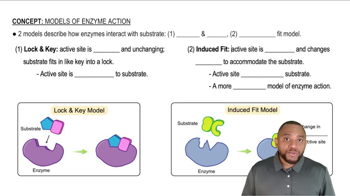
Models of Enzyme Action Concept 1