
Textbook Question
Match the terms (1) ES with the following descriptions:
a. has a tertiary structure that recognizes the substrate
b. is the combination of an enzyme with the substrate
c. has a structure that fits the active site of an enzyme


 Verified step by step guidance
 1:06
1:06
 1:26
1:26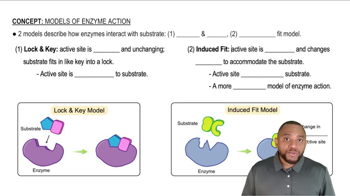 2:39
2:39Match the terms (1) ES with the following descriptions:
a. has a tertiary structure that recognizes the substrate
b. is the combination of an enzyme with the substrate
c. has a structure that fits the active site of an enzyme
Match the terms (2) enzyme with the following descriptions:
a. has a tertiary structure that recognizes the substrate
b. is the combination of an enzyme with the substrate
c. has a structure that fits the active site of an enzyme
Match the terms (3) substrate with the following descriptions:
a. has a tertiary structure that recognizes the substrate
b. is the combination of an enzyme with the substrate
c. has a structure that fits the active site of an enzyme
Do the amino acids that are in the active site of an enzyme have to be near each other in the enzyme’s primary structure? If no, explain.
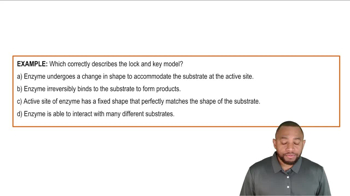
The enzyme trypsin catalyzes the breakdown of many structurally diverse proteins in foods. Does the induced-fit or lock-and-key model explain the action of trypsin better? Explain.
The enzyme sucrase catalyzes the hydrolysis of the disaccharide sucrose but not the disaccharide lactose. Does the induced-fit or lock-and-key model explain the action of sucrase better? Explain.