Pearson+ LogoPearson+ Logo
Ch.15 - Chemical Kinetics
Tro - Chemistry: A Molecular Approach 5th Edition
Tro5th EditionChemistry: A Molecular ApproachISBN: 9780134874371Not the one you use?Change textbook
Chapter 15, Problem 1

What must happen before a chemical reaction can begin?

Verified step by step guidance
1
Chemical reactions require reactant molecules to collide with each other.
The collisions must have sufficient energy to overcome the activation energy barrier.
The molecules must be oriented properly during the collision to allow the formation of new bonds.
The activation energy is the minimum energy required for the reaction to occur.
Once these conditions are met, the reactants can transform into products, initiating the chemical reaction.

Verified video answer for a similar problem:

This video solution was recommended by our tutors as helpful for the problem above.
Video duration:
3m
Was this helpful?

Key Concepts

Here are the essential concepts you must grasp in order to answer the question correctly.

Reactant Interaction

Before a chemical reaction can begin, reactants must come into contact with each other. This interaction allows the molecules to collide with sufficient energy and proper orientation, which is essential for breaking existing bonds and forming new ones. The nature of these interactions can significantly influence the rate and outcome of the reaction.
Recommended video:
Guided course
03:01
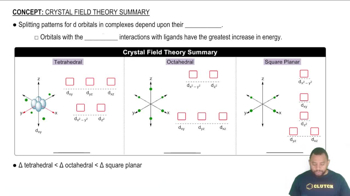
The greatest ligand-orbital interactions result in the greatest increase in energy.

Activation Energy

Activation energy is the minimum energy required for a chemical reaction to occur. It represents the energy barrier that must be overcome for reactants to transform into products. This concept is crucial because even if reactants are present, they will not react unless they possess enough energy to surpass this threshold.
Recommended video:
Guided course
02:02
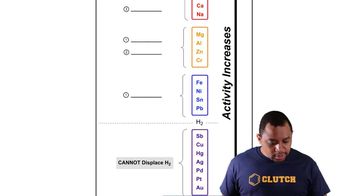
Activity Series Chart

Catalysts

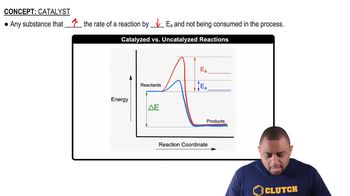
Catalysts are substances that can lower the activation energy of a reaction, thereby increasing the reaction rate without being consumed in the process. They provide an alternative pathway for the reaction, allowing it to proceed more easily. Understanding the role of catalysts is important for controlling and optimizing chemical reactions in various applications.
Recommended video:
Guided course
01:59
Catalyzed vs. Uncatalyzed Reactions