Skip to main content
General Chemistry
My Course
Learn
Exam Prep
AI Tutor
Study Guides
Textbook Solutions
Flashcards
Explore
My Course
Learn
Exam Prep
AI Tutor
Study Guides
Textbook Solutions
Flashcards
Explore
Back
Endothermic & Exothermic Reactions definitions
You can tap to flip the card.
Endothermic Reaction
You can tap to
flip the card.
👆
Endothermic Reaction
A process that absorbs thermal energy, causing molecules to speed up and break bonds, often feeling cold to the touch.
Track progress
Control buttons has been changed to "navigation" mode.
1/15
Related flashcards
Related practice
Recommended videos
Guided course
02:30
Endothermic & Exothermic Reactions
Jules
Guided course
00:55
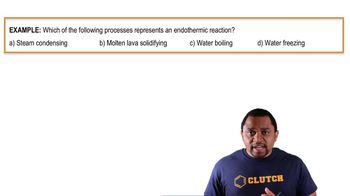
Endothermic & Exothermic Reactions Example 1
Jules
Guided course
02:38
Endothermic & Exothermic Reactions
Jules
Terms in this set (15)
Hide definitions
Endothermic Reaction
A process that absorbs thermal energy, causing molecules to speed up and break bonds, often feeling cold to the touch.
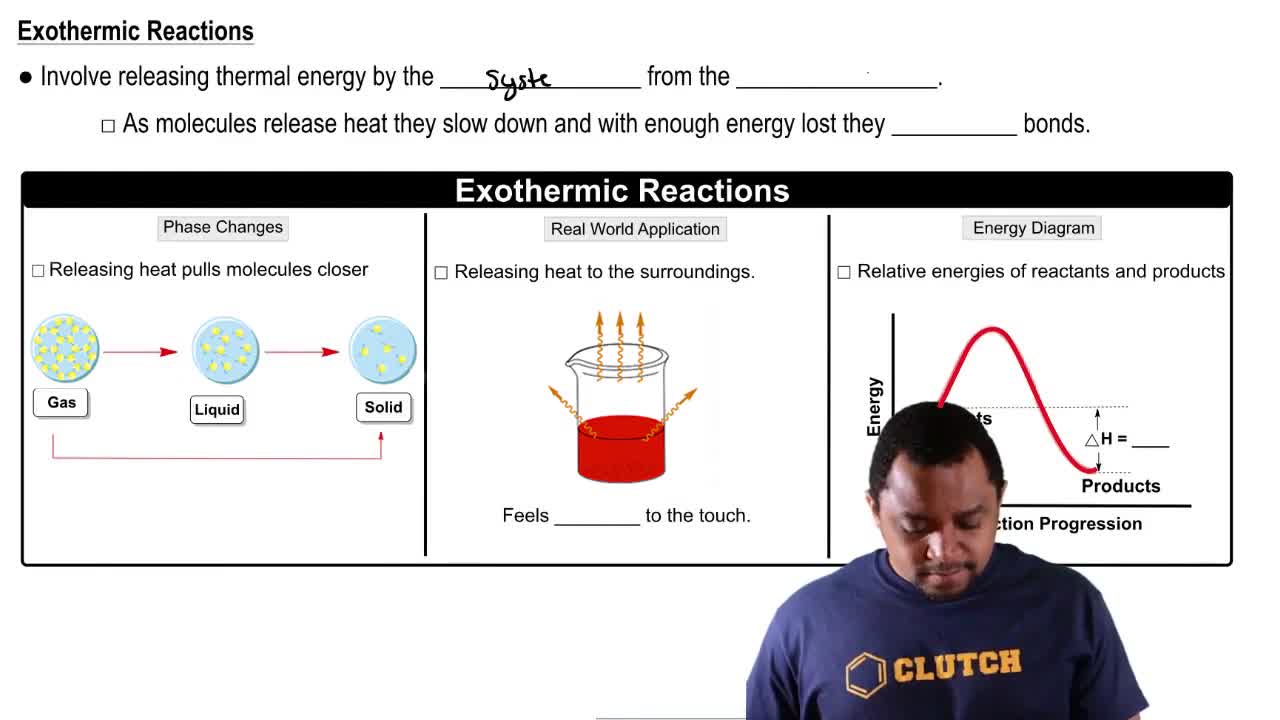
Exothermic Reaction
A process that releases thermal energy, causing molecules to slow down and form bonds, often feeling warm to the touch.
Thermal Energy
The energy absorbed or released during chemical reactions, affecting molecular motion and phase changes.
Phase Change
A transition between different states of matter, such as solid, liquid, and gas, influenced by thermal energy.
Fusion
The process of a solid absorbing heat to become a liquid, also known as melting.
Vaporization
The process of a liquid absorbing heat to become a gas.
Sublimation
The transition of a solid directly into a gas without passing through the liquid phase.
Condensation
The process of a gas releasing heat to become a liquid.
Freezing
The process of a liquid releasing heat to become a solid.
Deposition
The transition of a gas directly into a solid without passing through the liquid phase.
Energy Diagram
A graphical representation showing the energy changes during a chemical reaction.
Enthalpy
A measure of heat change in a reaction, positive for endothermic and negative for exothermic processes.
Delta H
The symbol representing the change in enthalpy during a chemical reaction.
Reactants
The starting substances in a chemical reaction, typically at a higher energy level in exothermic reactions.
Products
The substances formed in a chemical reaction, typically at a higher energy level in endothermic reactions.
 Back
Back
 Back
Back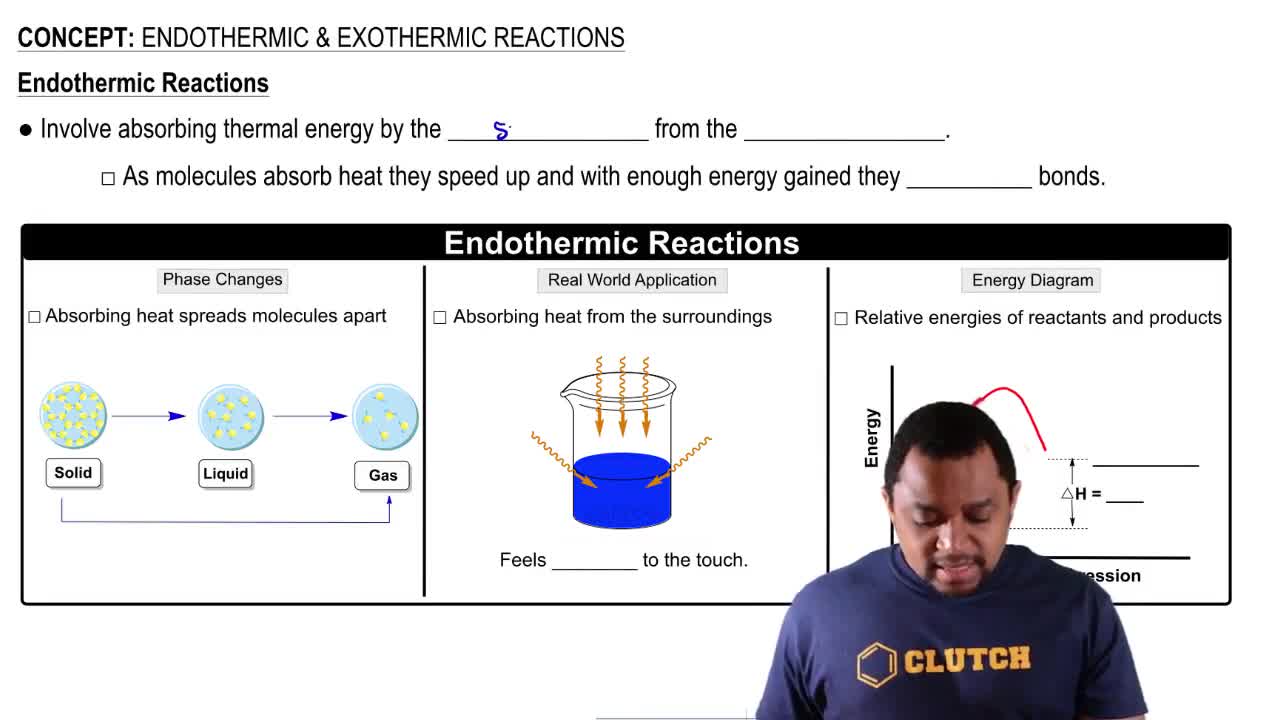
 02:30
02:30