Skip to main content
General Chemistry
My Course
Learn
Exam Prep
AI Tutor
Study Guides
Textbook Solutions
Flashcards
Explore
My Course
Learn
Exam Prep
AI Tutor
Study Guides
Textbook Solutions
Flashcards
Explore
Back
Intermolecular Forces and Physical Properties quiz
You can tap to flip the card.
Which of the following is a hydrophobic material: water, oil, or salt?
You can tap to
flip the card.
👆
Which of the following is a hydrophobic material: water, oil, or salt?
Oil is a hydrophobic material because it does not mix with water.
Track progress
Control buttons has been changed to "navigation" mode.
1/10
Related flashcards
Related practice
Recommended videos
Guided course
02:59
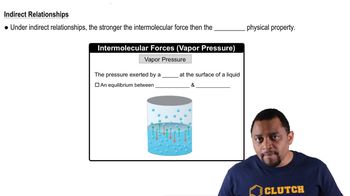
Intermolecular Forces and Properties
Jules
Guided course
01:21
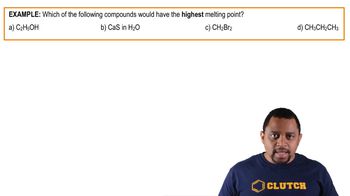
Melting Point Example
Jules
Guided course
01:04
Intermolecular Forces & Physical Properties
Jules
Terms in this set (10)
Hide definitions
Which of the following is a hydrophobic material: water, oil, or salt?
Oil is a hydrophobic material because it does not mix with water.
What is the relationship between intermolecular forces and boiling point?
Stronger intermolecular forces lead to a higher boiling point.
How do intermolecular forces affect melting point?
Stronger intermolecular forces result in a higher melting point.
What is surface tension and how is it related to intermolecular forces?
Surface tension is the measure of cohesive forces at a liquid's surface, and it increases with stronger intermolecular forces.
How does viscosity relate to intermolecular forces?
Viscosity is higher in substances with strong intermolecular forces.
What effect does temperature have on viscosity?
Increasing temperature can reduce viscosity, making substances flow more easily.
What is vapor pressure and how is it affected by intermolecular forces?
Vapor pressure is the pressure exerted by a gas on a liquid's surface, and it decreases with stronger intermolecular forces.
What is the equilibrium involved in boiling point?
Boiling point is the equilibrium between a liquid and a gas.
What phenomenon allows insects to walk on water?
Insects can walk on water due to the surface tension created by strong intermolecular forces.
What is the indirect relationship between vapor pressure and intermolecular forces?
Stronger intermolecular forces lead to lower vapor pressure.
 Back
Back
 Back
Back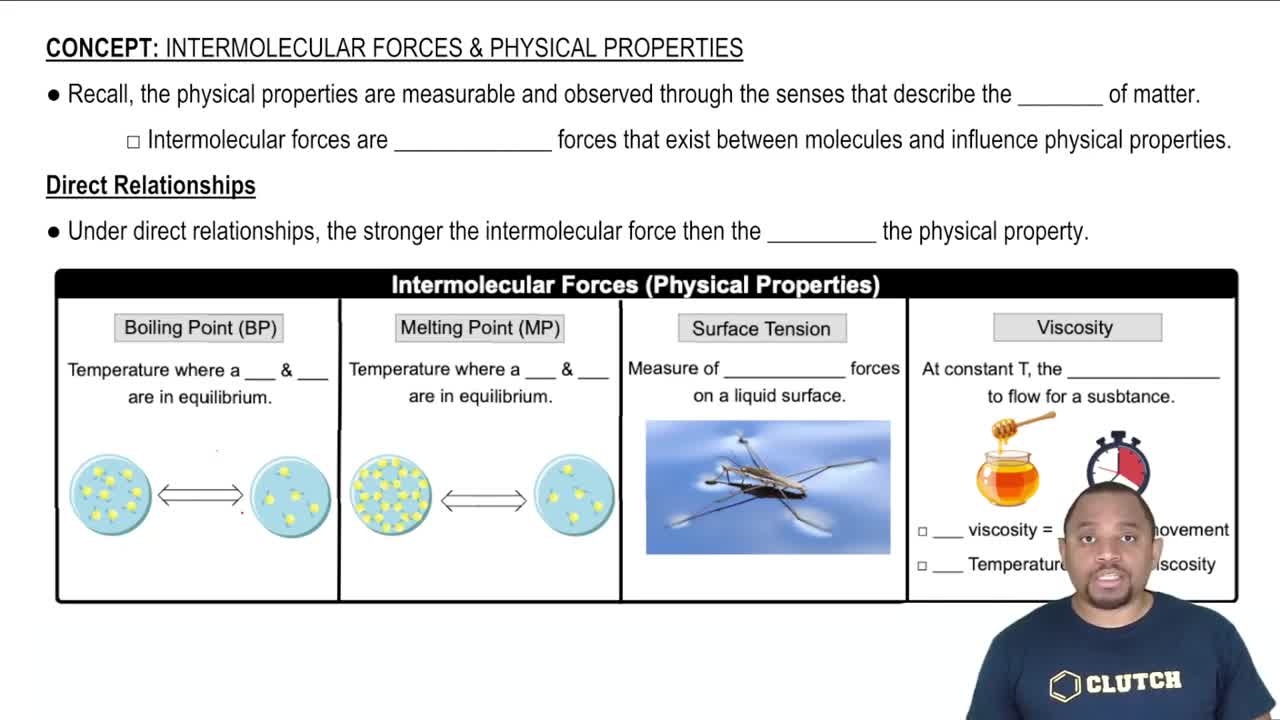
 02:59
02:59